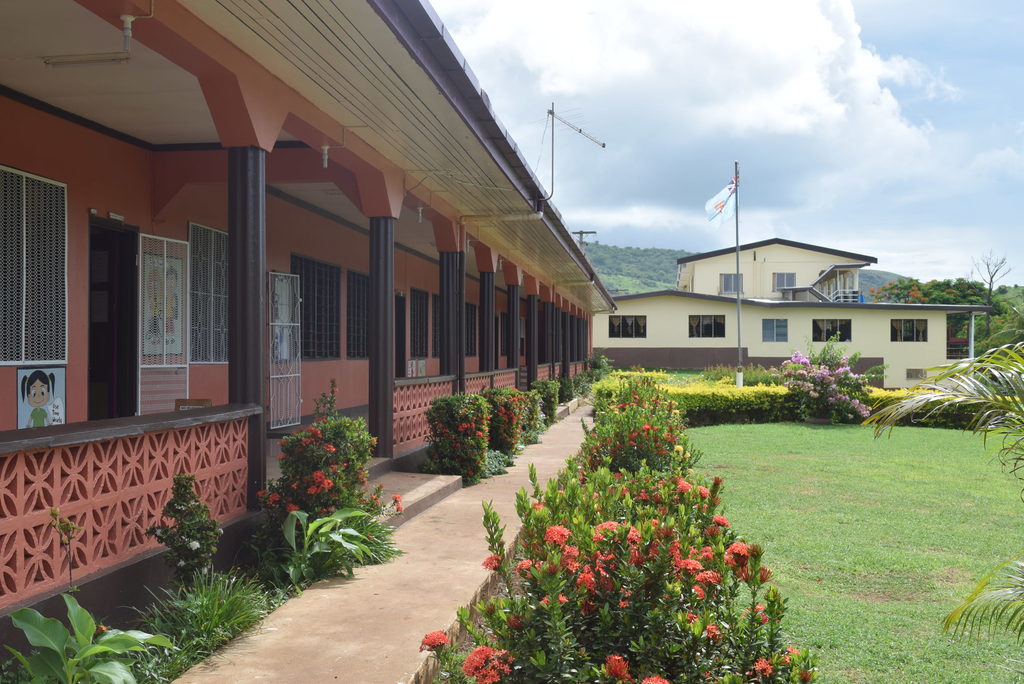
On a school billboard outside Rakiraki town, the printed words “Wairuku Primary School” screams at you.
You’d think it is just a district school until you discover it has been in operation since the late 1800s.
The fact is, behind the school’s noble structure is a history worth sharing.
Wairuku Primary School’s claim to fame dates back to the late 1800s. That’s when the Rakiraki based school became the first to be established by Indian labourers who had come to work in Fiji as indentured labourers.
For over a century, students have been going through the gates of the institution of learning, which started as Wairuku Indian School in the late 1890s.
But someone famous had walked the corridors of the school in its pioneer days when it started as a tiny, thatched bure in the middle of what is now a playing field.
That someone was Ratu Sir Lala Vanayaliyali Sukuna, who was born into a chiefly family on Bau.
His father, Ratu Joni Madraiwiwi, was the son of the Bauan noble Ratu Mara Kapaiwai.
Although Ratu Sukuna was an indigenous Fijian boy, his father enrolled him at Wairuku Indian School in Ra.
The school was founded in 1898 by Pandit Badri Maharaj, who was born in 1868 in Bamoli Village, in the state of Uttarakhand, India.
Maharaj came to Fiji as an indentured labourer in 1889 and through hard work became a successful farmer.
He later served from 1917 to 1929 as the first Indo-Fijian member of Fiji’s Legislative Council , the forerunner to the present Parliament.
During Ratu Sukuna’s years at Wairuku, his father worked as Roko at the Ra Provincial Council office in Nanukuloa Village.
School records of the late Statesman’s years at Wairuku are scarce. However, whatever remains confirm he was one of the pioneering pupils of the school.
Through Maharaj, the school acquired the services of Reverend C.F Andrew whom the founder met in the office of Robert Crompton, a renown Fiji lawyer at the time.
Alongside Henry Marks, John Maynard Hedstrom and Henry Milne Scott, he was one of the ‘big four’, the group that heavily influenced the Fijian economy and political sphere in the first half of the 20th century.
It was at Crompton’s office that Mr Andrew agreed to take up the appointment as head teacher of Wairuku Indian School.
School records show that Reverend Andrew’s first pupils in 1898 included “Ratu J.l.V Sukuna (later to be Ratu Sir Lala Sukuna), B. Raghwan Nand, Shiu Lakhan, Miss Snow, Bechu and Santa Bai”.
Rev Andrew carried on his work as Wairuku’s head teacher until his death in 1950.
Hay, another European took over as teacher and taught from 1905-1907. He also taught in a bure.
In 1907, a Bihari Lal, a Punjab graduate, took up the appointment of head teacher until 1911.
From 1912-1920 Pandit Moti Chandra and Parshotam Mudaliar, a Madras university graduate taught at the school.
When Pandit Moti Chandra retired, Pt Shiri Ram Sharma, a fully trained teacher in vernacular from India, taught with Mr S.G.Sanderson.
Mr Sanderson died at Wairuku in 1927.
In 1920, a new school building of iron and wood was erected at a cost of 300, including a grant of $100 which was given by the education department.
The building was destroyed in a hurricane in 1930. After this disaster teaching continued under trees and in the “kuti” area (temple)
The grand festival of Ram Leela at that time was staged at two places in Fiji. Wairuku Kuti was one of them.
The father of Wairuku Indian School, Badri Maharaj died in 1931. Another building was erected at the Ram Leela site and children were taught at this new building till 1961 when during Ram Leela festivities, the school got burnt down.
School continued under the trees and in the “kuti” for two and half years.
In 1963, with the support of the people of Ra and other organisations, a new school was built and serves the community to this day.
If you travel from Vaileka, Rakiraki’s Central Business District, towards Tavua, you’d come across a huge “Wairuku Primary School” billboard on the roadside with the words “established since 1898”.
In the 1940s there were two pit toilets for girls and two for boys.
There was one single wooden building made up of three rooms. There were about 15 students in class.
During its pioneering years, classes were conducted in a bure where the current soccer field is.
One of Wairuku’s former students during the colonial days was Pushp Chandra Naidu who spent seven years walking to his school. He dropped out in his final year because his parents couldn’t afford to send him anymore.
“Back in those days, I didn’t have any dreams. I just went to school because I was told to,’ he said during an interview with The Sunday Times in 2019.
“I remember going to school for the first time, with no shoes and bags. I had only had two pairs of uniforms and they were sewn by my dad.”
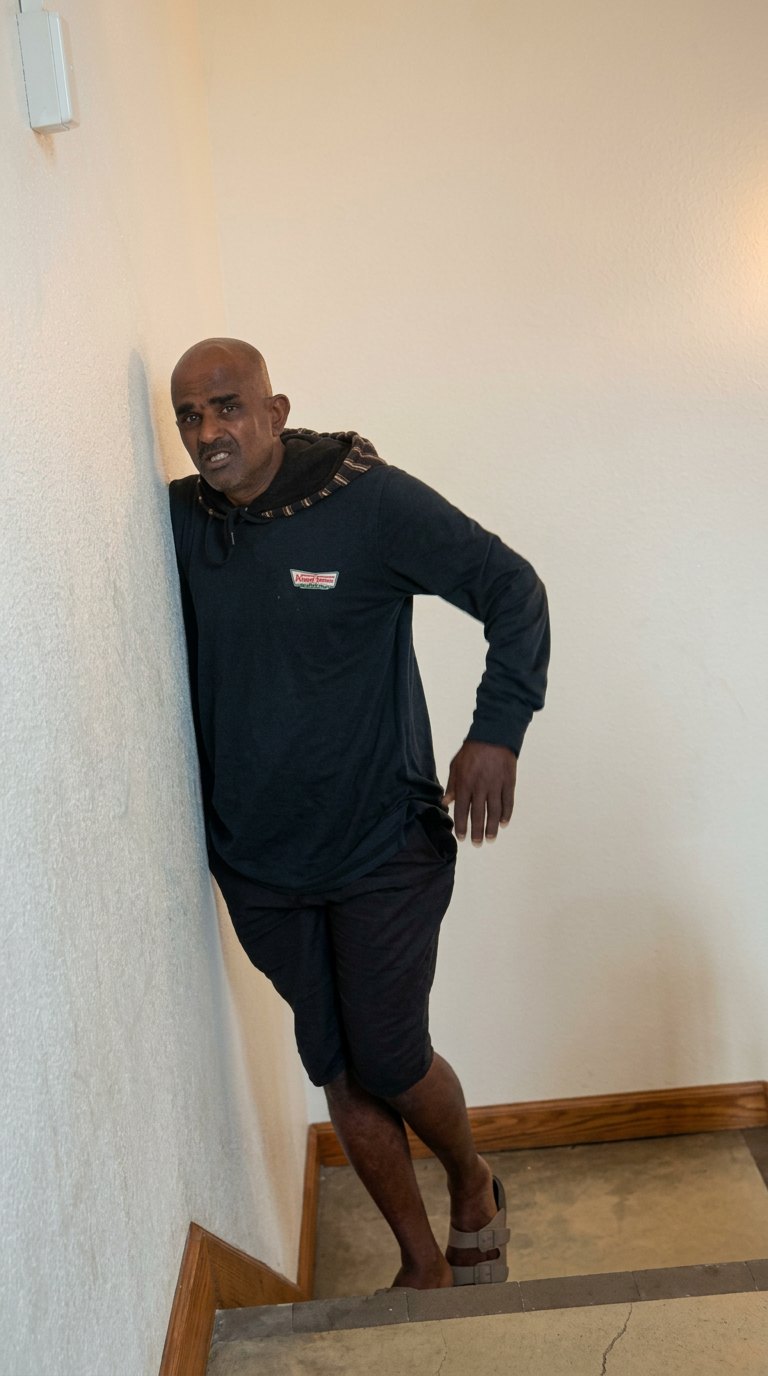
Six decades later, he still walks the corridors of Wairuku Primary School, on the periphery of the western town of Rakiraki.
Gone are his youthful strides. He now treads lightly when he walks. Also, gone are his oil-drenched straight hair and tight skin. He now has grey hair and wrinkles.
In his 70s, Mr Naidu dedicates his time to the school that taught him how to read and write.
“The school is close to my heart because it taught me many things,” he said.
“One of those is to work hard no matter what life throws at you, to persevere beyond your dreams.”
Mr Naidu’s account of his upbringing is one that talks about poverty and survival.
“My parents struggled to give us the best education they could give us. It was because of their sweat and labour that I am still around supporting this school.”
“They were very poor that I had to live school at class seven to help my father, who at the time was driving a taxi that was on payment.”
To supplement the family’s income, Mr Naidu’s father had a farm, where we’d plant vegetables.
Beans were sold for five cents, which the struggling family had a lot of, except for weekends when ‘ dad would buy lamb chops from CSR.
“Sometimes we’d have two tins of sardines to share with two parents and six siblings. You can’t ask for extras.”
“Sometimes we’d have just rice to eat. Mum would boil rice and we’d have it with salt, ghee and mango chutney, sometimes we’d have rice with water, salt and onions.
“At school, there were two pit toilets for girls and two for boys.”
There was one single wooden building made up of three rooms. There were about 15 students in class.
Because Mr Naidu didn’t go far in education, he struggled when he got married in 1972
“Most of the time it rained and there was spring water behind the school.”
“Our parents couldn’t afford to buy us shoes so we’d walk barefoot everywhere. We’d walk on mud all the time and this would make our feet itch. We’d scratch them so bad that mum make us sleep by applying kerosene on them.”
“In the morning when we’d walk to school, stepping on grass would hurt. I had two brothers and four sisters.
After he got married Mr Naidu struggled but made sure his children did not have to experience my hardships growing up. I didn’t want them to suffer like I suffered.
“Many years later, I had a minivan. I would to transport all children to school and back to their homes in the afternoon. It was my way of sharing with others what my siblings and I never enjoyed.”