
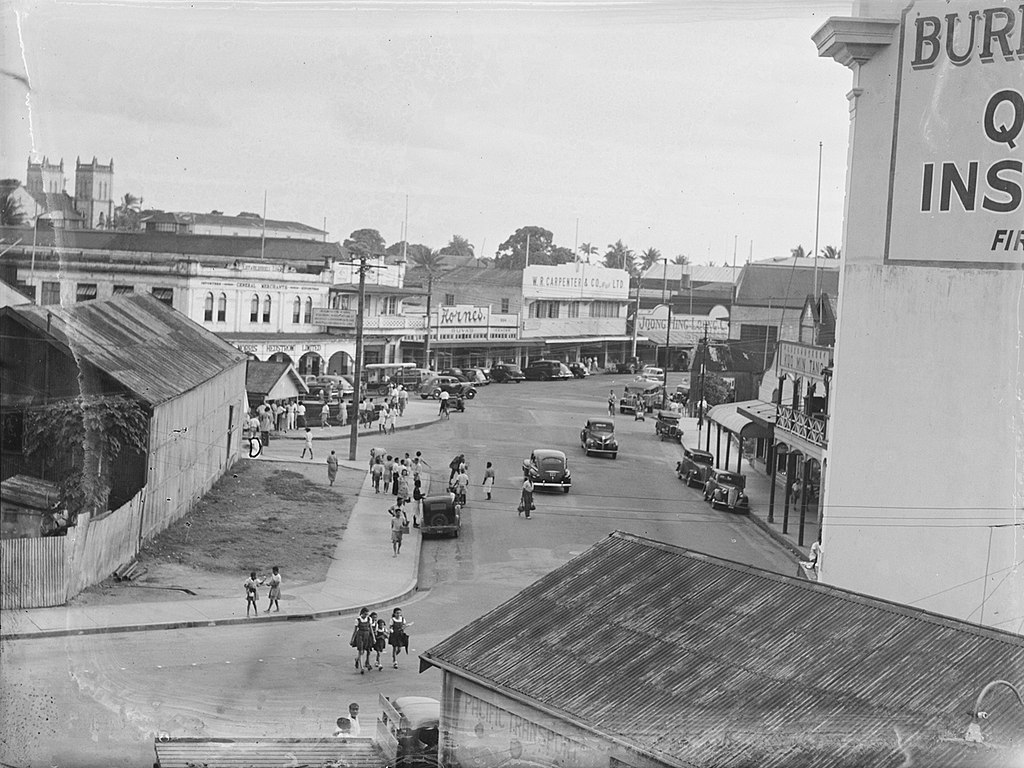
IN the 1960s, a few decades after Suva’s early transformation as the new capital, one of Thomson Street’s businessmen was engaged in daily pigeon feeding, an amazing act of kindness he did for over 15 years.
According to The Fiji Times of July 4 1964, one day Ratanji Jogia, 70, discovered that 11 of the pigeons he fed daily had been run over by a car.
The death of his “faithful friends” struck him with deep sadness.
“That driver has no heart,” Mr Jogia lamented.
In those colonial days, he was something of a Suva institution through his “daily custom of feeding dried peas to pigeons.
Every day, around 9am, Mr Jogia would set out with his bag of peas attracting Suva pigeons that flew in from all directions. Before he reached his feeding spot at the corner of Pier and Thomson streets, more than 100 pigeons would be waiting.
“By 8am pigeons would start arriving. At nine o’clock they would display behaviour that showed their excitement,” The Fiji Times reported.
Whenever he fell ill and couldn’t make it, Mr Jogia would always send his son to ensure the homing birds were always nourished.
From the early colonial days, the areas within and around Thomson St and Renwick Rd were the trade and economic nerve centre of the capital Now that boundary has been vastly extended.
In the 1880s the main waterfront street, equivalent to Levuka’s Beach St, was Thomson St.
It extended from the start of Mark St and ended at the start of Victoria Parade. The general merchants and ship chandlers of that period in history built their premises along it and all along adjoining Renwick Rd.
“The larger business concern dominating the commercial scene at the turn of the century and well after, were firms which have now gone out of business although their successors still exist – firms like Marks, Walter Horne, Brown & Joske and Sturt-Ogilvie,” notes the Suva City Council website.
These big names occupied the area between Thomson St and Renwick Rd as well as the opposite side of Renwick Rd, where commercial developments were already starting to spread. For instance, the Cumming St area, north of Nubukalou, was developed much later in the early 1900s.
The street pattern for the land south of Nubukalou Creek, which remains substantially unchanged to this day, except for the addition of a number of waterfront streets, was based on a design developed by a surveyor in the Royal Engineers, W. Stephens, who served under Colonel Pratt the surveyor general and director of works.
Based on this design, a master plan of the capital known as “Plan of Proposed Township of Suva – Viti Levu” was drawn up in June 1880 by E.W. Cross, a surveyor in the civil administration working under the direction of Crown Surveyor, J. Berry.
To ensure that buildings in the township would be erected to this plan, Ordinance No. 4 of 1881 entitled “An Ordinance for Regulating the Alignments of Streets in the Town of Suva” was passed in April the following year, representing the first step taken towards planning control in Fiji.
The ordinance provided that no buildings (public buildings excepted) could be erected along the frontages of certain streets listed in an attached schedule, unless the crown surveyor was satisfied with their siting and had given a certificate to that effect.
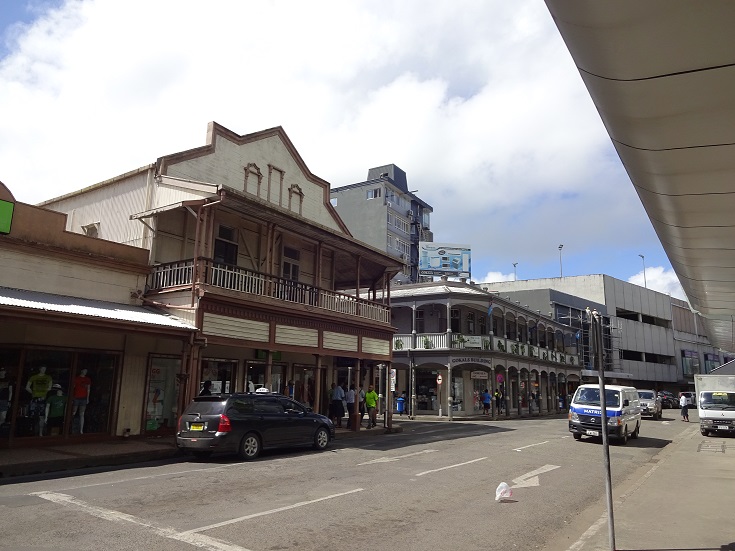
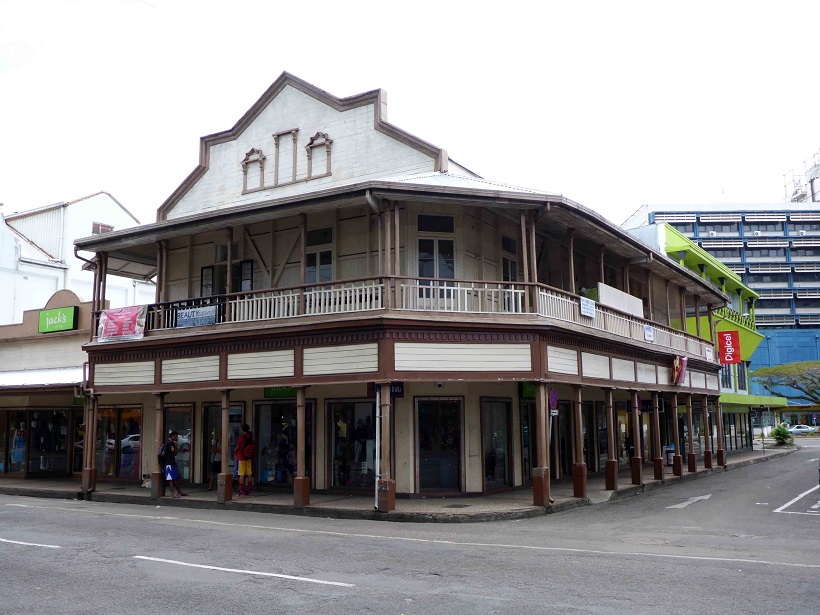
The schedule listed nine streets, which appeared to be more important commercial streets of that time:- Victoria Parade, Thomson St, Carnarvon St, Margaret St, Loftus St, Gordon St, Renwick Rd, MacArthur St and Pratt St. Now, at the corner of Pier St and Renwick Rd, was a “neglected corner shop”, which we started looking at last week.
Writer Rex Steele noted in “A Story of Suva in the mid-20th Century: Steele’s Central Store” that in 1948, his parents Rurik (Rex) and Maude Steele, a woman with “twinkly blue eyes” that lived to 106 years, took over the lease of the place which included the quaint corner shop, whatever was left of a book store and a defunct kava saloon.
Once the Steeles took over, the store was cleaned out and all rubbish collected were put in boxes on the footpath for disposal.
The Steeles placed an order for a selection of English book and magazines and spent “sleepless nights” think about how payment was going to be made.
They were given assistance by Sir Henry Scott, who offered to guarantee an overdraft with the Bank of New Zealand.
As a result, the magazines were imported in bulk monthly by sea.
They were redistributed around the Colony to subscribers via local mail.
As business progressed, toys were added to books and magazines sold by the Steeles, who became the representatives of high quality Mobotoys in Fiji which included shooters, rocking horses and merry go round.
Later, the type of products sold at the Steele’s Central Store increased to include things like Craven.
A cigarettes, local baskets and paints. It was agents for several items such as Edmunds Acto baking powder, and Moore and Johnstone brand of men’s suiting, Pier St, which cuts Renwick and Thompson, has its own claim to fame.
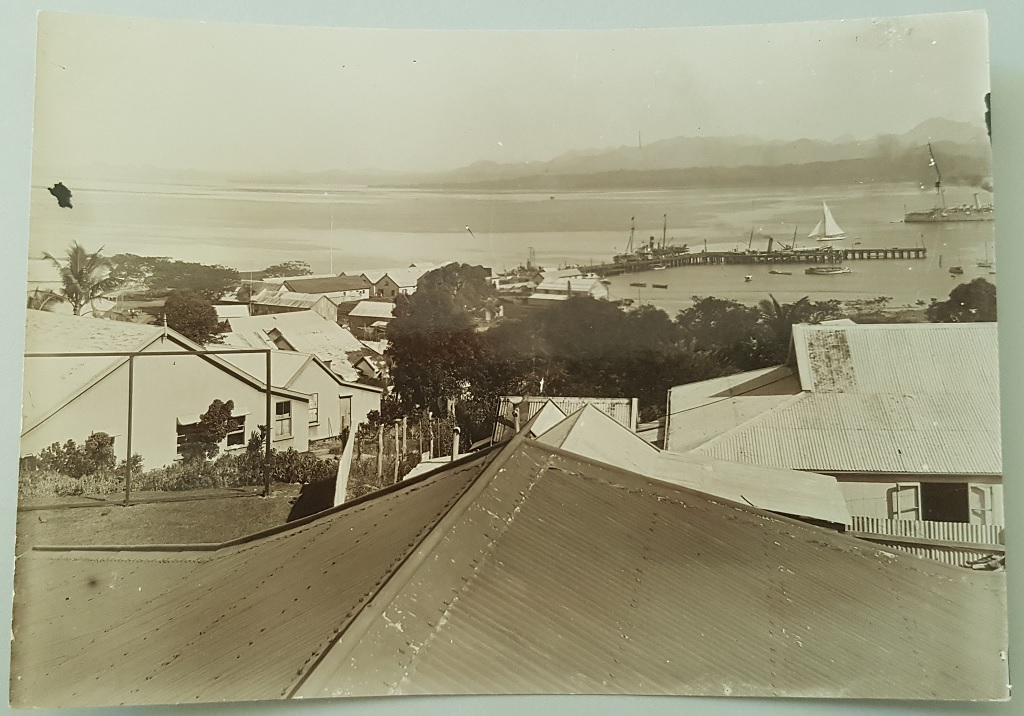
According to Fiji Ports Corporation Ltd history records, land reclamation development opposite Pier St in the early 1880s resulted in the first major harbour work in Suva and the building of the Queen’s Wharf.
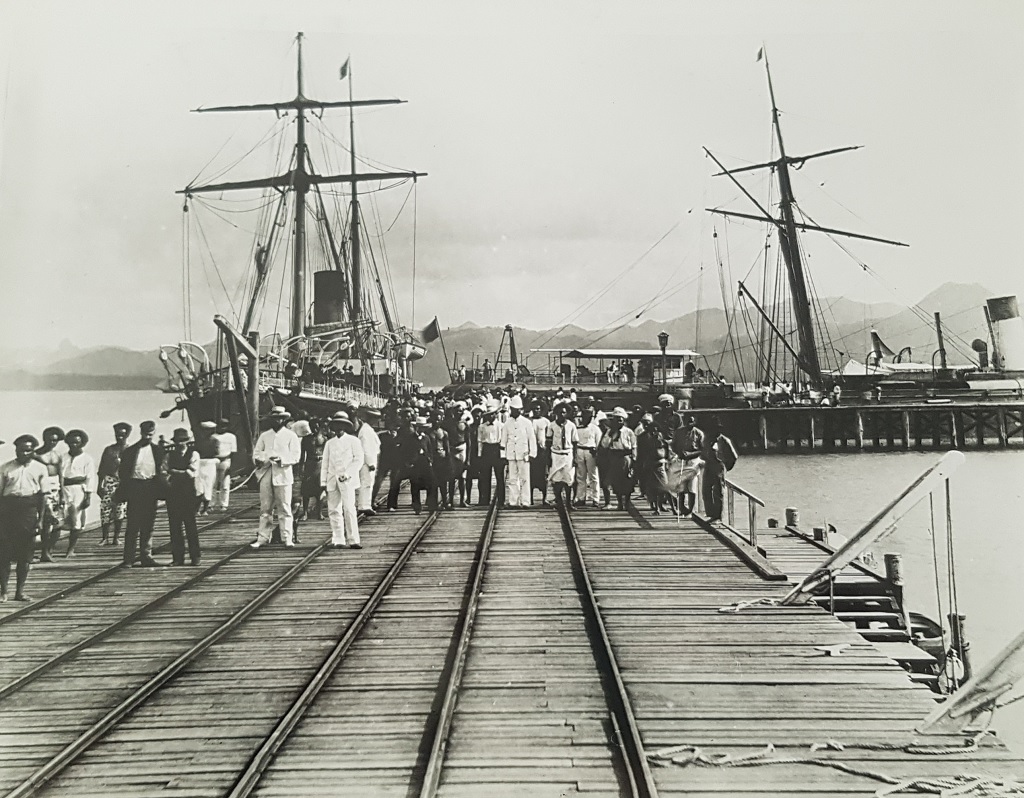
The port of Suva today has come a long way from its humble beginnings in 1881 when the Queen’s Wharf was extended from the end of Pier St, on the Thompson St end.
The Queen’s Wharf was named after Queen Victoria.
In 1881, Queens Wharf was 120-metres long with a 45-metre pier. In 1900, another pier of 60-metre was added.
The latest of development then was the completion of stage one and stage two of the Suva port rehabilitation and upgrading program which cost $10.6 million.
The development of Suva’s wharf and wooden pier did not happen overnight.
It was the result of increase in trade and ships movements.
“The increased cargo throughout together with the changes from sail to steam meant that better port and ancillary services had to be provided,” FPCL says.
To achieve this, the Kings Wharf was constructed in 1912, a major development that served the city and country well for the next 50 years.
FPCL notes that in the 1880s there was easy access by road and horse-drawn tram or trolley line from the wharf to the area of Thomson St, the main waterfront street throughout the 1880s.
“The tramways or railways had been in use in Fiji since 1876, with horse-drawn vehicles serving the sugarcane industry and from the early 1800s the transportation of cargo to and from the wharves in both Suva and Levuka up until the end of the 1930s,” the FPCL says.
The tramlines can be seen in some old photos of Thomson St, where they were used to cart goods to and from the ships. Steele’s Central Store was given a facelift “when things seemed to be going fairly well”.
This included a new look showroom and a middle display area made up of a “three tiered square stand”.
The name of the shop was changed to “Steele’s of Suva.
The shop survived most of the 1950s until the Steeles decided to resettle in New Zealand, responding to the need for greener pastures and developing financial and political problems in the Colony.
The Cumming St area north of Nubukalou was developed later in the early 1900s, first largely as the site of boat building.
With its boat building sheds, yaqona shops, hot beer saloons, kava bars, barber shops, tailoring outlets and drapery stores, Cumming St was the melting port of traders from different racial groupings which is why it was earlier called All Nations St, a name that disappeared after World War II.
It was a little general merchants’ paradise and even had “dens of iniquities”.
It also had the site of the first public market which was razed to the ground in the famous “Cumming St. fire of 1923”.
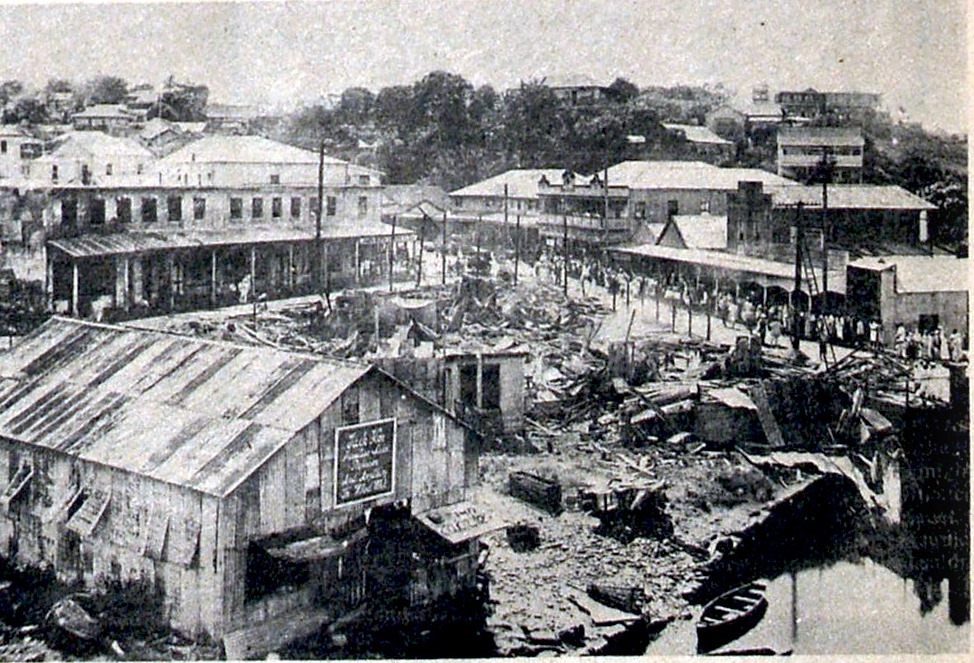
The tourist trade may be said to have originated from this street. But its first “tourists” were not globe trotters.
They were navy and military personnel stationed in Fiji from 1942 to 1946.
The goods they bought from Cumming St shops were mainly tortoise shell, jewellery and ivory ware, the latter being specially imported from India.
When the military men left Fiji after the war, their places were taken by the real tourists who started arriving in large numbers by sea in the 1950s.
From then on, the face of Suva was never the same again, and today Suva has a complex network of streets within its city boundary but the famous Thomson St and Renwick Rd remain as evidence of Fiji’s humble beginnings, and a historical remnant of our colonial past.
- History being the subject it is, a group’s version of events may not be the same as that held by another group. When publishing one account, it is not our intention to cause division or to disrespect other oral traditions. Those with a different version can contact us so we can publish your account of history too — Editor

