
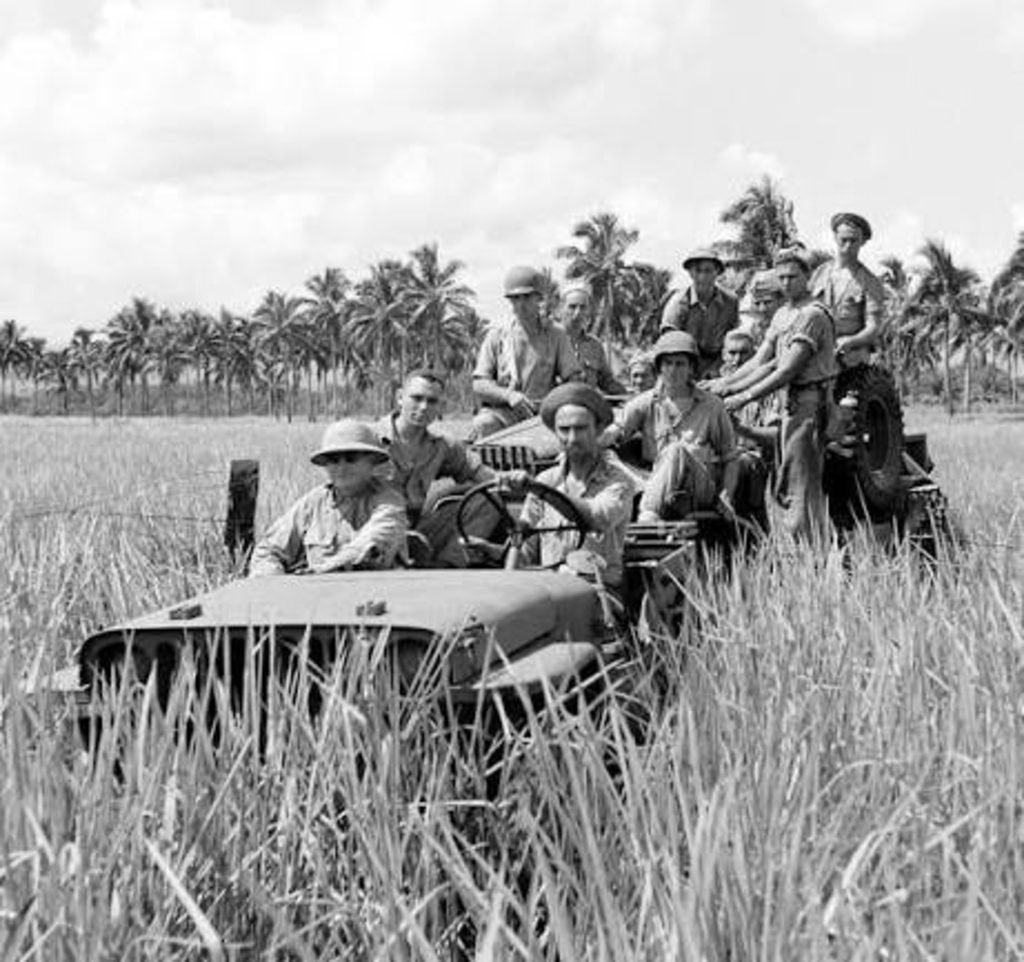
IN the interior of Ra where mist settles low and the land holds its stories close, the people of Nubumakita still walk on dirt roads believed to have been cut by soldiers during World War II.
For Nubumakita’s Qase ni Turaga Sitiveni Waqa, those stories are not distant history, they are inherited memory, carried through the voices of their elders.
Mr Waqa of the Yavusa Togavere sat with The Sunday Times team, recalling stories passed down by his elders during his childhood in the village.
Now 56, he shared details that are rarely disclosed to outsiders.
“We were told the soldiers came through the old ancestral Tuleita trail to get to Nubumakita,” Waqa said.
“They had travelled from Nadarivatu through the trail to Nubumakita, where they set up camp.”
What remains today at Nubumakita is the quiet imprint of a temporary army base, one built out of urgency then later left behind.
The old dam
Just metres away from the village, partially hidden by time and vegetation, stands a concrete structure the villagers simply call a dam.
Believed to have been built by World War II soldiers, it once served as the lifeline of the army camp.
“If you go to the dam, you will see an old concrete structure,” Waqa said.
“We call it a dam as it was used to supply soldiers with water for essential use during their stay in Nubumakita.”
The soldiers, according to accounts passed down, had also constructed a small hospital nearby. Pipes ran from the dam to the facility, ensuring a steady water supply for treatment and daily use during their stay.
“They connected pipes to the hospital, so it made it easy for them to treat people and to cater for the camp,” he said.
Even after the soldiers departed, the structure continued to serve the community.
For a time, water from the dam was directed into the village, sustaining daily life.
“When the soldiers left, villagers used the old dam to supply water directly to the village,” he said.
“Now the pipes have been dismantled, so it doesn’t run through the village as it should.”
Instead, a new dam, constructed a few metres above the old dam has taken over that role. The old one remains, its waters still flowing but largely untouched.
“There is water flowing through it today, but we don’t use it like we use to in the past,” he said. “We stopped using the old dam when our new dam was constructed.”
Unlike the remnants of the hospital, which are closer to the village and regularly maintained, the dam is no longer actively used, though it remains a visible part of Nubumakita.
Water from the dam flows into the Qaitabua River, which runs alongside the village.
In the past, the river supported only freshwater eels (duna) and prawns (ura), as these were the only species able to survive in its conditions.
Unlike other rivers where tilapia (malea) and a variety of freshwater fish are common, Qaitabua was once limited to these native species. However, in recent years, tilapia has begun to appear in the river, something that was not possible before.
The old dirt road
If the dam speaks of survival, the dirt road tells a story of movement, one that runs directly through the village, beside the old hospital site.
Cut through rugged terrain, the road once carried military jeeps navigating the interior. Today, it remains a narrow, well-worn path, still in use, but only by foot or horseback.
“We were told that their old war jeep ran through this dirt road,” Waqa said.
“They used to travel all the way to Vunidawa in Naitasiri.”
The route follows the ancient Tuleita trail, a path known to generations long before the war. It winds through Tomaniivi, passes Nubumakita, and stretches toward Nakorovatu in Naitasiri.
“The old Tuleita trail goes through Tomaniivi, through Nubumakita to Vunidawa, these are commonly known to those from here,” he said.
What made the trail remarkable and valuable during wartime was its terrain.
“These old trails do not cross any waterway or river all the way to Nakorovatu,” he said.
“Since it was a dry trail throughout, the soldiers were able to move around easily on their jeeps.”
He recounts the rivers that mark the wider journey, which is Nasoqo river near Nadarivatu, Nubumakita river in Ra, and Wairuarua river in Naitasiri – the trail itself avoids those waterways.
“This has been shared by our elders, and that is what we will share with your team,” he said.
Despite the passage of time, the road remains essential. Before any formal link between Ra and Naitasiri, it was the only connection there.
“The dirt road was done by the soldiers. We still use it to this day,” Waqa said. “Before the dirt road was constructed to join Ra and Naitasiri, we have been using this old trail.”
Vehicles cannot pass through it now, but the journey continues in a slower pace.
“No cars can go on this dirt road, we only walk and go on horseback there,” he said.
From Nubumakita to Wairuarua Village, the trek stretches nearly 12 miles.
Between the old dam and the dirt road lies a story of adaptation, of how a remote community absorbed the remnants of war into its daily life.
The soldiers are long gone, their numbers and their length of stay unknown but their presence lingers in concrete structures and in memory.
History being the subject it is, a group’s version of events may not be the same as that held by another group. When publishing one account, it is not our intention to cause division or to disrespect other oral traditions. Those with a different version can contact us so we can publish your account of history too — Editor.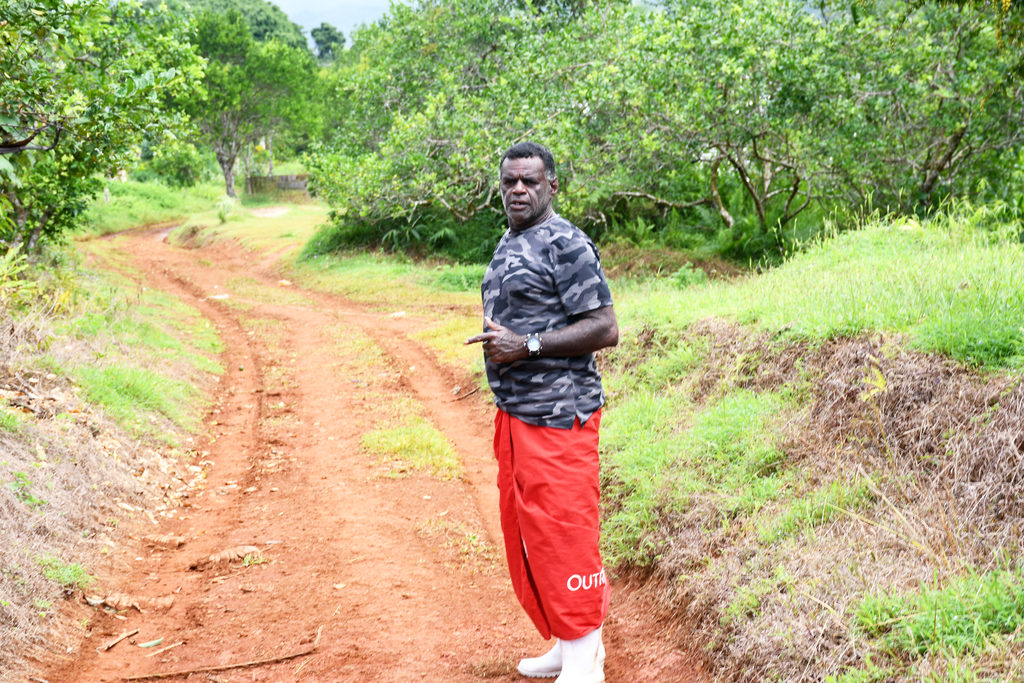
Qase ni Turaga at Nubumakita, Sitiveni Waqa shows the dirt road that was believed to have been cut by American soldiers when they set up camp in the village during WWII. Picture: LITIA RITOVA
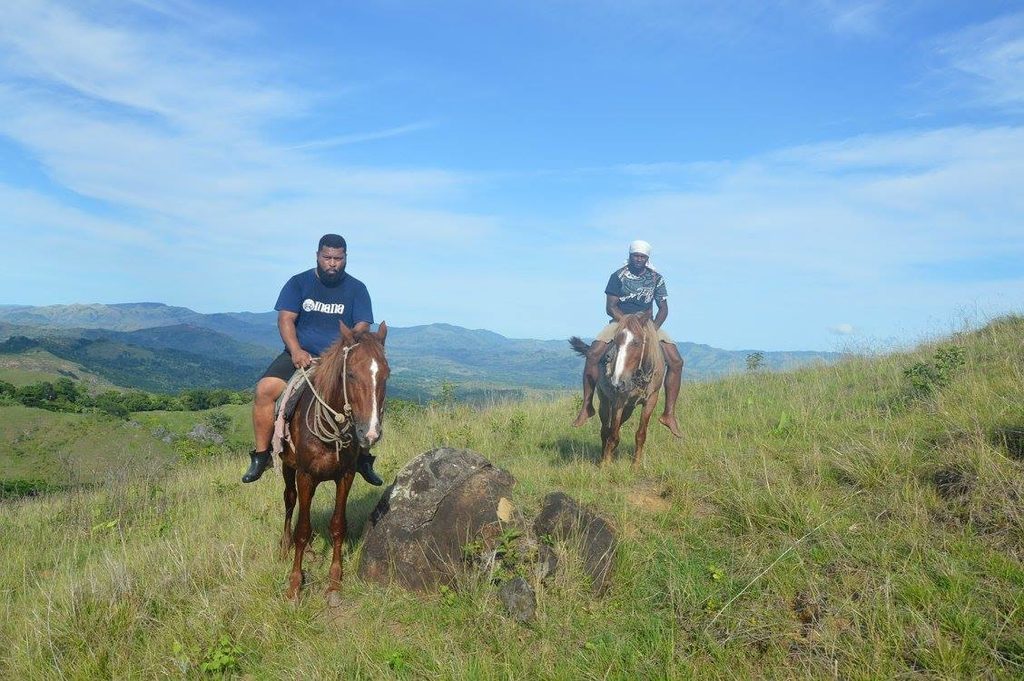
Na i Lalakai senior reporter, Viliame Ravai on the Tualeita track that connects Navosa, to Ra and Naitasiri. Picture: SUPPLIED
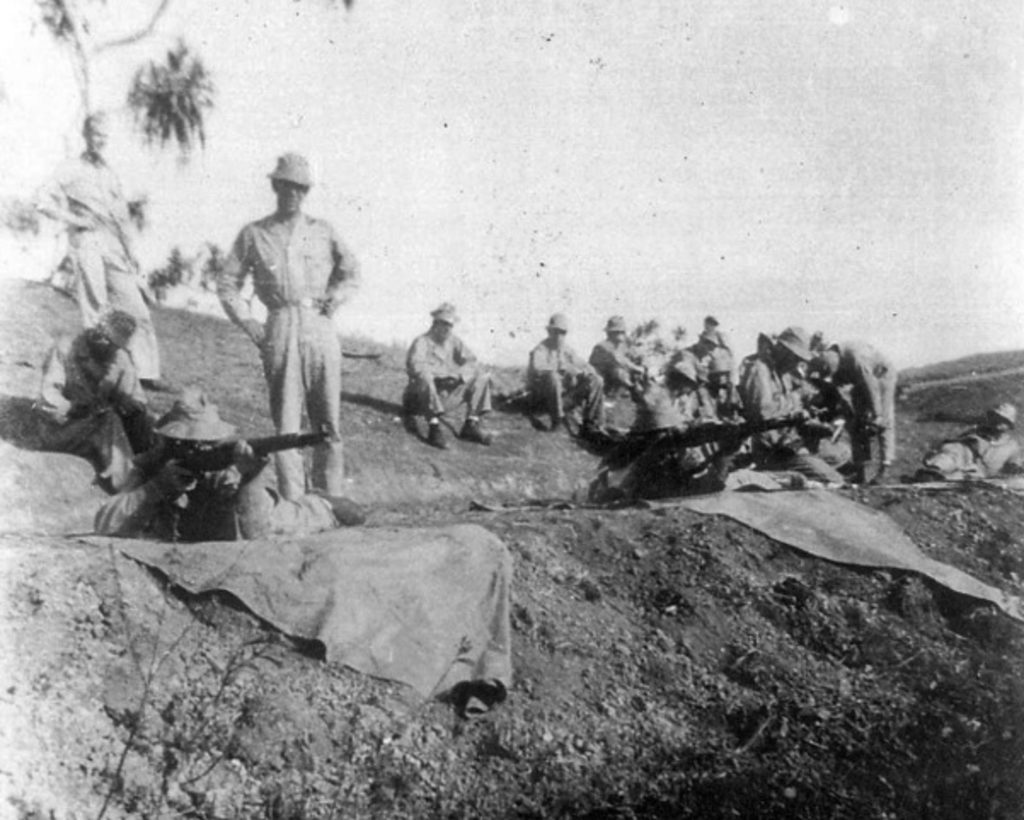
American soldiers in Fiji during WWII.
Picture: JACK MORTON COLLECTION/ WWW.182NDINFANTRY.ORG
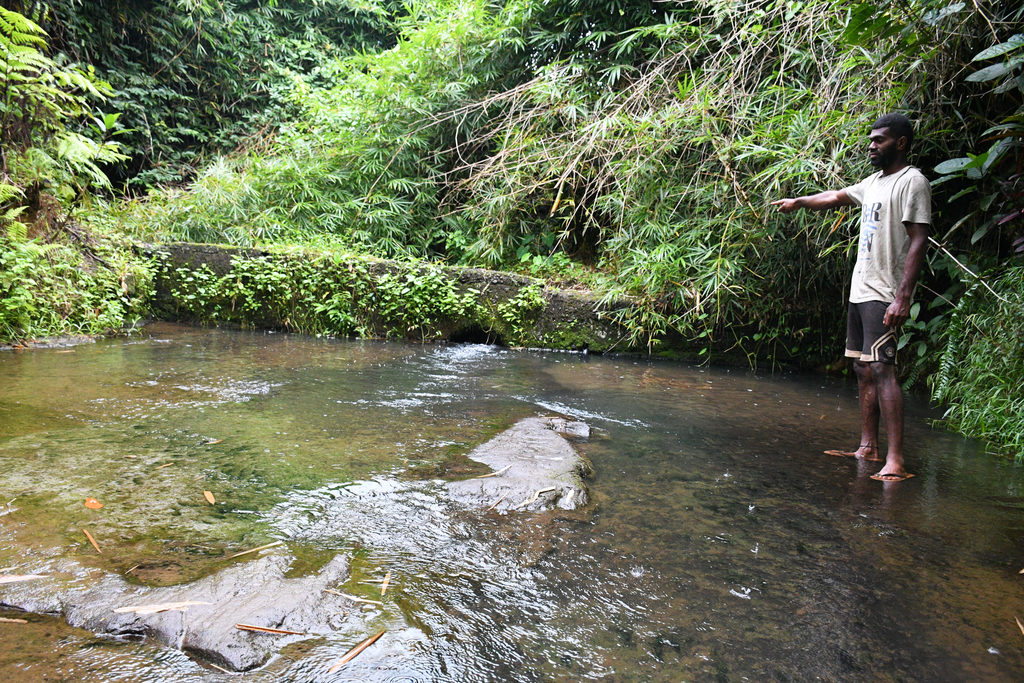
Nubumakita villager, Inosi Senilolokula shows the old dam believed to have been constructed by the American soldiers when they set up their military camp in Nubumakita. Picture: LITIA RITOVA
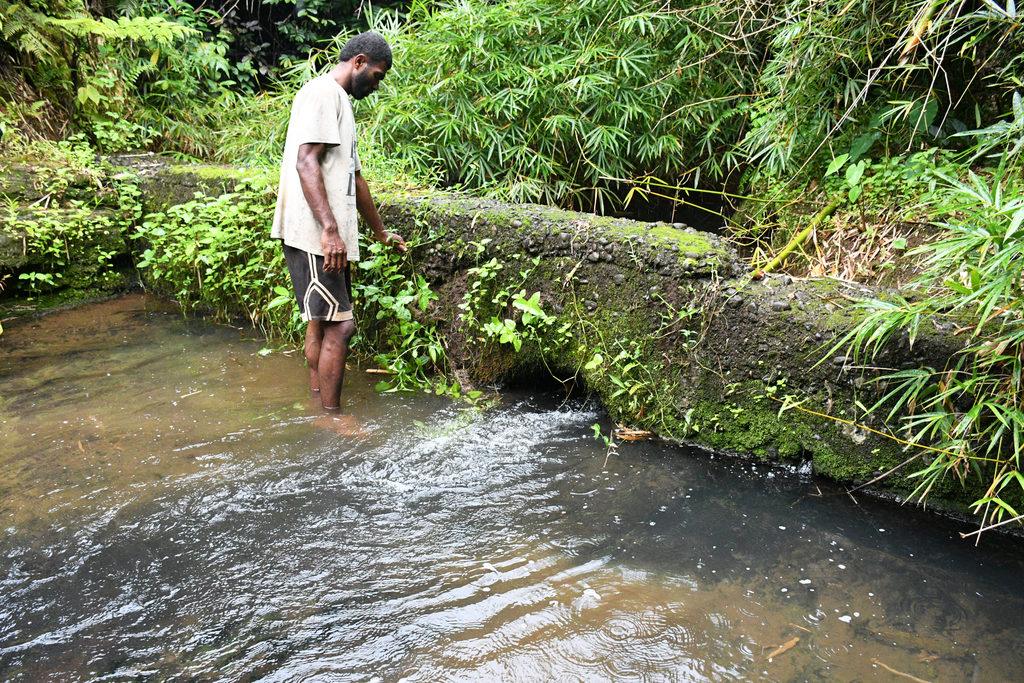
A closer view of the concrete structure used as a dam during WWII by American soldiers in Nubumakita. Picture: LITIA RITOVA
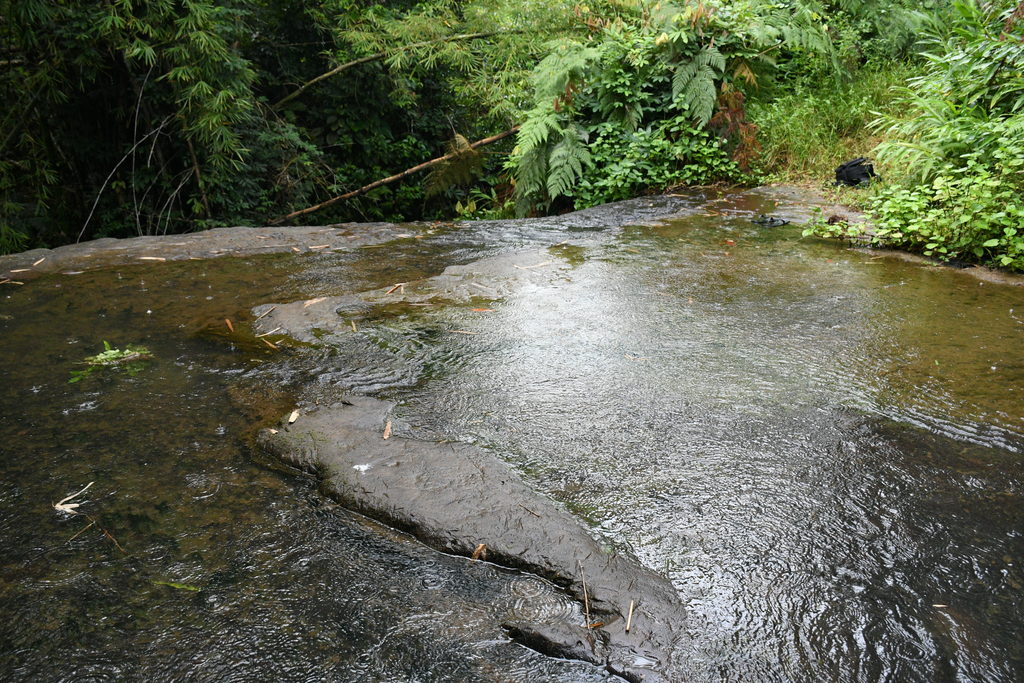
The water from the dam flows off a cliff then goes beside the village as Qaitabua river. Picture: LITIA RITOVA

