
IF you have ever taken the time to closely examine the symbols on our national emblems, specifically the coat of arms and flag, you may have noticed, but perhaps never deeply considered, the presence of three agricultural commodities that were once the lifeline of Fiji’s vibrant economy during British colonial rule.
There is the coconut, representing the copra industry; the sugarcane, symbolising the once-great sugar empire; and, unmistakably, a bunch of bananas.
Some have joked in the past that it references Fiji’s being a “banana republic,” a nod to our coup-riddled post-independence political history.
But its true meaning is far more vibrant and intimate.
This week, in Discovering Fiji, we delve into the story of this once flourishing and robust industry that is credited for kick starting grassroots development and commerce in the lush interiors of central Viti Levu.
The roots of trade
By the late 1800s, bananas were already widely grown across Fiji. Chinese market gardeners in regions like the Rewa River delta and Sigatoka Valley were cultivating them as a major crop as early as 1885.
The Fijian term for banana, “jaina,” is itself believed to be linked to the presence and influence of these Chinese growers, illustrating their early role in the local banana economy.
Fiji’s bananas reached international markets sooner than many might assume.
Exports to Australia began as early as 1877, with the first recorded shipment being 3100 bunches.
This trade grew exponentially, reaching over 1.7 million bunches by 1914. By the turn of the 20th century, bananas had become Fiji’s second-largest export after sugar, with New Zealand emerging as a key overseas market.
The industry spread across Nadroga, Navosa, Navua, Waidina, Naitasiri, and Tailevu. Production was primarily driven by local Fijian growers, with historical debate suggesting that Indian indentured labour played a minimal role, contrary to some claims.
Traders negotiated contracts with local landowners, often through chiefs or magistrates, to secure steady supplies for export.
Payments per bunch were modest at first but rose with increased competition among middlemen by 1900.
Throughout Fiji, local hubs formed around this green gold.
In Naitasiri Province, from the early 1900s through the mid-20th century, villages became central to the export trade, blending agriculture with small-scale commerce and giving rise to village stores and cooperatives.
A photograph in Naqali
This history came alive recently during a visit to Naqali Village in Naitasiri.
I had accompanied a news colleague who was on the hunt for details relating to a tragic incident that had occurred a day before.
Seeking the village headman, we were directed instead to the household of the matanivanua, the chiefly herald and spokesman, to present our sevusevu.
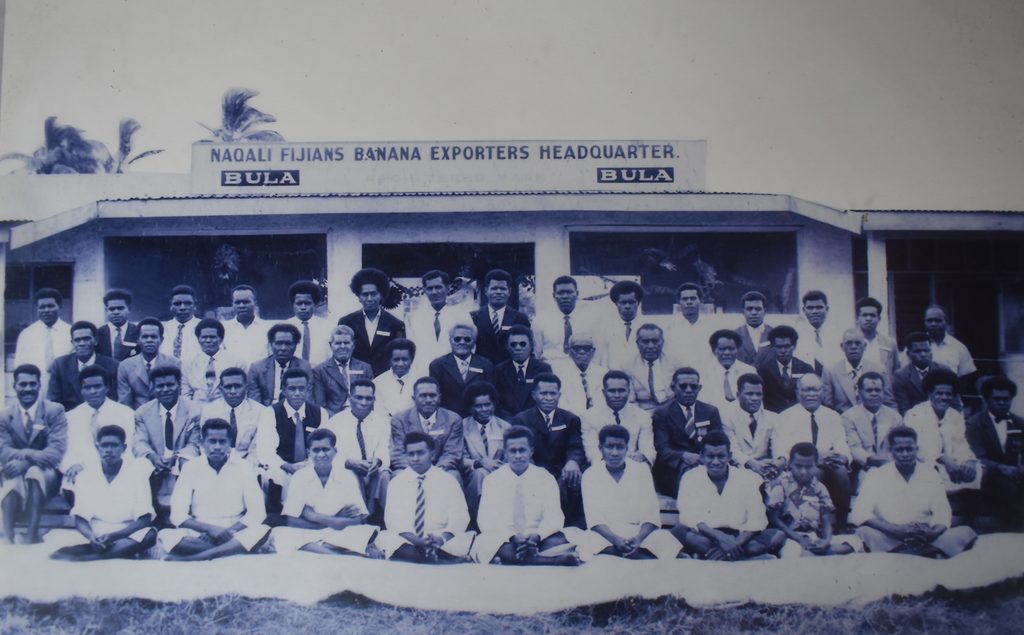
After the traditional protocols, a photograph hanging on the wall caught my eye.
It showed a group of smartly dressed indigenous Fijian gentlemen in two-piece suits, under the title “Naqali Co-operative Society 1957.”
They looked like enlightened academics or a fraternal group. In a sense, I was right.
“Would you like to hear the story of those men there?” asked the matanivanua, Sikeli Nailauota.
“Turaga, tell me,” I replied.
The story of solesolevaki
Mr Nailauota, whose traditional role is herald to the vunivalu, their chief, began with the village itself.
“When I was born, five concrete houses, still clearly visible as you enter the village, were standing.
These are the fruits of the hard work of our forefathers.”
His narrative then turned to bananas.
“A major commodity from the 1800s to the early 1900s here in Naitasiri, and indeed for Fiji, was bananas.
As I understand, they would be sourced even from as far as the highlands of Namosi.”
Mr Nailauota elaborated further that farmers and traders would travel down the Waidina River and stop at Naqali, loading bananas into crates.
These crates would then be placed on punts and barges, taken downriver to Nausori, onwards to Suva, and then shipped to overseas markets.
The elders who worked at the banana landing station here later named the site ‘Valenijivani.’
“This was because many of the bananas were bound for Japan – Javani or Japani in iTaukei,” Mr Nailauota explained.
The profits from this trade funded community transformation.
“The large hall named the ‘Bula Hall’ as you enter, and those first five concrete houses, were built by our elders engaged in the banana trade,” he said.
“The idea was that after these five, another row of five would be built behind them, and then another. Unfortunately, the banana trade eventually weakened, and with its decline, the development works it funded also stopped.”
This was before roads were built in the Naitasiri Province; the river was the main highway.
Nailauota shared a poignant memory from his father, Saula, now 61 years of age.
“He told me that at the time, the elders were so fully engaged in solesolevaki, working together for the common good, in the banana trade, that they used all the proceeds to build the houses. They became so focused that they neglected going to the farm to plant other crops. At one point, they ended up eating only bananas. But they did it to ensure those five houses were completed.”
The very materials used for the construction of the houses are proof of that collective effort.
“The sand and gravel were all sourced from here, taken from the river, carried to the village, and prepared by the community.”
The five concrete houses and the Bula Hall of Naqali today are more than just physical structures but instead are a tangible reminder of a time when a humble fruit, sent downriver to the world, built not just homes, but the very idea of progress for a village.
The banana trade may have weakened, and the rows of houses may never have multiplied as dreamed; however, the legacy of those men in the 1957 photograph, the believers in solesolevaki, is cemented in more than concrete.
It is woven into the land and the memory of Naqali, a lasting reminder that from bunches of bananas once flowed the means to build a future, together.
History being the subject it is, a group’s version of events may not be the same as that held by another group. When publishing one account, it is not our intention to cause division or to disrespect other oral traditions. Those with a different version can contact us so we can publish your account of history too — Editor.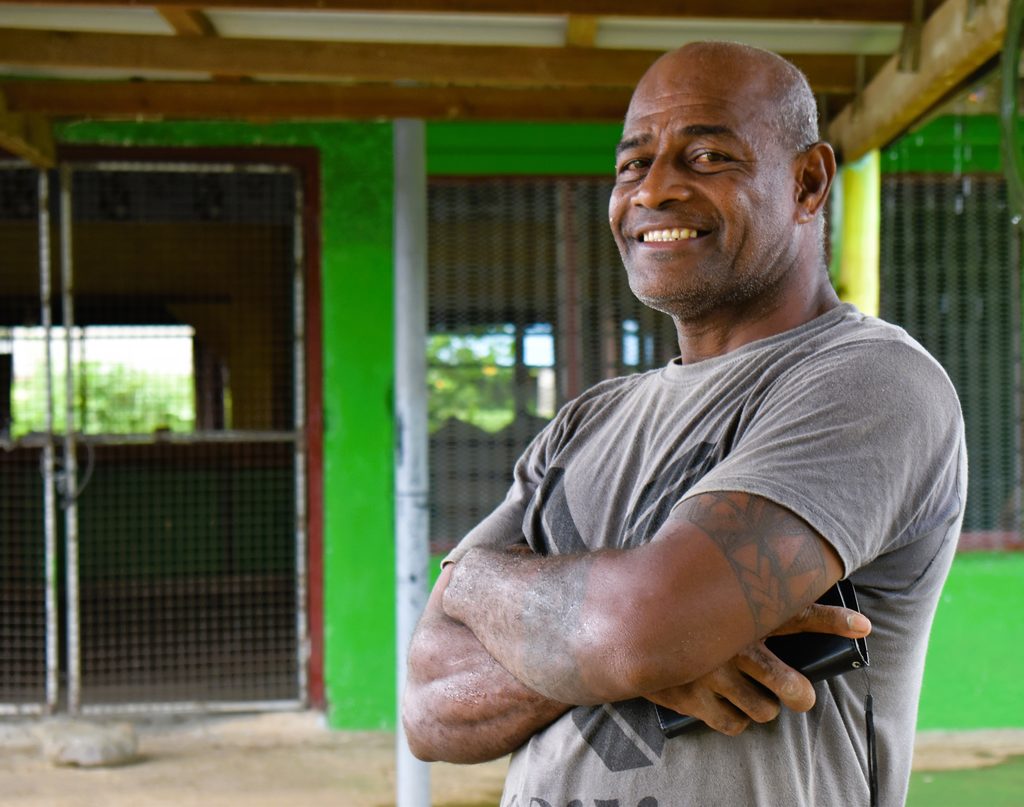
Naqali villager and matanivanua, Sikeli Nailauota. Picture: ALIFERETI SAKIASI
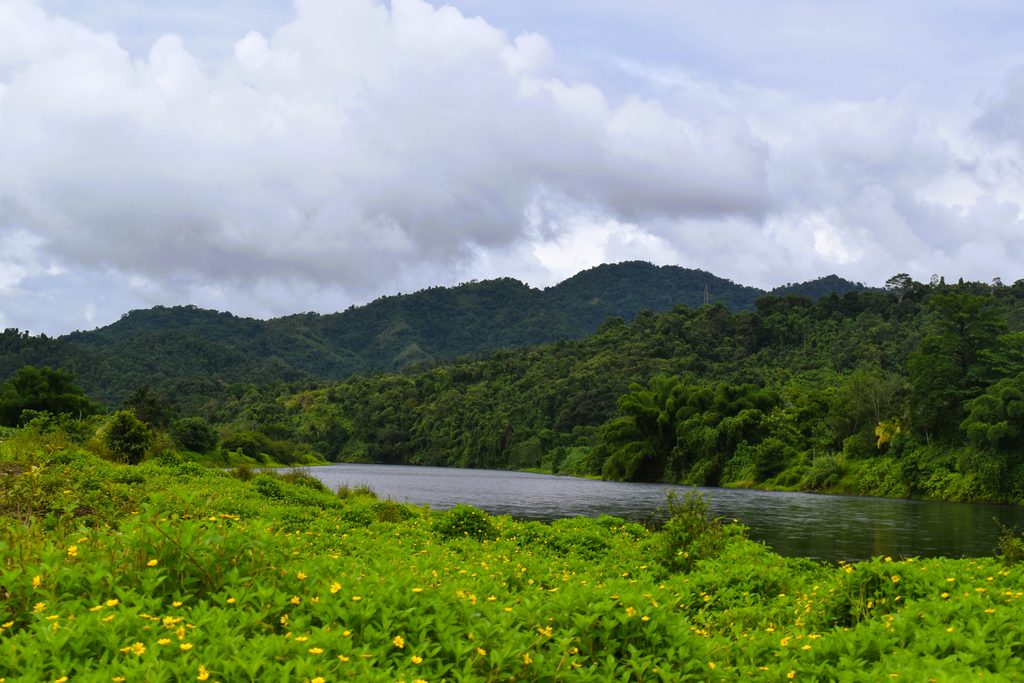
The banks of the life giving Waidina River in Naitasiri which served as a major transportation route in the province for both people and the vital banana crop. Picture: ALIFERETI SAKIASI
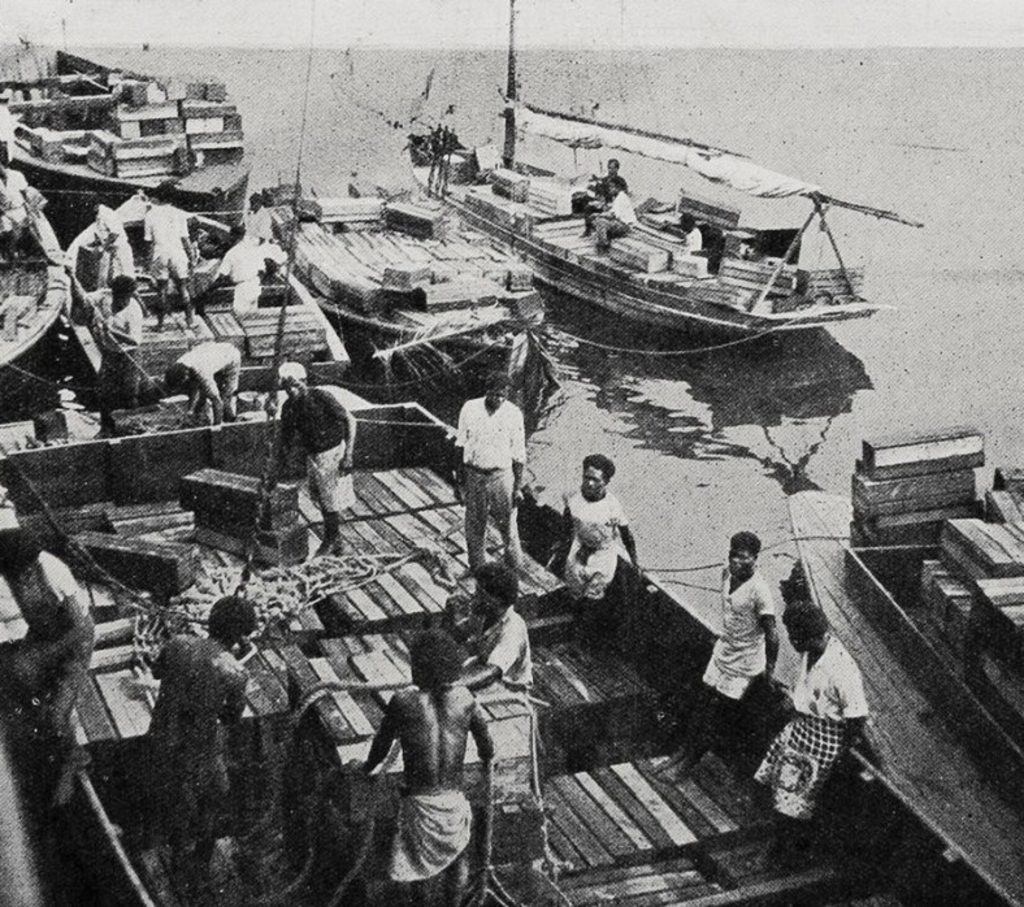
Indigenous Fijians load cargo which include crates of bananas onto a steamer. Picture: SUPPLIED
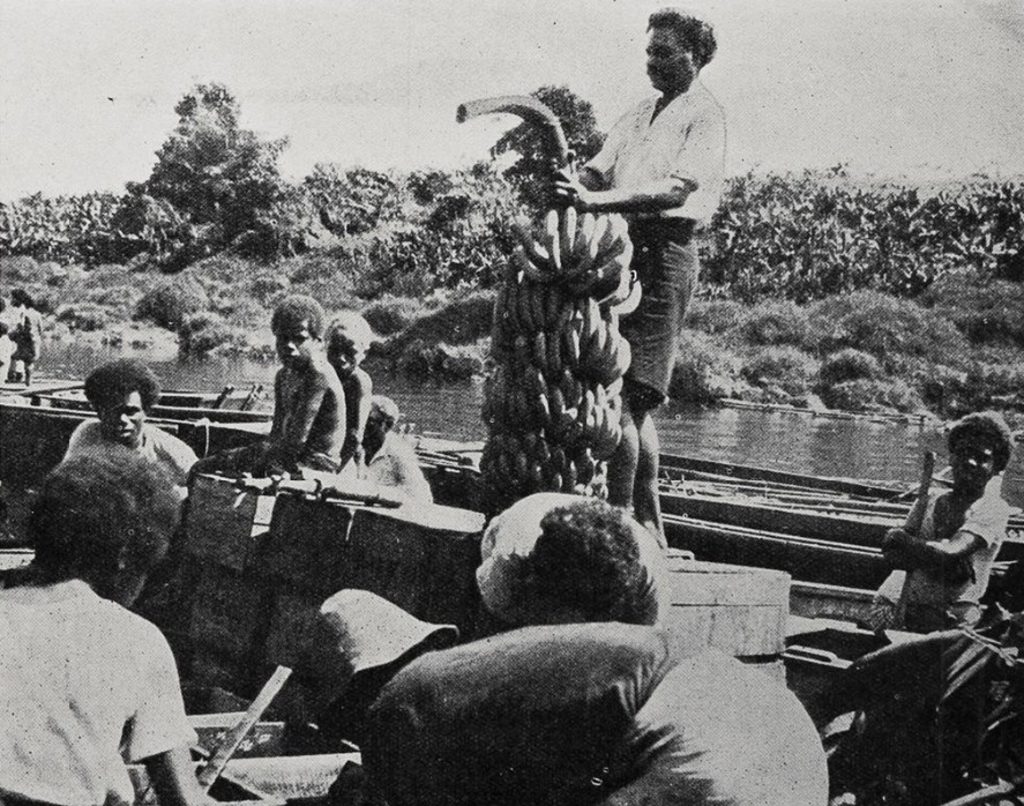
Banana being packed into crates somewhere along the Rewa River.
Picture: SUPPLIED
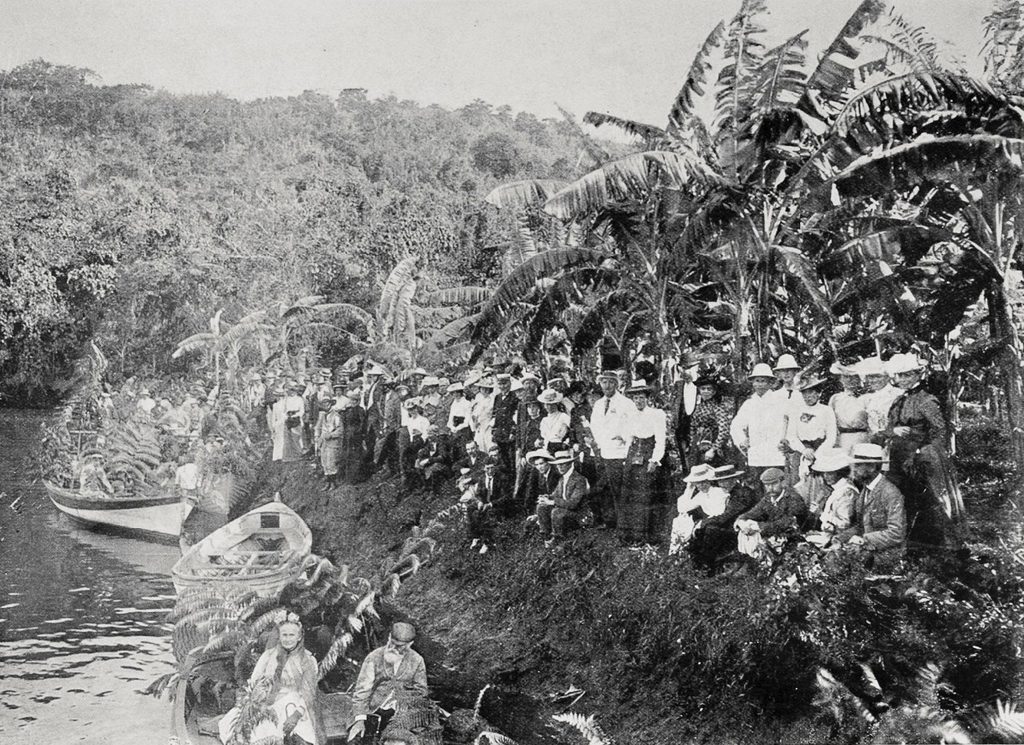
Excursionists from New Zealand on a picnic along the Tamavua River next to a thriving banana plantation. Picture: SUPPLIED
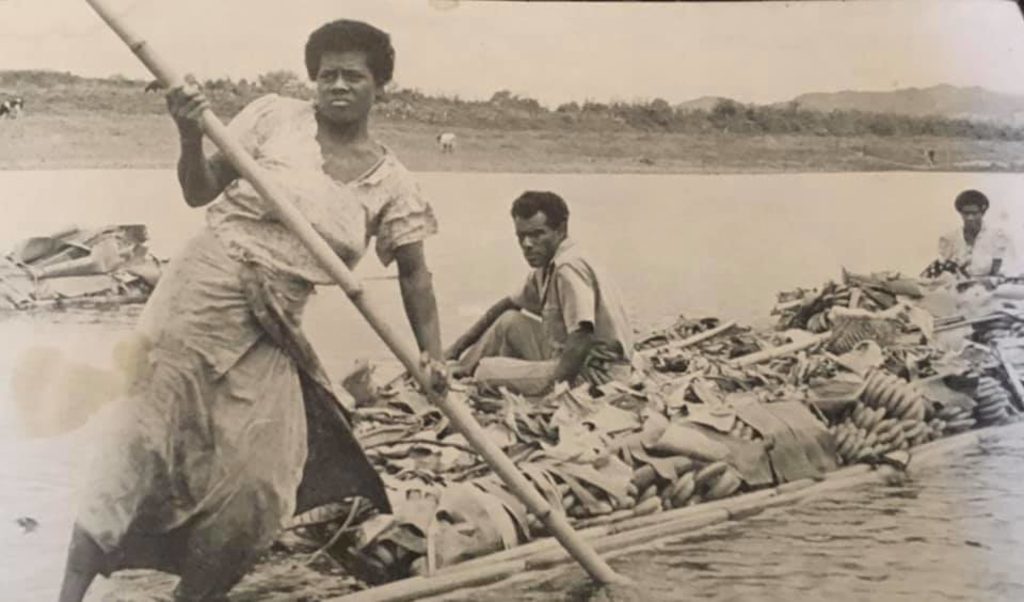
A women rows a bilibili filled with harvested banana.
Picture: SUPPLIED
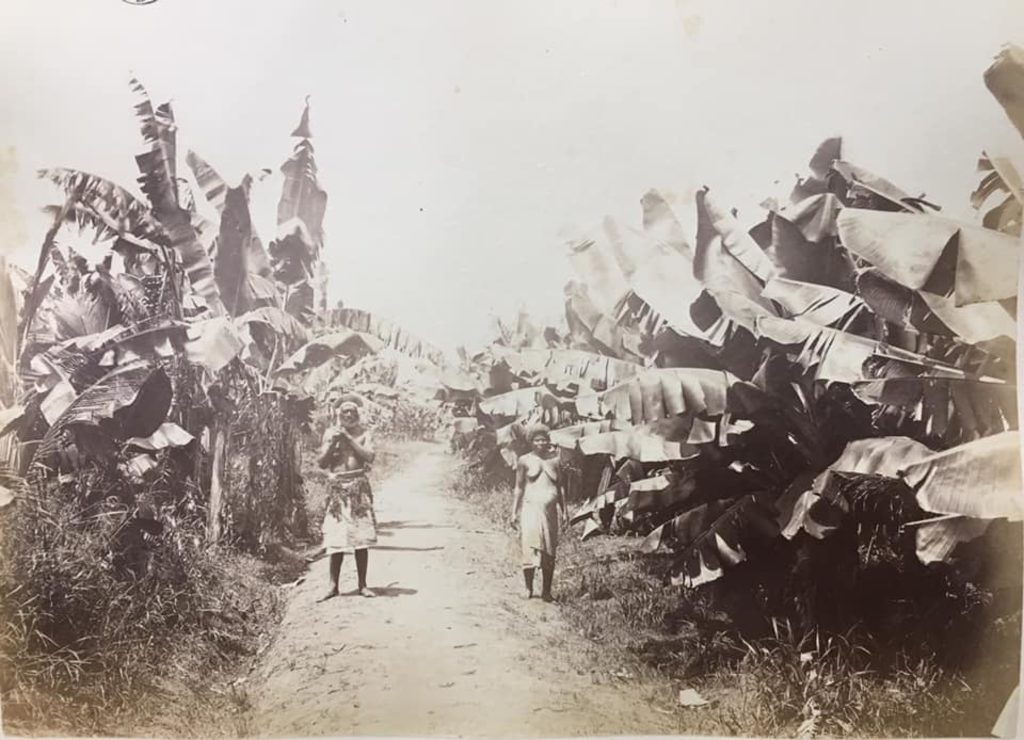
An indigenous Fijian couple tend to their banana crop. Picture: SUPPLIED
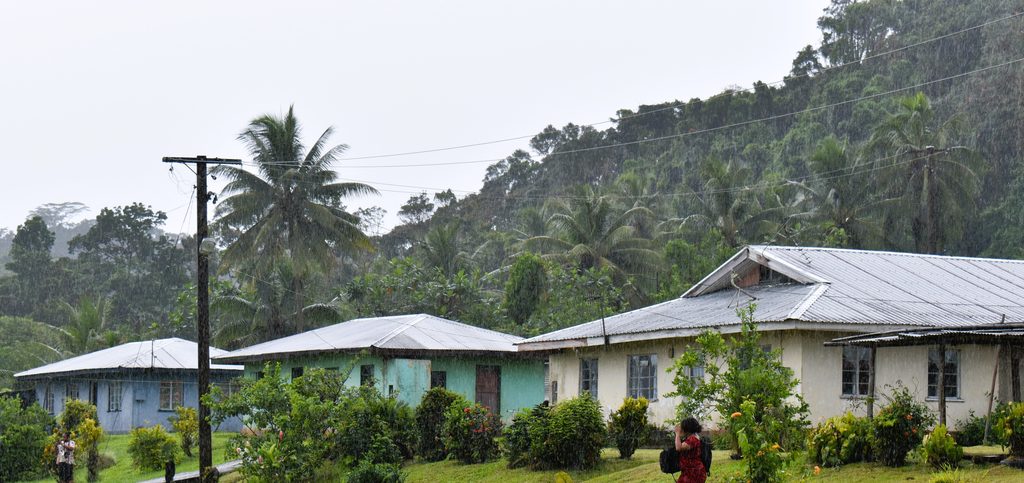
Three of the five houses in Naqali Village that were built from proceeds of the banana trade that thrived in Naitasiri until it’s decline in the lead up to independence in 1970. Picture: ALIFERETI SAKIASI

