
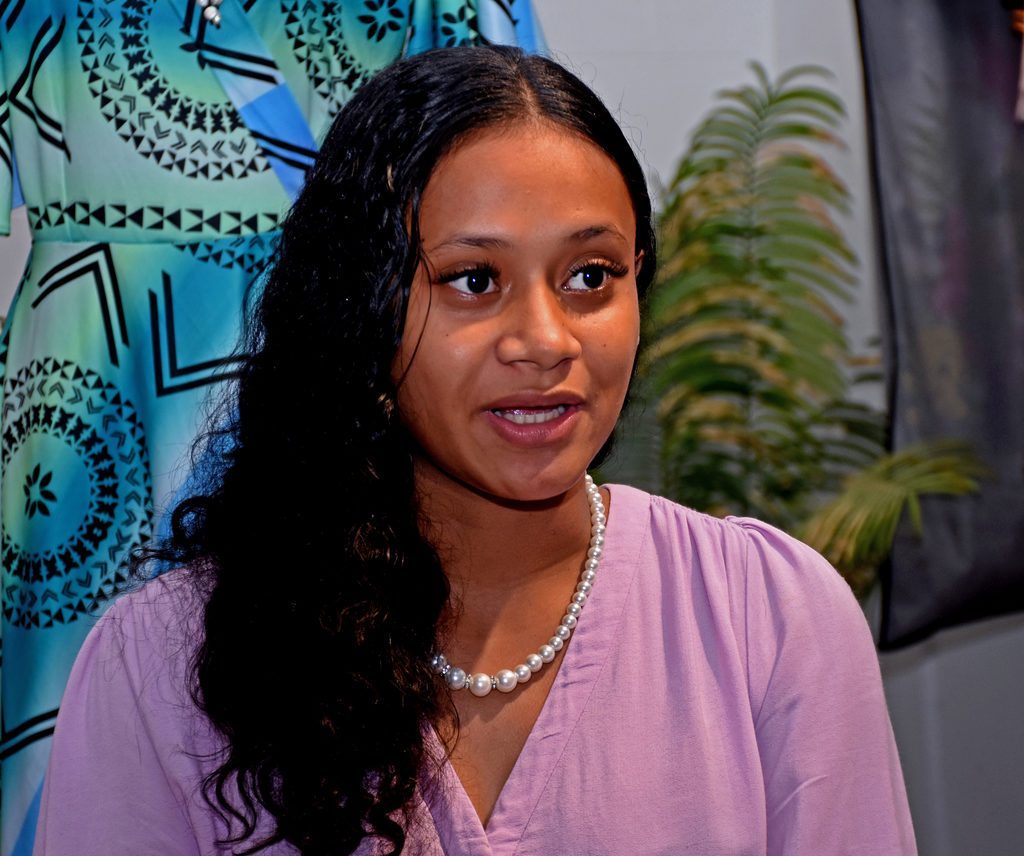
IMAGINE you are 19 years old. You have just won a local title. Even before the applause fades, your “country” turns on you – with fingers pointed at your face, your body, your right to even stand on that stage.
The comments are brutal. Multiple fake accounts emerge, to mock and shame you. And somewhere in your direct messages, a stranger tells you to “kill yourself”.
This is technology-facilitated gender-based violence, or TFGBV, defined by the UN as any act of violence committed, assisted, aggravated or amplified through the use of digital technology, against a person on the basis of their gender.
It includes cyberbullying, online harassment, image-based abuse, defamation and online impersonation.
In Fiji, these acts are not confined to any one space or a specific type of woman. It follows women everywhere — into pageants, parliaments, construction sites, disciplined forces, online marketplaces and community Facebook groups.
UNDP Pacific’s 2025 analysis found that more than two-thirds of women and girls in Fiji have been affected by it.
Last month, acting Online Safety Commissioner Tajeshwari Devi confirmed that women account for 61.44 per cent of cyberbullying cases in Fiji, with women being targeted ten times more than men.
After an eight-year hiatus, the Miss Fiji Pageant was revived under the theme “Think Before You Click — Promoting Online Safety”.
In the end, that theme reflected the very realities contestants were living. Despite the Online Safety Commission’s public warnings, online commentary intensified.
Information Minister Lynda Tabuya, who spoke at the opening, had herself experienced image-based abuse when a private video was shared online without her consent. Officiating at the Miss Fiji Pageant opening last year, she had said, “I am not here as a Minister or a politician, but as a woman who has bled publicly, who has been shamed publicly, who has cried privately.”
Deputy Speaker Lenora Qereqeretabua faced years of online attacks, including false allegations spread across fake accounts. She shared that it was infuriating and embarrassing as a mother, wife, leader, a woman in Parliament.
When Ailava Samuels won the Miss Pacific Islands crown this year, she had been relentlessly targeted since her Miss Nasinu title win.
The harassment did not stop when she won — it got worse. “I know firsthand how damaging online attacks can be. But I also know that we have the power to change the narrative around digital behaviour in our Pacific communities,” she had said.
These are documented examples of a pattern that the Institute for Democracy and Electoral Assistance (International IDEA), which conducted specific research on how women candidates and politicians are treated on social media in Fiji, found to be systemic. Most problematic comments aimed at women in public life were sexist in nature, focusing on appearance and personal qualities rather than substance.
A 2025 Inter-Parliamentary Union study of 150 women MPs from 33 countries including Fiji found 60 per cent had been targeted online through hate speech, disinformation and image-based abuse.
Women who participated in Fiji’s 2024 Women’s Practice Parliament cited fear of social media attacks as a barrier to entering leadership.
Over 86 per cent of Fiji’s adult population uses social media. According to the Online Safety Commission’s 2024 report, 22 per cent of Fijian women are frequent targets of image-based abuse while 30 per cent experience defamatory online attacks, often from fake accounts.
Women made up over 60 per cent of all complaints received by the commission, with Facebook accounting for 57.58 per cent of reported cases and TikTok and WhatsApp for a further 15.95 per cent.
TFGBV is formally recognised within Fiji’s National Action Plan to Prevent Violence Against All Women and Girls 2023-2028, and as per government assurances last year, it was reviewing the Online Safety Act to introduce new categories of offences.
Online Safety Commissioner Filipe Batiwale had said that despite receiving weekly complaints from women affected by online abuse, many women across Fiji continue to suffer in silence, unaware of support available or how to lodge a complaint.
While we observe another season of International Women’s Day or Month, there are indeed many wins to celebrate. Yet behind those milestones is a reality lurking behind the inspirational struggle-to-triumph stories.
TFGBV in Fiji is widespread and underreported. Unfortunately, it continues to grow. It does not discriminate between a cabinet minister or mother going about her day.
It will take more than legislation to close that gap — it requires a shift in how we as a society view and treat women — our daughters, our mothers, and the women who shape our lives.
As a country, we take great pride in our traditions and culture. We speak of respect, of protecting our women, of community above self. But how do we decide where those values apply and where they don’t?
How many more Fijian women and girls must be violated by TFGBV – at the hands of their own – or how much worse must it get before we stop?
Every act of online violence was a choice made. The shift begins when we start making better ones.
Rising above the criticisim… Ailava Samuels. Picture: ELIKI NUKUTABU

