
THE decision by mataqali matarua to discontinue firewalking in Naceva Village on Beqa Island has led to the complete halt of a centuries-old tradition once central to community life within the clan.
Mataqali matarua of yavusa kulu was among the first in the village to formally abandon the ritual known as vilavilairevo, a move that is slowly influencing others on the island.
Today, the fire pits of the mataqali matarua lies quiet on the island.
Faith and tradition intersect
For 66-year-old Turaga ni mataqali matarua, Samuela Bureicegu, the decision was shaped by a period of spiritual change in the village.
He said the decision was not made lightly by the elders five years ago.
The turning point came during a wave of Christian evangelism, which prompted discussions within the mataqali. The spiritual revival prompted deep reflection among members of the mataqali and village leaders.
“My brother, who was the bete at the time, discussed it with mataqali members and decided to stop the vila,” Mr Bureicegu said.
Once that decision was made, the rest of the clan followed.
Spiritual renewal and community changes
The evangelism led to a broader commitment to spiritual renewal.
Villagers undertook a period of fasting and reflection as they reassessed practices and behaviours.
“After the veivakalotutaki, we then went on one month of fasting. We gave up smoking and drinking yaqona.”
During this time, they developed a list of changes for the future of the mataqali and the wider community.
“We came up with a list of things we wanted to do or implement. It included not allowing marijuana to be planted on mataqali land, and to discontinue the vilavilairevo,” he said.
The recommendation to stop the ritual was also encouraged by church leaders.
The suggestion to discontinue vilavilairevo was made by the talatala for the Methodist Church’s Beqa Division at the time and a lay preacher who lived in Kalokolevu.
“They had suggested for us to stop the vila to address the issues we faced at the time, we then made the decision to stop practicing it completely,” he said.
Today, the decision remains firmly in place, across the members of the mataqali.
He said from what he has observed in the village two mataqali from the yavusa Kulu has stopped practicing firewalking – his mataqali and mataqali naibale.
Despite abandoning the ritual, Samuela said the mana associated with it has not disappeared.
“Even though we have discontinued firewalking, we still continue to help those who suffer from burns. That mana is still there – it hasn’t been taken away from us,” he said.
Economic and cultural losses
Elsewhere on Beqa Island, however, the tradition has not entirely vanished.
“Rukua Village (not a Sawau village) might be the only one that is practicing it on the island. A few of the young ones are doing it because the price is now $1500; before it used to be $200,” he said.
Samuela acknowledged the significant role the practice once played in village development.
“Vila has done big things in the village. We were able to clear land, build good homes, build the seawall, and even contribute to the construction of our big church,” he said.
With the practice being discontinued by the village many customs associated with firewalking will likely disappear in the future.
Even so, elders have ensured that younger generations understand the decision that was made.
“We have shared this decision with the younger generation, and most of them are following it.”
Tradition continues beyond the village
While mataqali matarua has stepped away from firewalking, others continue to carry the tradition beyond village boundaries.
Rusiate Rokotavo, 47, from Dakuibeqa Village, belongs to the mataqali Naivilaqata – the priestly clan of the tikina Sawau, custodians of the sacred ritual.
Now based in Lepanoni, Deuba, he continues to practice firewalking.
“We live in Lepanoni in Deuba, and just a few of us living in the city are practicing firewalking,” Mr Rokotavo said.
The practice has declined in his village too.
“At the village they have stopped firewalking. It’s just me, my cousins and those with maternal links to my family who are still firewalking,” Mr Rokotavo said.
He began firewalking in 2007, despite some elders discontinuing the tradition.
“Some of the elders had stopped, but I told them I would continue it.
Keeping the flames alive
Today, he performs at cultural venues and tourist sites across the Western Division.
“I usually perform at the Arts Village, the Pearl Resort, and in Nawaka when cruise ships visit.”
Performances are often aligned with tourist demand.
“We usually do it once a week, sometimes more when cruise ships come.”
For Mr Rokotavo, firewalking is his cultural duty and has also helped his family as a source of livelihood.
He said it was a good source of income; it has helped him a lot financially.
Despite differing views within the community, he remains committed.
“We have different beliefs about the traditional rituals. Others have a different viewpoint, and I have mine,” he said.
His resolve is clear.
“I know that I will continue practicing firewalking until I die because it was passed down from our elders. It’s a gift.”
The Methodist Church in Fiji and Rotuma when approached for comments on the issue said it was still in the process of determining its official position on the issue.
The Church said more time was needed to provide a considered response, noting that a paper was currently being drafted which would guide its formal stance on the matter.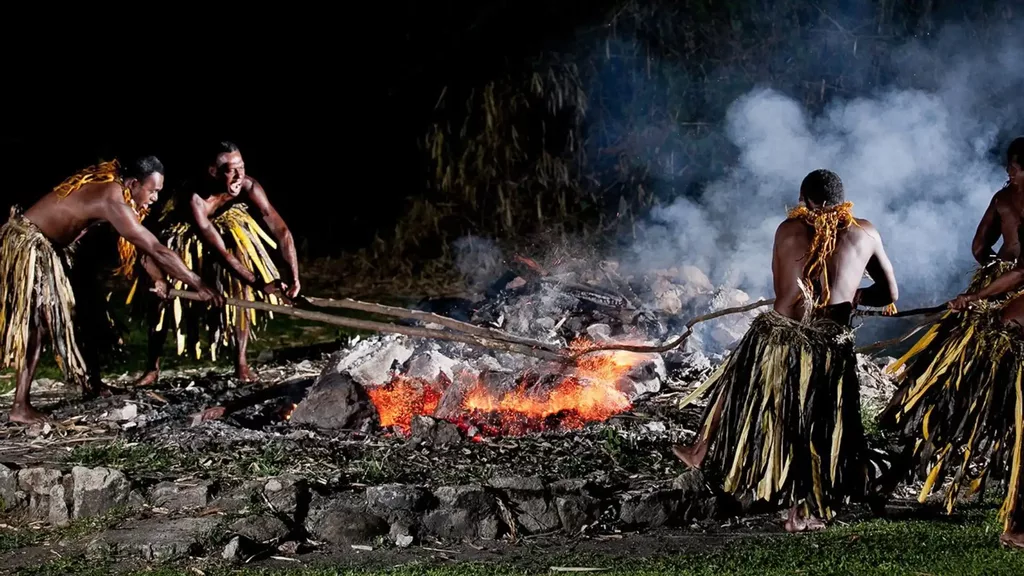
Firewalkers prepare the pit for firewalking. Picture: WWW.FIJIECO.COM
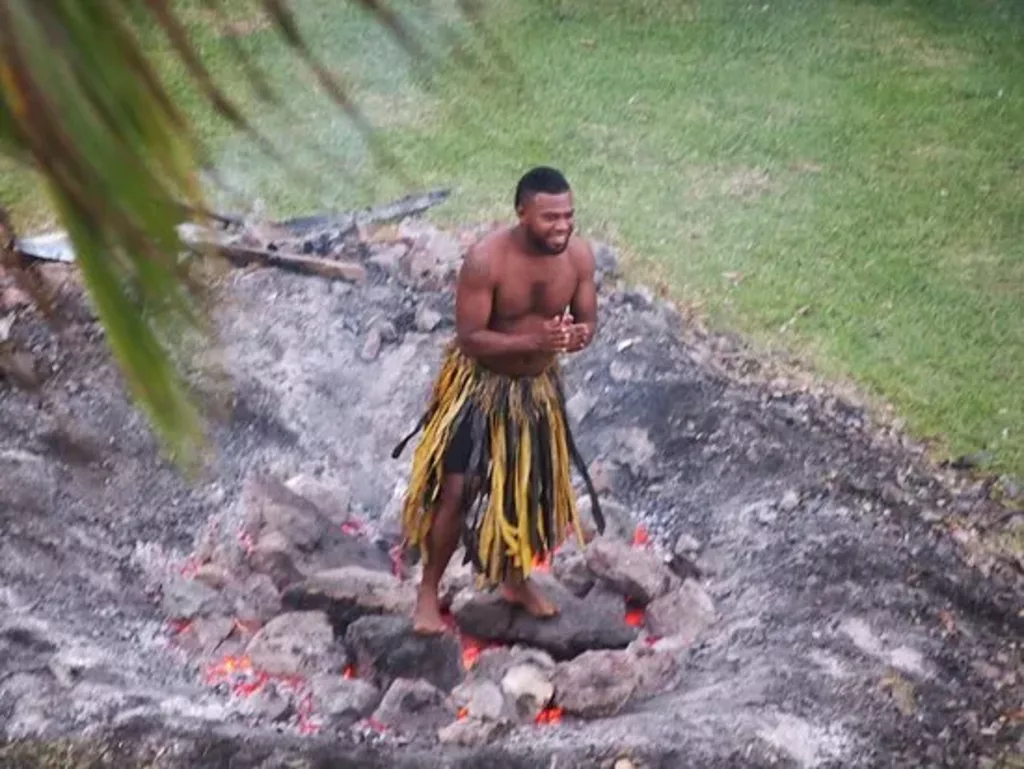
Practical restrictions were also observed before a firewalking ritual. Picture: WORDPRESS

