
THERE are two ways to watch soap operas like Shortland Street or Mirzapur or these Filipino or South Korean sagas that absorb many of us.
One way, for the devoted fanatics, is to diligently set aside the time to watch everything,as soon as the episodes are released, so that you are always fully up to speed.
The other is to look in maybe once a fortnight, check out who is alive, who is dead, who is sleeping with who, etc. This means you know just enough to follow your friends in conversation but you have saved a lot of time which you can then devote to watching – I don’t know – Super Rugby or The Decline and Fall of the Roman Empire.
For the last month or so Fiji politics has been a bit like that. You can follow the detail (and I am trying to while I do my day job). You can choose only to tune in when “sex and drugs” is mentioned (which seems to be a Fiji political thing). But what does it all mean for the rest of us?
The story so far seems to be:
- a parliamentary committee tabled a report on pay rises. The country blew up;
- then Parliament voted rapidly (taking some of its own people by surprise) to approve the pay rises. The Government nearly blew up;
- 17 FijiFirst party Opposition MPs voted for the pay rise (the other nine voted against, abstained or skipped the vote). Then the Opposition blew up;
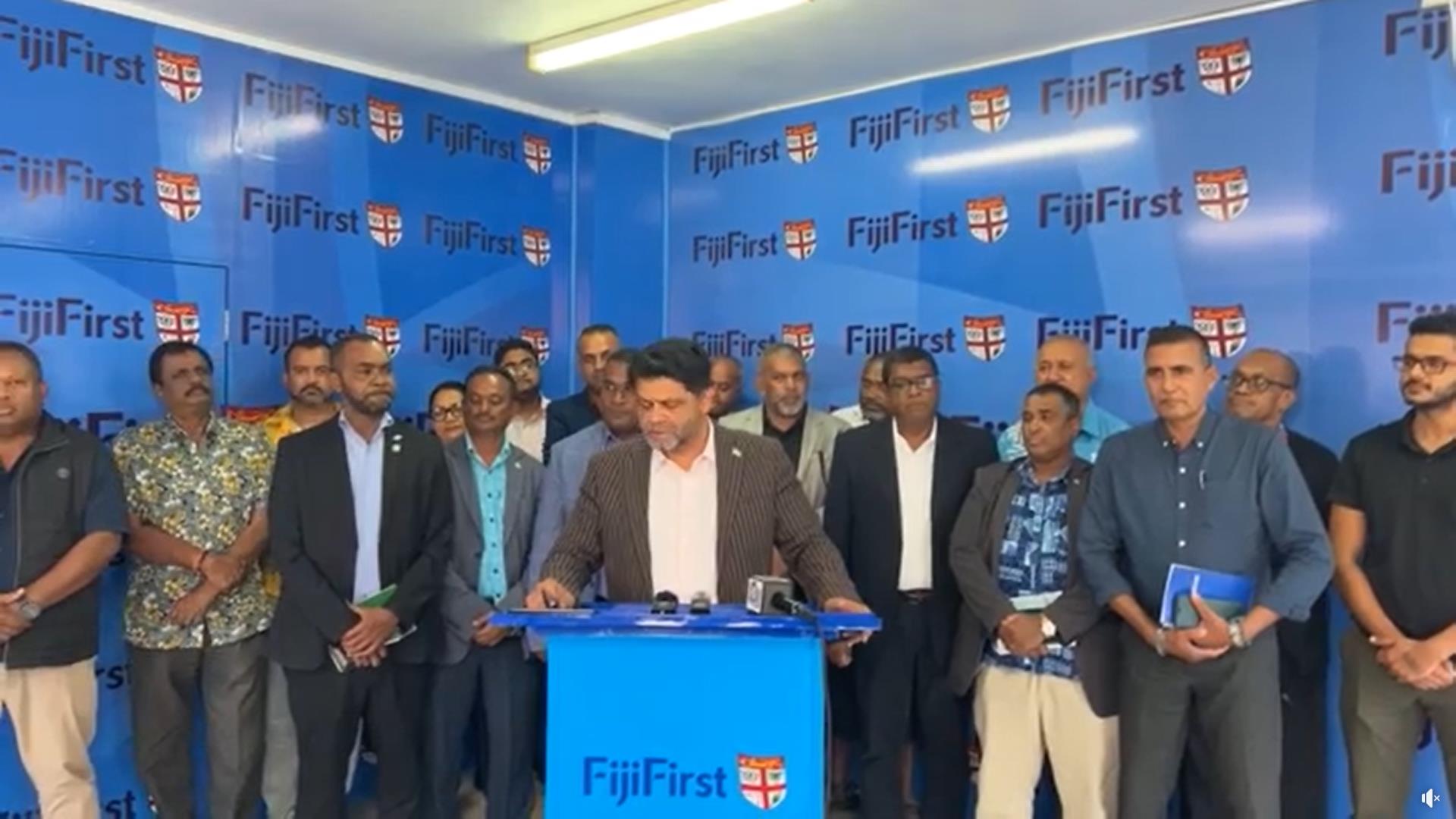
- we learned that the Opposition had been directed (from prison?) by their party leader to vote against the pay rises. So the FijiFirst secretary-general, Faiyaz Koya, told the Speaker he had to declare their seats vacant;
- then (it seems) FijiFirst party’s Leadership Committee expelled the 17 rebels – another reason under the Constitution that the 17 should lose their seats;
- some FijiFirst MPs seem to have complained to the Supervisor of Elections that the FijiFirst party constitution breached the Political Parties Act by not having proper rules on how to resolve internal disputes. So then the Supervisor directed FijiFirst to fix their constitution – and if they didn’t, she would de-register them on June 28;
- the only people who can fix the constitution – FijiFirst party’s so-called “Leadership Committee” – then decided that, rather than fix their constitution, they would all just resign from the party. This disables FijiFirst party’s power and steering and, a bit like RFNS Puamau, it runs hard up on a reef. It can’t change its constitution. That means that (unlike RFNS Puamau so far) the whole FijiFirst party blows up.
How did this happen?
We may all have our theories of how we got into this mess. Naturally, I look at it from the viewpoint of the law.
Let’s start with our fantastic Fiji Constitution, a gift from the FijiFirst party, with its “voting by numbers” electoral system. This encourages us all to treat our party leaders like cult figures, instead of voting for someone who lives in our city or province, knows our local problems, and can actually fight for us in Parliament. This, we were told, was “true democracy”.
“The reality of the matter” is that it was a Constitution written by FijiFirst for FijiFirst, riding on the cult of personality of Frank Bainimarama. It was designed to ensure that he and Aiyaz Sayed-Khaiyum could keep total control of the MPs who were elected under it.
Under s.63(1)(h) of the Constitution, if any MP voted against – or even abstained from supporting – “any direction” issued by their political party, they would lose their seats.
To take them out, the Constitution says that the leader and secretary of that political party have only to write to the Speaker of Parliament telling him that the naughty MP hasn’t followed a direction. As soon as the Speaker receives the letter, the MP’s career blows up.
That appears to be what happened in the case of the FijiFirst rebels. However, the rebels did not go quietly. Instead they seem to have told the Speaker “wait a minute, that direction to vote against the pay rises was not a lawful direction because the party didn’t properly decide it – only the leader did and he was in jail at the time” (or something like that).
There’s some question about whether the Speaker has any discretion to decide on whether MPs lose their seats. Strictly, if the rebels have lost their seats, they must take their case to the Court of Disputed Returns to rule that they are still MPs. That must be done within seven days of losing them. As far as we know the rebels haven’t done that. They appear to be betting that the Speaker will tell them they haven’t lost their seats.
So have they lost their seats? Or does the Speaker have the right to say (as the rebels say) “that direction wasn’t a lawful direction”? So far the Speaker doesn’t appear to have said anything, so we are assuming the rebels are still MPs. They certainly think so.
But the two men who started the FijiFirst party seem to have decided that, if they can’t control the FijiFirst party, no one else is allowed to. Never mind the hundreds of thousands of people who voted for FijiFirst and what they want. The two of them – and their cohorts – will just blow it up instead.
The strange world of FijiFirst
This possessiveness reflects the FijiFirst party constitution, a strange document which would not be out of place in North Korea. The “founders” of the party are four people (at least I think so, because the FijiFirst party constitution doesn’t say who they are). One of them is dead. Anyway, whoever they are, they control everything.
The “founders” decide who sits on FijiFirst party’s “Leadership Committee”. The “Leadership Committee” decides who will be on its “central executive committee”. Only the “Leadership Committee” can change the FijiFirst party constitution.
There are no annual general meetings. So what is the role of the party members? Good question. They can attend a “FijiFirst Congress” if the party ever organises one (it hasn’t). There they can pass resolutions which mean – well, nothing.
A party that told us it was bringing the nation “true democracy” turned out not to really believe in democracy for itself.
So if FijiFirst party founders leave, that’s the end of the Leadership Committee. If the Leadership Committee disappears, that seems to mean the party constitution can’t be changed. If the party constitution isn’t changed, FFP will be deregistered, gone.
For the FijiFirst party rebels, there’s a question of whether they even want the party. It is saddled with hundreds of thousands of dollars in 2022 election debts.
Now what?
Assuming they haven’t lost their seats, FijiFirst party’s deregistration means that the rebels – in fact all 26 FijiFirst party MPs, rebels or not – will be free agents. They can be independents, they can join other political parties – that’s up to them.
Now the Prime Minister is talking about a “government of national unity”. I assume he wants to draw some of the rebels into his team. That may give his original PA-NFP Coalition some options, since it currently depends on the parliamentary votes of SODELPA, the third party in the Coalition Government.
It would be nice to be able to write about how the story ended. But as of yesterday morning, when this was being written, it was still going. Of course that is the point with soap operas – they will keep going as long as there’s anyone watching.
But what lessons should we learn from all this? Let’s step back and take the long view. This series of explosions results from a combination of crazy rules in the FijiFirst party constitution, the country’s Constitution and the Political Parties Act.
We are now paying the price for letting one military dictator and his muddle-headed legal sidekick draft laws for our country – and their own party – when they thought they knew everything and consulted no one. And told us that we had “true democracy” and “equal citizenry” and it was all going to be great.
And enough people took the bait. As a country, we voted these people into office twice, and nearly again a third time. So what does that say about all of us?
- RICHARD NAIDU is a Suva lawyer. He watched Shortland Street once. The views expressed in this article are his own.

