
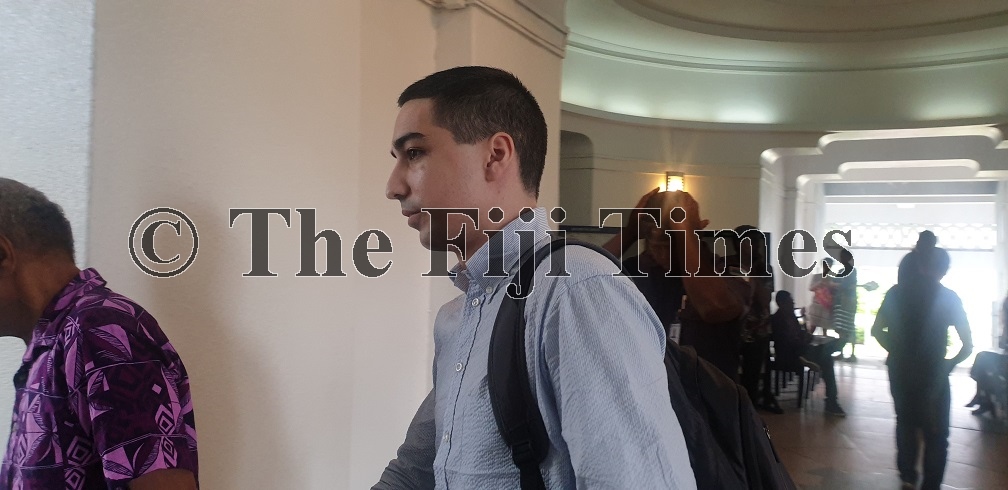
THE Fiji Court of Appeal has freed Fiji-Canadian national Joshua Aziz Rahman after finding errors in the findings of the High Court which convicted him in 2021 for possession of more than $30 million worth of cocaine.
However, Mr Rahman will face a new trial, the appeal court ordered, “as soon as possible”. The court quashed Mr Rahman’s conviction and set aside his 23-year prison sentence for possession of nearly 40 kilograms of cocaine, which were discovered at his Caubati home in 2019.
Mr Rahman had been convicted and sent to prison in October 2021, with a non-parole period of 14 years. The Court of Appeal dismissed a number of Mr Rahman’s grounds of appeal, but found that
High Court Judge Daniel Goundar had “misdirected himself” on the question of what Mr Rahman need ed to prove about whether he was unlawfully in possession of the drugs.
The evidence at trial was that police discovered the drugs in the master bedroom of the home Mr Rahman was living in.
The master bedroom was normally occupied by Mr Rahman’s father who was in New Zealand at the time of the police search.
The court said that Mr Rahman and his father were in “joint control” of the house, meaning that under s.32 of the Illegal Drugs Control Act, he was presumed to be in possession of the drugs until the
contrary was proved.
“The real issue for consideration is whether the accused (Rahman) was in possession of the drugs,” the court said. “For the presumption to apply, the prosecution must prove beyond reasonable doubt that the premises in which the drugs were found were under the control of the accused and the question whether the house in which the drugs were found were under the control of the accused is a question of fact. “The learned trial judge seems to have misdirected himself on the appellant’s burden in rebutting the presumption.
“The appellant is only required to comply with the evidential burden, that is, to show on the balance of probabilities that he neither believed nor suspected nor had reason to suspect that the substance found on the premises was an illegal drug.”

