
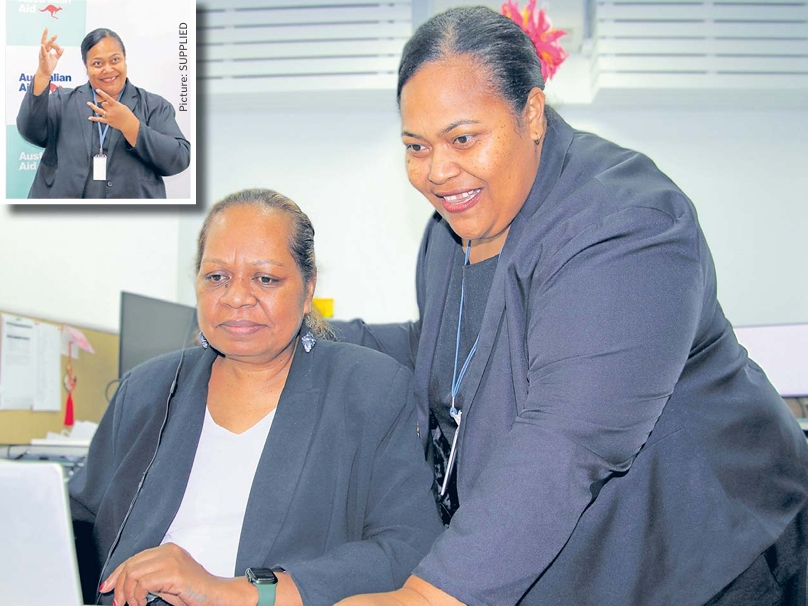
AT 3:30am, Orelia Kava’s phone rang.
On the other end was a deaf pregnant woman in labour. Stranded at home with her husband, also deaf, no transport, and no way to reach the hospital.
Orelia acted fast. She connected a nurse on duty at the Colonial War Memorial Hospital on a video call. Then she interpreted the nurse’s instructions into sign language as the woman pushed through each contraction at home.
The baby was born safely.
“I remained on the call until the ambulance arrived, then met the new mother at the hospital to continue supporting communication,” Orelia said.
“For the next two weeks, I was her interpreter and advocate. I also delivered medication, recharge cards and baby items to ensure she had full access to vital information for the safety, protection and dignity of mother and child.”
Orelia did not set out to be a sign language interpreter.
For more than a decade she worked as a hairdresser. Then in 2010, her husband died. A friend from the disability sector suggested she try sign language classes. She enrolled at the Fiji Association of the Deaf in Suva a year later, completing both basic and advanced levels.
“Sign language gave me a sense of belonging. I formed strong bonds within the deaf community, and my home became a gathering place for meetings and events. Their warmth helped me rediscover connection, purpose and healing,” she said.
She went on to work as a sign language interpreter for six years at the University of the South Pacific, alongside freelance work in hospitals and community settings.
Orelia works as a Disability Support Coordinator with the Australian Government’s Fiji Program Support Platform, supporting Disability Inclusion Specialist Lanieta Tuimabu.
“This role has deepened my understanding of gender equality, disability and social inclusion – and the importance of documentation and technical support to ensure disability perspectives are meaningfully integrated,” she said.
Fiji Sign Language has received official recognition. A partnership between the Australia-Fiji Health Program and the Fiji Association of the Deaf now ensures interpreters are available at CWM Hospital.
But gaps remain.
“Sign language is still not widely incorporated into public systems. Many deaf people remain unsupported and excluded from basic services,” Orelia said.
Too few interpreters. Limited inclusive education. Scarce employment. Stigma in workplaces, schools and hospitals.
“We need more interpreter training, inclusive policies and representation that breaks stereotypes to build a more informed society,” she said.
Orelia has spent years volunteering for Deaf-led initiatives alongside her paid work.
“This ongoing involvement has built relationships of mutual respect and shared purpose,” she said.
“Accessibility is not a privilege; it is a fundamental right. For people who are deaf or hard of hearing, equitable access to communication is essential. No one should be left behind because of communication barriers.”
*This story was originally written by Priyanka Lal and published in The Fiji Times. It has been modified for the International Women’s Day Series 2026.

