
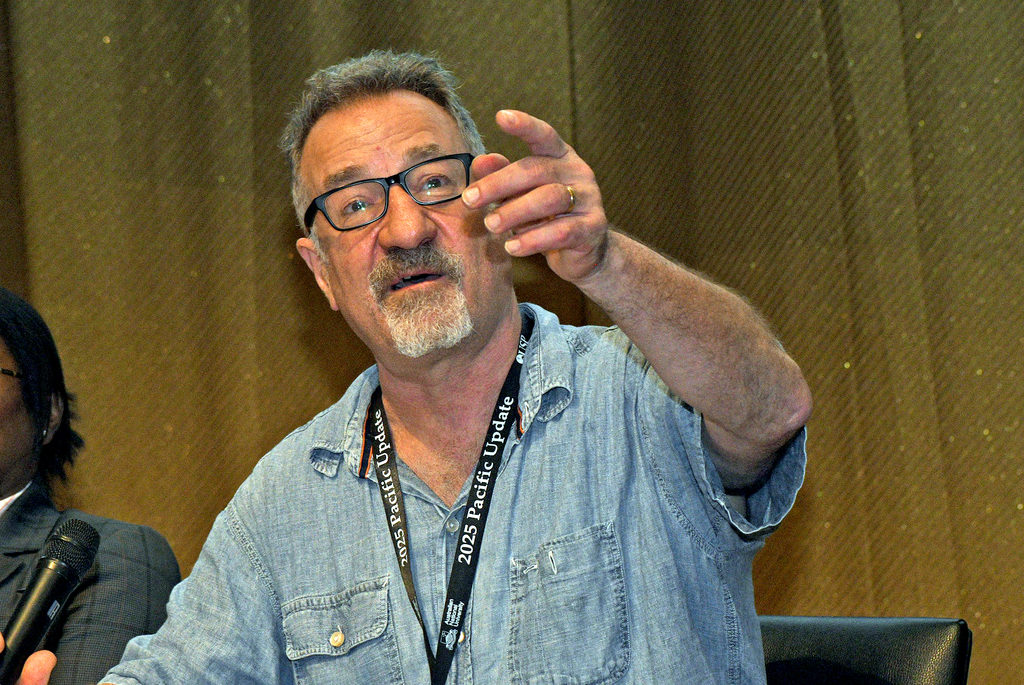
Fiji’s coup perpetrators conducted the takeovers without envisaging the full consequences of their actions, according to Professor Jon Fraenkel.
He told the Fiji Law Society convention in Nadi yesterday that each coup was followed by the abrogation of a constitution.
The Victoria University of Wellington comparative politics and international relations lecturer said what was unique about Fiji’s coups was that each coup had two basics, first was an illegal overthrow of a government and, secondly, separated in time, an illegal abrogation of the Constitution.
“That is what is unusual about Fiji,” Professor Fraenkel said.
“May 19, 2000, and then May 29, when the abrogation of the Constitution happened by other agencies.
“Then, of course, December 2006 was the Bainimarama coup and then it took years until April 2009, the abrogation of the Constitution. What usually occurs as a single phase occurs in two phases in Fiji.”
Professor Fraenkel highlighted why Fiji’s case was different from other political upheavals in the Pacific.
“I think in Fiji, the coup perpetrators have undertaken coups without envisaging the full repercussions of their actions.
“That is why in December 2006, a coup can be described as a cleanup campaign. Nowhere else has had a similar experience to Fiji.
“The only other coup in the Pacific was the June 2000 overthrow of the government of the Solomon Islands when Prime Minister Bartholomew Bar Ulufa’alu was removed at gunpoint by a joint operation between a militia group and a police paramilitary wing.
“The second phase witnessed in the Fiji coup after the removal of the government did not happen in the Solomon Islands.”

