
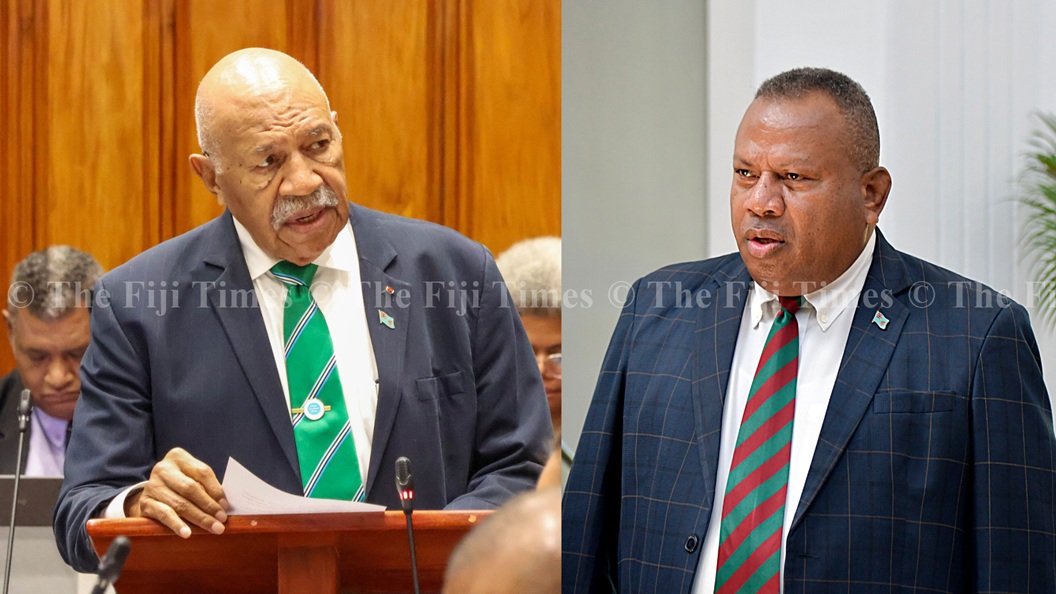
Two contrasting yet interconnected economic narratives emerged in Parliament yesterday as leaders talked about Fiji’s future development plans and the current hardships facing many households – while responding to the President’s address at the opening of the 2026 session of the Parliament of Fiji.
Prime Minister Sitiveni Rabuka outlined the Government’s long-term ambition to accelerate economic growth, announcing plans to raise Fiji’s growth target to six per cent annually by 2050.
He said this shift was aimed at transitioning Fiji from a low-income nation to a high-income economy.
“While Fiji has maintained a steady growth trajectory, our strategic objective is to mobilise Fiji to move from a low-income nation to a high-income nation by lifting the national growth target to six per cent annually by 2050,” Mr Rabuka said.
He said Fiji’s current growth performance stood at about 3.4 per cent.
“To realise this ambition, Government will pursue a coordinated strategy focused on productivity-led growth, targeted investment in key sectors such as tourism, agriculture, fisheries, manufacturing and the digital economy, improved ease of doing business, and stronger public-private partnerships.
According to the Prime Minister, achieving stronger growth would expand employment opportunities and create greater fiscal space for infrastructure, social services and climate resilience.
Government plans to focus on productivity-led growth through targeted investment in sectors such as tourism, agriculture, fisheries, manufacturing and the digital economy.
“Through disciplined policy implementation and whole-of-government coordination, we are confident that Fiji can accelerate growth in a way that is inclusive, sustainable and resilient, delivering tangible benefits for all our citizens.
However, Opposition Leader Inia Seruiratu drew attention to the immediate economic challenges faced by many Fijians, particularly the rising cost of living.
He warned that increasing prices for everyday goods were placing severe pressure on low-income households.
“The surge in the prices of goods has triggered a severe cost of living crisis which is disproportionately affecting many households,” Mr Seruiratu said.
He argued that wages have not kept pace with inflation, leaving many families struggling to cope.
“Wages have not kept pace with the rising costs of living, leading to increased financial pressure, debt and reduced purchasing power.?
Mr Seruiratu added that some families were now “skipping meals and living in overcrowded spaces just to get by”.

