
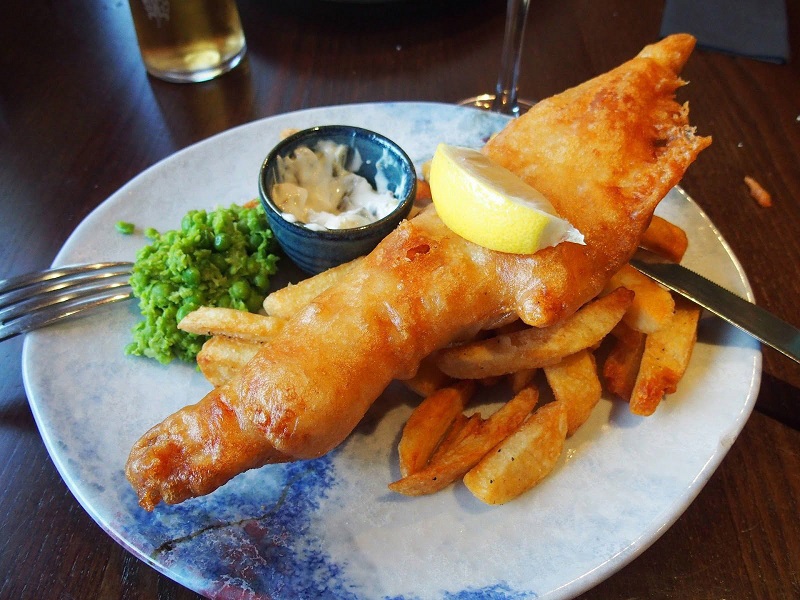
With local beer prices plummeting, now is a good time to learn how to use beer in cooking on this celebratory day for dad’s. Whilst most associate beer as a cold beverage, it just makes sense to cook with beer. Beer has more in common with a lot of the food that we eat than does that other cooking beverage. It contains grain (barley), herbs (hops), water and yeast, whilst wine contains grapes. Adding beer to a recipe can really change the character of the dish. It can enhance particular ingredients, help blend the flavours of the dish, or just add that little zing that your meal might be lacking.
Beer is a natural partner in Fijian cooking as many home cooked dishes are water-based like stews and curries. Instead of adding plain water, coconut bu water or a stock to your next wet dish, don’t be afraid to experiment with beer. You’ll be surprised at the number of recipes from around the world that include beer. Beer battered fish is probably the most commonly known recipe but there are some crazy, yet fun recipes like beer-can chicken where you shove a full can of opened beer up the cavity of the chook as it roasts. As with any alcohol you cook with, the alcohol that makes you drunk evaporates at high temperature, leaving the dish with the booze’s malty and floral undertones. Cooking with beer or wine doesn’t mean you are going to get drunk, but it will sure add more flavour to your dish.
Know your beers
Whilst most of us know which beers are our favorite to drink, learning the different types of imported beers to use in cooking will have an impact on flavour. There are three main types of beers: ales, stouts and lagers. Ales and lagers tend to be best for using in cooking, although stout has its place too, such as in some versions of Christmas pudding. Selecting the right type of beer that complements and enhances the food is important. One rule of thumb to follow is like wine––use dark beer for robust, meaty dishes and light beer for lighter fare. Generally, pale ale beer complements nearly all recipes. Beer intensifies during cooking, so a lighter tasting beer may lend more of a blended flavor than a darker beer. Strong Belgian ales can complement gamey meat dishes like a goat curry. Most meat, especially red meat dishes will require the use of dark brown ale rather than the lighter version. Fruity beers work well with desserts. Wheat ales can enhance seafood and poultry dishes. Lager beer like Fiji’s Vonu works well for baking breads because it adds levity to the dough or batter. Beer can be used instead of yeast in pancakes and some breads. The malt and hops in beers are the flavouring agents so choosing beers that are ‘hoppy’ will be reflected in your dish. Enhancing the flavour of the food is not the only role beer can have in cooking. It is also a natural meat tenderizer and a deglazing agent that can re-infuse a dish with cooked ingredients. Never cook or use beer that you wouldn’t enjoy drinking and remember that price doesn’t always dictate flavour, so if you’re not already sure, sample the beer before adding it to your dish. Finally, don’t be afraid of using stale beer in your cooking. Last night’s unfinished beer, although a rarity in a Fijian household, can be used to cook with. After all, it’s probably flat and no good for drinking anyway. And be careful of people who might have used the beer bottle as an ashtray before you pour it into your cooking.

Lighten up batter
Most of our resort kitchens aren’t strangers to the concept of adding beer to batter. It works like sparkling water to carbonate the batter mix, helping to make it more crisp, light and airy. Full-bodied beer like stout or brown ale work well in beer battered fish, but lagers like Vonu work just as well. Beer batter shouldn’t be reserved for fish – use it to coat onion rings, calamari or tempura too. Does beer batter still contain alcohol after deep frying? Most likely a tiny, teeny amount depending on the alcohol strength of the beer and how long the batter was cooking, but not enough to get you drunk or even tipsy.
Use the can
Now here’s something you don’t see every day – a whole chicken with a beer can wedged up its cavity. This rather ungainly-looking cooking method (also known as ‘beer butt chicken’ or ‘drunken chicken’) first appeared at a U.S. state fair where annual BBQ competitions force competitors to get very creative. Proponents of this method say that opening the upright beer can allows the contents of the can to evaporate and keep the meat moist during cooking. Critics argue it’s just a gimmick that has no merit in food science, and is just a waste of beer. But it sure is worth a laugh at home!
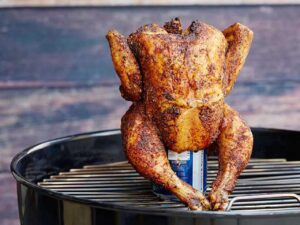
popular in the US. Picture: LANCE SEETO
In marinades
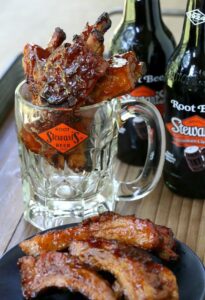
Beers work awesomely well in meat marinades when combined with anything sticky like honey, molasses and maple syrup. Add some ketchup, mustard and herbs to create a deep-flavoured marinade you can use on ribs or a chunk of meat for the lovo. I’ve used this method on Fiji Day. Instead of wrapping naked pork or lamb shanks in leaves, I instead wrap a large, deep tray full of meats and beer marinade, and drop this into a lovo pit. When you eventually uncover your lovo, the combined smells of wood fire and sticky, sweet smell of a beer marinade is something that is unforgettable.

gives the pulses added depth of flavour. Picture: LANCE SEETO
Go Jamaican
If you think that the liquid gold of beer only works with red meats then you probably haven’t heard of Jamaican beer-grilled fish. This herby, piquant beer marinade is rubbed into the sides of a whole snapper and combines to create a Caribbean seafood sensation. Jamaica has a lot to share with us in terms of food and use of beer and rums in much of their stews, grilled seafood and dehydrated jerk meats.
Braised with lentils
Lentils and dhal are an integral part of Indo-Fijian cooking and are generally cooked with plain water but their flavour absorption ability means they can be cooked in many other liquids including beer. This made-in-heaven marriage allows the malted grains in the beer to eventually caramelize to give a sweet, toasted flavour whilst the hops balances this sweetness with some bitterness, much the same way herbs balance out a stew.
With the lowering of taxes on alcohol during COVID, beers and wines have become more affordable to use in cooking. Virtually any recipe that calls for a liquid could be replaced with beer. You just have to convince the beer drinkers in the house that you want to use their precious liquid gold in your cooking.
Happy Father’s day.
* Lance Seeto is owner/chef at KANU Restaurant in Martintar, and host of FBC-TV’s Exotic Delights

