
TWENTY years ago, Merina George was a young classroom aide walking home with bruises and bite marks on her arms. She wondered why the five-year-old she was assigned to support went from calm one day to violent the next.
“I would ask myself every day what I was doing wrong,” she said.
“He would bite, hit, and sometimes I felt completely lost. Nothing in my training prepared me for it. I would go home exhausted and crying, asking myself if I was failing him.”
At the time, autism was rarely spoken of in Fiji. Children who struggled in school were often labelled slow, naughty, or not all there while families had little access to support.
“I thought autism was something you only saw overseas,” Merina said.
“But when I look back, those children were here all along. We just did not have the words, and families had nowhere to turn.”
That realisation prompted her to leave the classroom and commit to one-on-one work with families, visiting four or five homes a day.
“I would go into homes and see children having meltdowns while the parents were confused or scared. I had to learn on the spot, figure out what to do, and keep going. Sometimes it felt impossible,” she said.
“But I kept thinking, if I do not do this, who will?”
Her work became deeply personal when her own son, Paul, began showing similar signs.
“I knew the behaviours, I knew the meltdowns, the self-injury. But because he was mine, I did not want to accept it,” she said.
“I tried to ignore the signs. I kept saying, maybe it is just a phase. But deep down, I knew.”
Paul was eventually diagnosed at almost five years old, and the therapy that followed was intensive and exhausting.
“I carried out most of his therapy myself,” Merina said. “Hospital visits were frequent, and every day was a challenge. I had to be consistent, even when I was tired, even when I wanted to give up, I did it because I had to.”
Today, Paul is talkative, curious, independent and outspoken.
“I watch him now and I think, we made it,” Merina said. “All those years of struggle, all those moments I doubted myself, it worked. And that is why I can do this for other families too.”
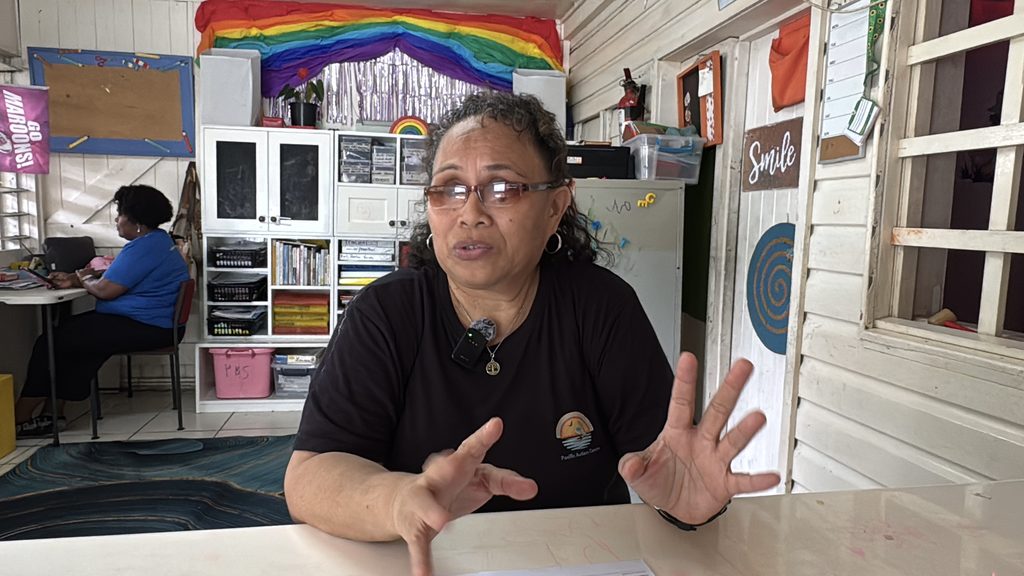
Those years shaped her decision to create the Pacific Autism Centre, one of the few centres in Fiji dedicated to supporting children on the spectrum.
“I wanted a space where children could be themselves, where families could come without fear or judgment. It was not easy. For years I worked without proper resources, without capital, just hoping to make a difference.”
She established the centre, and with the support of her co-founder Josefa Baleinukulala, they expanded programmes to rural communities.
“Some families live far from Suva or Nadi, and they think help is out of reach. We take our work to them because every child deserves support,” she said.
Cultural beliefs often add challenges, she said, with some families convinced their child’s condition is linked to witchcraft or bad luck. Others worry they are to blame for their actions during pregnancy.
“I approach families slowly. I tell them, look at the other children, see what is possible. When they see it themselves, they start to understand. Then we can talk about diagnosis and therapy,” Merina said. “It takes patience, but it is worth it.”
During COVID, a video went viral claiming mobile phones caused autism, sending families into panic. “I got calls almost every day from worried parents – it was exhausting trying to reassure them but it had to be done. Families need the truth.”
Inside the centre, Merina begins each day thinking about the children she will see. Some arrive eager, others distressed. She moves between them calmly, guiding teachers and supporting children in real time.
“Connection comes first,” she said. “You cannot correct a child you are not connected to. When they feel safe, they respond. That is how progress happens.”
She emphasises that parents are the child’s best therapists.
“We have the children for a few hours a day. The rest of the time they are with their families. If parents apply what we teach, the child flourishes. When it does not happen, we see it immediately,” she said.
Merina’s dedication goes beyond therapy. She monitors trends, corrects misinformation, and advocates nationally for better awareness and support.
Her work is both professional and deeply personal.
“Before I even get here, I am thinking about them, the ones who come through the gate crying, the ones who run straight to class,” she said.
“They feel your energy. When a child who struggled comes back and hugs you, that is what keeps you going. That is why I do this every day.”

