
ALTHOUGH 94 per cent of hospitals in Fiji have basic water services, it does not reflect the reality in frontline clinics where access is often limited, says Health Minister Dr Atonio Lalabalavu.
While commissioning three water sanitation and hygiene (WASH) projects in Namau, Ba, he cited the 2024 WHO UNICEF Joint Monitoring Program which highlighted some of Fiji’s healthcare needs.
“While infrastructure progress has been made in healthcare facilities around the country, conditions in clinics and nursing stations remain uneven,” he said.
“According to the 2024 WHO–UNICEF Joint Monitoring Program, although 94 per cent of hospitals in Fiji have basic water services, this does not reflect the reality in frontline clinics, where access is often limited or unreliable.
“In addition, 79 per cent still have toilets that are broken, blocked, without water or unsafe and only 42 per cent have basic handwashing facilities with nearly a quarter lacking these services altogether,” he said.
“These gaps place mothers, newborns, children, patients and healthcare workers at risk.”
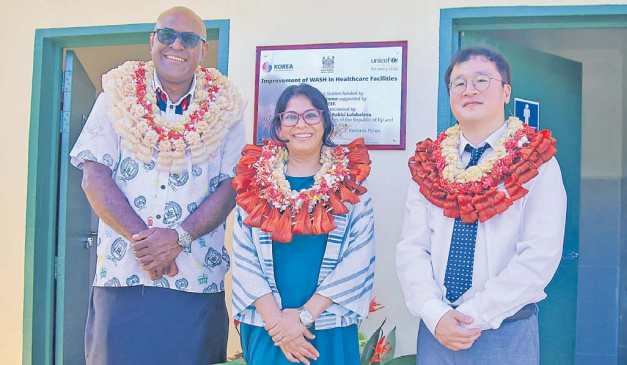
Mr Lalabalavu said the newly-upgraded WASH facilities for the Namau Nursing Station, Balevuto Health Centre and Nailaga Health Centre had restored water supply systems, increased water storage capacity, separate toilets for women, men and people living with disabilities with improved handwashing stations.
“Together these improvements will benefit more than 11,000 people living in the communities served by these clinics including around 3000 children.”
The Health Minister said funding for these projects was part of the Korean government’s larger $US30 million ($F65,575,500) global support to UNICEF under the Access to COVID-19 Tools Accelerator Phase 2 initiative.

