
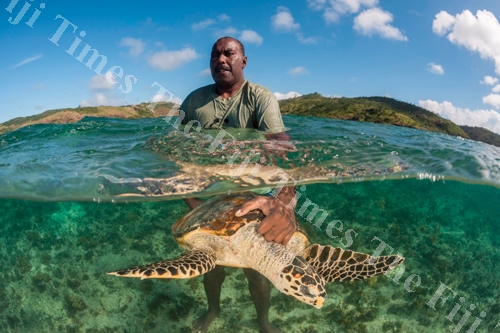
The effect of climate change on the depleting populations of sea turtles is a growing concern, says World Wildlife Fund for Nature – Pacific.
To mark World Turtle Day on Sunday, a statement from WWF-Pacific stated climate change impacted marine turtles in a number of ways.
“The first is what is referred to as temperature-dependent sex determination, in marine turtles their sex is determined by the temperature of the developing egg once it is laid,” WWF-Pacific said.
“If the heat of the sand where it is laid is above 31°C, the majority of the turtles hatchlings will turn out female, below 28°C then the majority are male.
“As climate change continues to increase the likelihood of hatchings turning out female, it will reduce the turtle population’s ability to perpetuate.
“The more obvious and pressing concern for Pacific Islands such as Fiji is the observed loss of beach areas and with it where marine turtles can nest in future. To understand the implications of climate change on beach erosion and turtle nesting sites in Fiji, WWF-Pacific conducted a beach erosion assessment of 12 known nesting beaches on the islands of Yadua, Kia and Katawaqa which lie along the Great Sea Reef to the north of Fiji.”
WWF-Pacific’s coastal fisheries officer Laitia Tamata said the findings of the research showed and confirmed the negative change caused by climate change, increasing intensity of storms, sea-level rise which all cause a drastic change in beach morphology and ability of turtles to nest and the viability of the nest themselves, by remaining undisturbed allowing eggs to hatch.
Mr Tamata said: “Losing the nesting habitat to erosion due to sea-level rise and frequent strong storms would displace hundreds of these species.”

