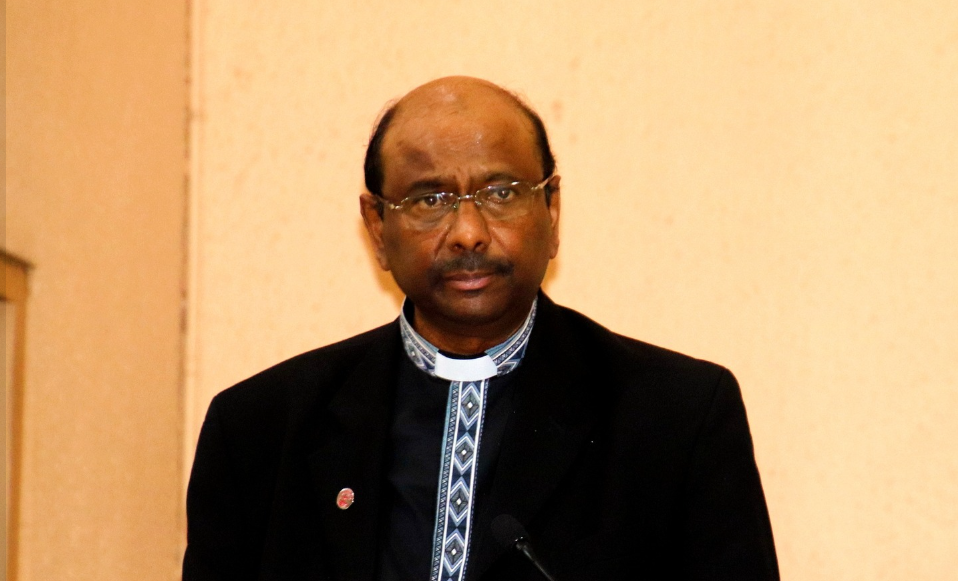
The General Secretary of the World Council of Churches, Jerry Pillay, says the message of Christ resonates deeply in the Pacific, where communities live with both the blessings and dangers of the ocean.
Speaking in Fiji during a Pacific Council of Churches meeting, Rev. Prof. Dr Pillay reflected on the region’s unique realities.
“For many Pacific peoples, the ocean is both life and danger,” he said.
“It feeds, connects, and sustains—but it can also threaten and overwhelm.”
Drawing parallels to faith, he said life carries both blessing and fear, but Christ remains present through it all.
“To see Jesus in a Pacific context is to recognize Him as present in the midst of the storm—not absent from it,” he said.
Pillay emphasised that faith is not about avoiding suffering, but understanding God’s presence within it.
“The true Christ is known by His scars… God meets us in suffering, not apart from it,” he said.
He said this message is especially relevant in the Pacific, where communities carry historical and ongoing challenges.
“Many islands carry wounds—of colonisation, displacement, loss of land… and climate catastrophe,” he said.
However, he noted that these struggles do not define the future.
“The scars remain, but they no longer define the future… they become testimonies of God’s goodness and presence,” he said.
Pillay also highlighted the importance of storytelling in Pacific cultures.
“The story of Jesus’ wounds is God’s story of love—a story that meets our own and transforms it,” he said.
He concluded that faith must lead to action.
“Seeing Jesus is never just a private experience… it leads to mission,” he said.
“When we truly see Jesus, we are changed.”