
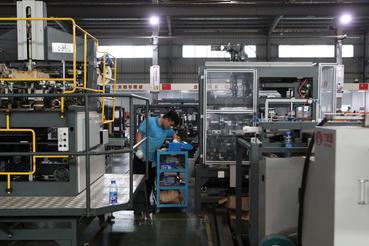
(Reuters) – China’s campaign to boost loans to small firms was supposed to support the economy during its biggest slowdown in decades, but banks’ reluctance to lend has left exporters and manufacturers in its southern industrial belt struggling to pay the bills.
Despite prodding from Beijing, several bankers have told Reuters they have little appetite to lend to smaller companies due to the uncertain economic outlook, the U.S.-China trade war and a years-long drive to purge risks from the financial system.
That has chilled credit flows to private sector firms, undermining stimulus measures that were designed to cushion the impact of slowing demand.
In the southern city of Dongguan in Guangdong province, one of the country’s major manufacturing hubs, some small firms are moving production overseas in the face of operational and financing challenges.
“These days the most discussed topic – something that we always talk about in meetings – is whether we should move to Vietnam. Many of my clients have moved there,” Li Jiajun, the chief financial officer at Guangdong LiShun Yuan Intelligent Automation Co., told Reuters.
LiShun, which makes paper box packaging machinery, lost financing from two of its four banks in the second quarter, halving its total credit line to 10 million yuan ($1.5 million).
One of those two banks – both are mid-sized – blamed its tighter lending policy on the first half’s economic climate, while the other said its local branch was banned from approving new loans due to a spike in bad debts, he said.
As a result, the company, which expects to generate 250 million yuan in revenue this year, is delaying orders worth nearly 20 million yuan following the cut and taking “defensive measures” – slashing its payroll by 40% and selling equity to raise funds.
“Government policy and implementation on the ground are still somehow disconnected. It’s not so easy – at least, I haven’t enjoyed much benefits so far,” Li said of China’s efforts to boost lending.

