
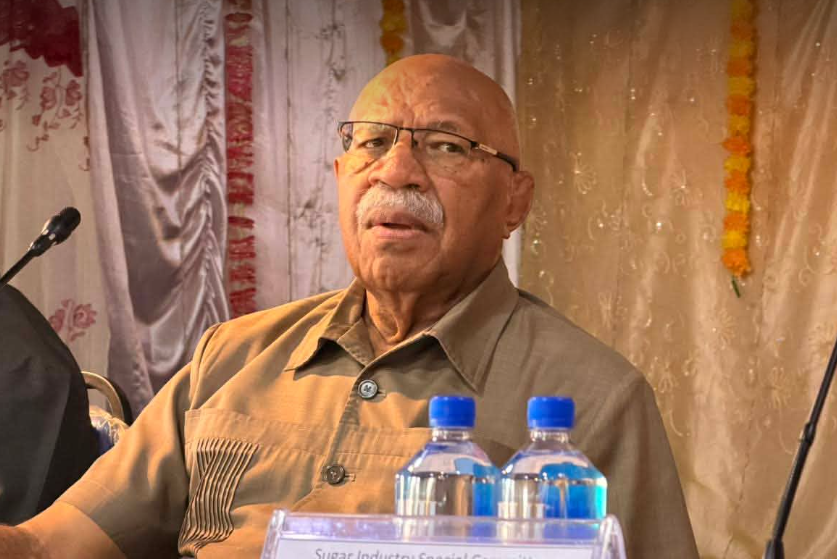
Prime Minister Sitiveni Rabuka says Fiji must take a fresh look at the future of the sugar industry, urging a shift from exporting raw sugar to developing value-added products and strengthening regional markets.
Speaking on the industry’s future, Mr Rabuka said Fiji could no longer rely solely on the international demand for raw sugar, including exports to the European Union.
“What is the future of sugar – is it just to provide raw sugar for export, or do we now have to look at developing value-adding to our sugar,” he said.
He said Fiji had the opportunity to create greater economic returns by investing in downstream processing and refining sugar for regional markets.
“This can provide a new direction for the industry while allowing Fiji to make greater use of its sugar production.”
Mr Rabuka’s comments come as Government, farmers and industry stakeholders continue to examine ways of improving the long-term sustainability of one of Fiji’s most important agricultural sectors.
He said greater emphasis should be placed on creating more value from sugar production rather than depending primarily on raw sugar exports.
The Prime Minister also acknowledged the ongoing challenges facing sugar production in the Western Division and said Government may eventually consider gradually reducing production there if conditions continued to deteriorate.
However, he stressed there were no immediate plans to close the sugar industry in the West.
His comments followed remarks by The People’s Alliance party president Ratu Josefa Dimuri, who suggested Government should consider scaling down the sugar industry in the West and place greater emphasis on expanding production in the North.
Mr Rabuka said the North held significant potential for sugar production as well as other agricultural activities.
He added that if sugar production in the West became increasingly difficult, it could be phased down gradually while alternative agricultural industries were developed alongside it.
“We can slowly tone it down and have it replaced at the same time.”
Mr Rabuka said any future transition would need to protect the interests of landowners and operators while ensuring that new agricultural opportunities were created to support rural communities.

