
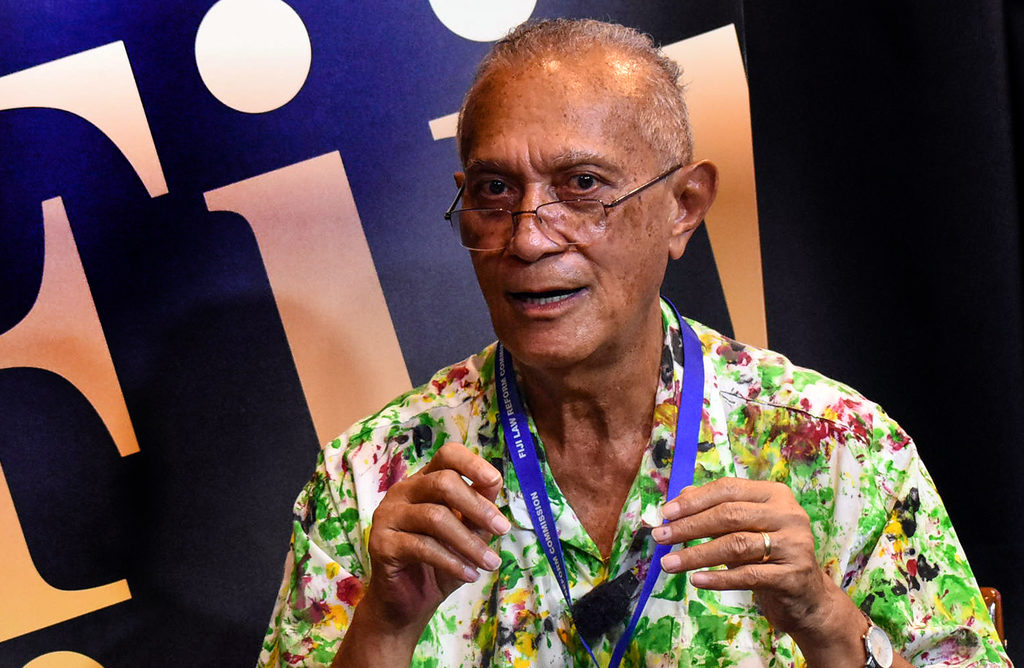
Fiji’s electoral system does not foster a genuine connection between voters and their representatives.
Speaking on The Lens@177 Electoral Law Reform Commission chairman and former chief justice Daniel Fatiaki questioned whether the current model allowed voters to truly know and identify their MPs.
Drawing comparisons with past electoral models, Mr Fatiaki noted that older systems encouraged greater familiarity between the electorate and their representatives.
“The current system is unfamiliar to those from my generation,” he said.
“We grew up with constituencies where we voted for someone we knew — someone who lived among us, represented our interests, and was accountable to us.
“In contrast, today’s voters often struggle to identify their MPs. If you ask them, ‘Who is your MP?’ many will look confused and say, ‘I don’t know.’
“They may only remember writing down a number on the ballot paper.”
He indicated that the commission may consider provisions from the 1997 Constitution, which allowed for elections in separate constituencies.
“We are open to considering anything.
“That was a system we were familiar with. I voted under it, though it had its complexities, such as the ‘above the line’ and ‘below the line’ voting system.
“Our goal is to simplify the process, making it more user-friendly rather than an obstacle to voter participation.”
Mr Fatiaki also outlined a possible approach to avoid voter confusion if multiple votes were allowed under a new system.
“If multiple votes are allowed, we propose separate ballot papers for each vote, with clear colour-coding. This eliminates confusion and ensures voters know exactly what they are doing. Our aim is to make elections more accessible, not to create barriers.”

