
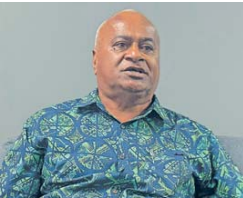
Traffic congestion along the busy Suva–Nausori corridor is being worsened by bus drivers making unscheduled stops and failing to properly use designated bus bays, Assistant Minister for Transport Naisa Tuinaceva said.
He confirmed that the Land Transport Authority (LTA) is stepping up enforcement to clear bus stops and prevent buses from blocking traffic during peak hours.
“LTA is doing their part by trying to clear the bus stops along the corridor to allow for a free flow of traffic,” Mr Tuinaceva said.
“In the past they were not there, and we see a lot of these buses blocking up the bus stops, not parking or stopping in a way to allow the flow of traffic.”
The crackdown forms part of the ministry’s fourth phase of congestion management, set to begin next week. Earlier phases included clearing outer lanes at traffic lights to ease movement.
“If you go down the Suva–Nausori corridor, you will see some of these traffic lights and outer lanes have been cleared to allow for the flow of traffic, even if there is a red light.”
The next phase will introduce smarter traffic light control and improved junction management, particularly closer to Nausori. Additional police officers will also be deployed at key intersections.
Mr Tuinaceva said the combined measures aim to improve efficiency and reduce delays for commuters along one of Fiji’s busiest corridors.
Ministry eyes ‘shifted school, work times’
THE Ministry of Transport is exploring staggered working and school hours to ease congestion along busy corridors, including the Lami-Suva and Suva- Nausori routes.
Assistant Minister for Transport Naisa Tuinaceva said careful planning must be done first before introducing changes to school or work schedules.
He said the ministry aims to combine these scheduling adjustments with other traffic management measures to improve commuting times.
“What we are targeting right now is the travelling time. That’s the important thing,” he said.
Mr Tuinaceva said the goal is to reduce travel times for long-distance commuters from more than one hour to around 40 minutes.
He added that ongoing initiatives such as smart traffic light control and police deployment at key junctions complement these measures.
“These are all the things our government is looking at, both in the meantime and in the long term as part of our road congestion traffic solution.
“We are working to try and clear the road as quick as possible.
We want to ensure that the travelling time for the various locations improve.”
Mr Tuinaceva said that by adjusting work and school times and improving traffic management, daily travel will become easier and more reliable for drivers and bus passengers.
Commuter behaviour key to tackling traffic, says Minister
TRAFFIC congestion is not only a matter of roads and vehicles but also commuter behaviour, says Assistant Minister for Public Works, Meteorological Services, and Transport Naisa Tuinaceva.
Mr Tuinaceva said understanding patterns is key to managing peak-hour congestion.
“Some of them are already on the road between 5.30am to 6am,” he said.
“It is the same with those living in Koronivia.
“They are the ones that come quickly because the mindset is there, that we need to come out early to reach Suva or wherever the destination as early as possible.”
He said authorities have observed that commuters from outer areas, including Koronivia, Sawani, and Makoi often start their journey early to avoid delays, while those living nearby enter the road later creating waves of congestion.
“The other pattern that normally forms are the ones going from Makoi down to Nabua.
“These people will start coming into the road around half past six to seven and it leads to a traffic jam.”
He said the ministry has also adjusted traffic lights, lane management, and police deployment based on these patterns.
“We need to understand that pattern and behaviour. What we are doing now with the police and also with the Fiji Roads Authority is to see if we can put more of our resources on the road around that time to put control and to allow the flow of traffic.”
He said that by taking into consideration commuter behaviour and introducing targeted measures, travel times will improve significantly especially for those travelling long distances during peak hours.

