
WHEN Fiji stood on the brink of collapse in 2000, a small group of concerned citizens confronted a hard truth: a nation could not be built on the kind of leadership that had helped to bring it down.
Those events from 25 years ago were deeply unsettling. It underscored the urgent need to find a better way forward.
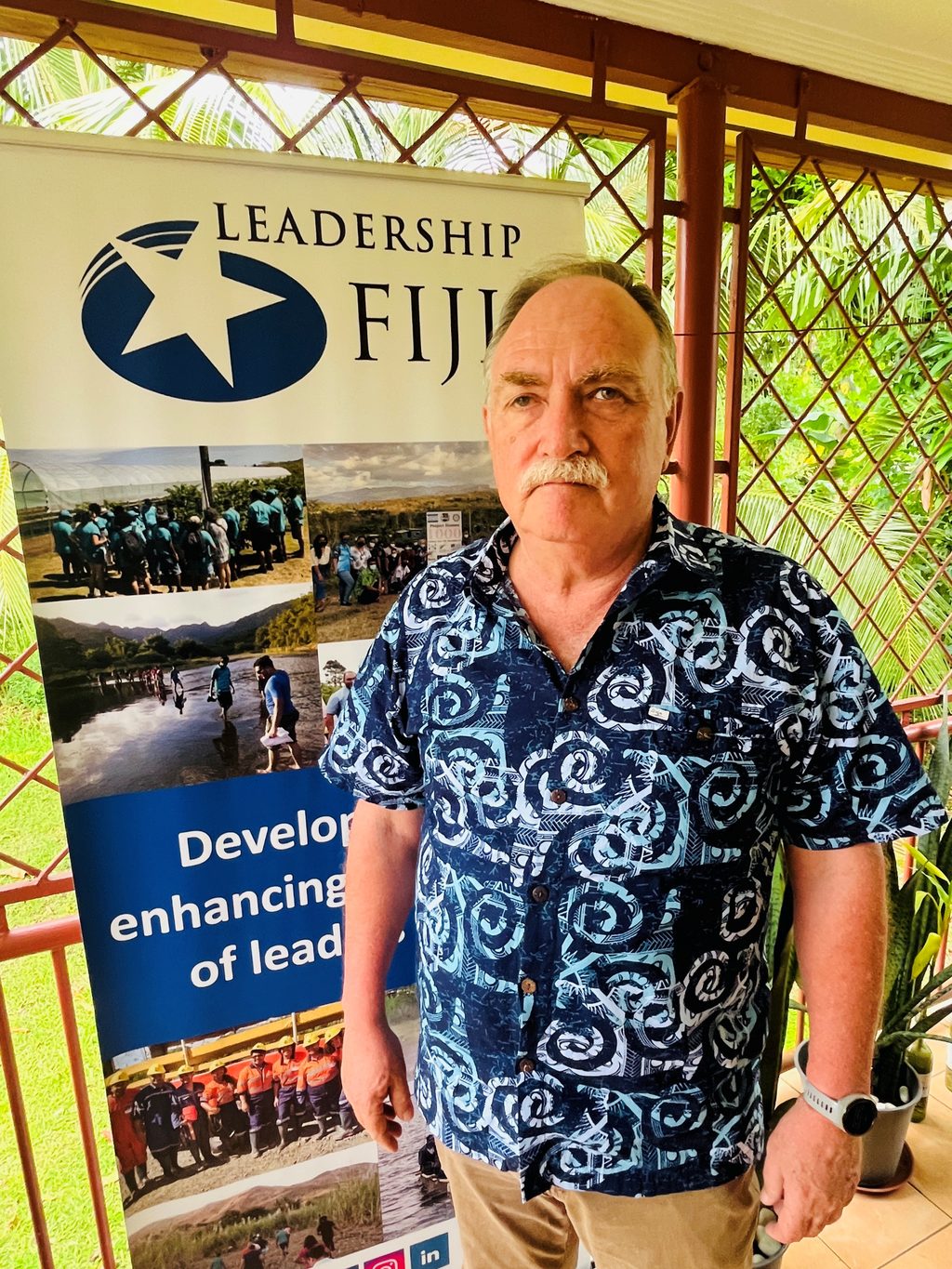
Leadership Fiji’s founding member and current chairman, William Parkinson believed the country had to invest in a new generation of leaders.
As a Fijian, he said the country needed individuals who understood democracy, respected the rule of law, and were equipped to guide a modern, multi-racial and multi-religious nation state.
That conviction became the foundation for what would eventually be known as Leadership Fiji.
The early conversations around starting a program were uncertain but intentional.
Then came a pivotal moment, Andrew Fairley who had been working in Fiji, introduced the group to a leadership development model operating in Melbourne under the banner – Leadership Victoria.
This offered a practical framework for training future leaders – one that could be adapted to Fiji’s context. The group met, explored the model and began shaping a local version.
Daryl Tarte stepped forward as founding chairman, guiding the organisation through that formative period.
Soon after, Sufi Dean became the first executive officer and later travelled to Melbourne to study the program in detail. Inspired by what they saw, the team helped design a Fiji-specific program almost immediately upon their return.
By 2002, the first cohort began its journey and Leadership Fiji was born.
From a single cohort to a national network
Over the past 25 years, Leadership Fiji has evolved steadily while remaining anchored to its original principles.
The core philosophy, drawn from the Victorian model, focuses on community leadership.
“Leadership does not operate in isolation – it functions within a broader national and social system,” Mr Parkinson said.
“As professionals climb higher, their focus tends to become increasingly specialised like for example an accountant may become highly qualified in finance yet lack an understanding of how the country functions as a whole, how institutions interconnect, or how leadership extends beyond a single profession.”
Leadership Fiji was designed to address that gap.
It brought in mid-career professionals and immersed them in a year-long exploration of leadership principles and national systems.
“This is often where the problem is and so that’s really where the idea behind Leadership Fiji came from,” he said.
“We bring in people mid-level within their careers, and we effectively educate them in the principles of good leadership. We also educate them about their country, how it works, how it functions and that ranges from the history of Fiji to the health system, to the economy, to all sorts of issues.
The cohorts also travel throughout Fiji, undertaking in-depth visits learning about communities. They emerge with a deeper understanding of Fiji’s complexity and their place within it.
Cohorts
The first cohort in 2002 was compact, numbering just over 20 participants. Organisers had to actively recruit candidates.
In hindsight, the selection proved fair-sighted. Alumni from those early years now occupy senior roles across Cabinet, the judiciary, the commercial sector and civil society. Today, cohorts number between 27 and 30 participants annually, and the alumni network has grown to more than 600 leaders across Fiji and the region.
Central to the Leadership Fiji mission is diversity, so each cohort is deliberately drawn from different sectors, ethnicities and professional backgrounds.
They spend a year together on what Mr Parkinson describes as “an emotional journey”.
In the program cohorts form a strong bond which is often drawn from their strength — diversity.
Leadership as action,
not position
As the organisation matured, it adapted the imported model to suit Fiji’s unique environment. One defining feature is its emphasis on community-based change.
“Based around the fundamentals, leadership is about change — it’s about effecting change. Not only at national level, in cabinet, or in senior levels but also in community.
“People by nature resist change. It’s almost an instinctive thing.
“One of the skills that we talk a lot about, and we’ve worked a lot on within the program is getting them to understand the process of taking people through change.”
Understanding how to guide individuals and groups through that resistance has become a central skill taught within the program.
Each cohort is required to translate theory into practice, and they undertake community projects during their program year.
To earn fellowship status the following year, they must independently design and execute projects outside the formal framework of Leadership Fiji.
They coordinate among themselves, mobilise resources and engage communities — learning firsthand how complex the process of change can be.
Over the years, cohorts have worked on projects in Suva, Ovalau, the Western Division and across Vanua Levu.
Many initiatives are practical and community-based: constructing bus shelters, building recreational areas for patients at St Giles, upgrading marketplaces, renovating village halls or creating education spaces for students.
Mr Parkinson said that a recent group explored establishing a tutoring centre in the Nausori Highlands.
He said those projects test the cohorts’ coordination, resilience and collaboration, reinforcing the principle that leadership is defined by action.
Remaining relevant in
a changing nation
While the flagship program remains intentionally intensive and selective, Leadership Fiji has sought ways to extend its reach.
After 25 years, its alumni network is strong but still relatively small in proportion to the population.
In response, the organisation launched an Executive Leadership Program.
Tailored to chief executives and senior leaders, the format accommodates demanding schedules while maintaining depth.
It also opens participation to expatriates living in Fiji, broadening the exchange of perspectives.
“That is one attempt to broadening it out and we’ve already got quite an impressive group of alumni from that program,” Mr Parkinson said.
Youth engagement has also become another priority for Leadership Fiji.
“We’ve done a number of programs aimed at youth. In the past, we have had a group of alumni who have gone out and done school prefects training.
“This year we are expanding that into a youth leadership training series.
“Prefects is a group, but we recognised that young people are running all sort of different types of organisations across the community and so we are going to run a series of weekend seminars aimed at those groups of people.
“We hope to do about 200 youth leaders across the country this year as our initial goal.”
The program recognises that leadership is not confined to formal titles but is exercised in student bodies, community groups and grassroots organisations.
Also, there are short term courses for corporate and public sectors that hope to further extend their organisation’s impact.
Leadership Fiji offers them focused training on leadership principles and managing change.
A vision for the future
the memory of 2000 remains a quiet but constant reminder of why the work matters and building a cadre of leaders who understand democratic principles and the rule of law is a long-term safeguard.
Looking ahead, his vision is expansive.
He hopes for a nation where leadership becomes instinctive, where citizens confronted with problems ask how to solve them, rather than simply criticise from the sidelines.
For Mr Parkinson and his fellow founders, the mission remains unchanged: to nurture leaders who understand Fiji in all its diversity and complexity, and who are prepared to serve it with integrity.
In a country still evolving, Leadership Fiji’s journey reflects an enduring conviction — that the surest way to secure the future is to prepare those who will lead it.

