
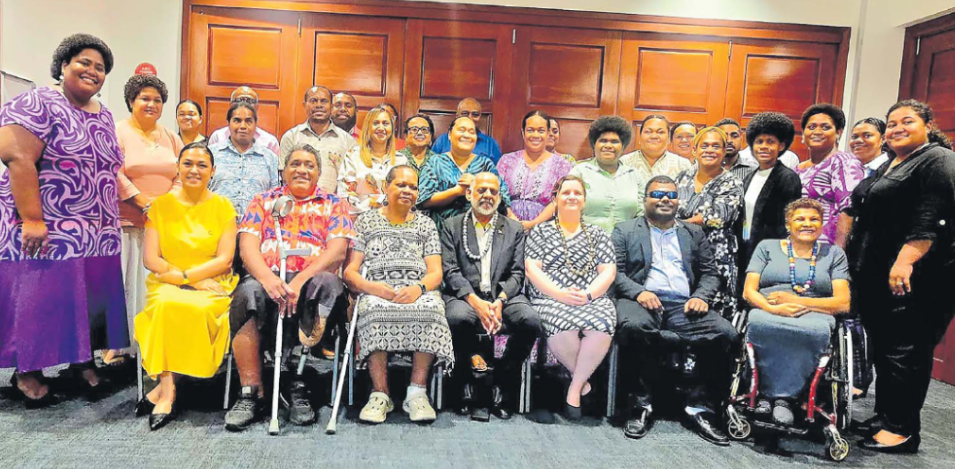
THERE was mounting support for employers to adopt the Inclusive Employment Guidebook during a national consultation conducted by the Ministry of Employment.
Speaking at the consultation, Minister for Employment Agni Deo Singh said the engagement went beyond reviewing a document and focused on strengthening a shared national commitment to ensuring that all people, regardless of ability, have fair and meaningful opportunities to contribute to the economy and society.
“The guidebook itself is a ‘landmark resource’. It has been developed to provide employers with practical tools to foster workplaces that are equitable, inclusive, and safe for persons with disabilities,” Mr Singh said.
“This national consultation is aimed at engaging key stakeholders to discuss and validate the Inclusive Employment Guidebook, ensuring it is practical, inclusive, and responsive to the needs of both workers and employers, particularly persons with disabilities.”
The consultation focused particularly on addressing the realities faced by persons with disabilities in the workforce, while ensuring employers are supported with clear and applicable guidance.
According to Mr Singh, the guidebook translates existing legal rights into practical measures, including accessible recruitment practices, workplace adjustments, inclusive workplace culture, and safe working conditions in line with health and safety legislation.
“Fiji’s legal and policy framework already provides strong protections against discrimination. Under Section 6 of the Employment Relations Act 2007, discrimination on the basis of disability in recruitment, employment terms, promotion, or termination is prohibited, and employers are required to provide equal opportunity and equal remuneration for work of equal value.”
He noted that the Rights of Persons with Disabilities Act 2018 further reinforces these protections by recognising the right of persons with disabilities to work on an equal basis with others in safe, accessible, and inclusive workplaces, supported by reasonable accommodations where required.
“These protections align with Fiji’s obligations under the United Nations Convention on the Rights of Persons with Disabilities and constitutional guarantees against discrimination.”
However, Mr Singh said the legislation alone was not enough to change workplace practices.
He said persons with disabilities continued to face barriers that limit their participation in the workforce, which in turn affected national productivity and social cohesion.
“Inclusive employment is not only a matter of fairness but also good policy and sound business practice, and diverse workplaces are more innovative, resilient, and productive.”
The guidebook, he said, is intended to support employers at all stages of their inclusion journey, whether they are beginning to adopt inclusive practices or strengthening existing ones.
He said the consultation provided an opportunity to hear directly from persons with disabilities, disability advocates, employers, unions, and civil society, ensuring the guidebook reflected real workplace needs.
“Inclusion must be shaped with the people it is intended to support and when inclusive employment practices are implemented effectively, the benefits extend to workers, employers, and the nation.”

