
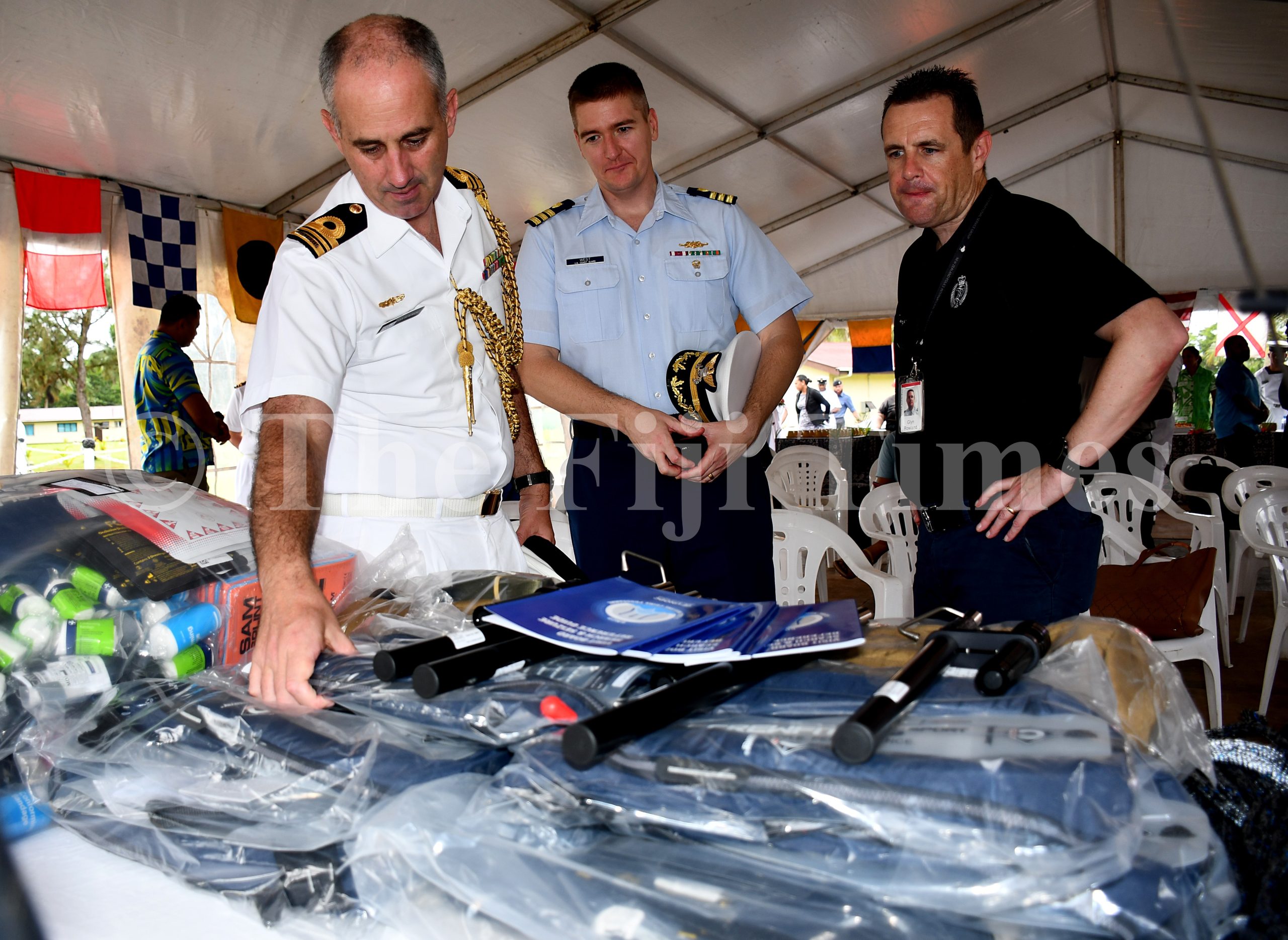
Fiji is now home to the United Nations Office on Drugs and Crime (UNODC) VBSS (visit, board, search, seizure) school.
Based at the Republic of Fiji Navy training base, RFNS Viti, in Togalevu, the school, was established through funding from the government of Japan to enhance regional capability and security.
While officiating at the school’s opening yesterday, Minister for Home Affairs and Immigration Pio Tikoduadua said Fiji and the region’s security environment was the most unpredictable “we have ever seen”.
He also said that traditional security threats and criminal activities, which included human trafficking, drug smuggling, crime syndicates, Illegal, Unregulated, and Unreported (IUU) fishing, and cybercrime, continued to pose greater challenges to the region.
“These activities are anticipated to increase over the years due to advancements in technology and the porous nature of our shared maritime borders,” he said.
This initiative is the first in the Pacific, in support of the 2050 Strategy for the Blue Pacific Continent.
Mr Tikoduadua said VBSS operations played a pivotal role in intercepting vessels of interest, as well as conducting searches, and seizing illicit goods or individuals involved in unlawful activities.
Japanese Ambassador Rokuichiro Michii said the opening of this facility came at a very crucial and important time, as maritime crimes became more diverse and complex.
This, he said, could lead to potentially devastating impacts on the Blue Pacific.
He said this was a common challenge in the Pacific region and should not be seen as a donor-recipient relationship, but something that was done as a collaboration among equal partners.
UNODC VBSS chief instructor Tony Wheatley said the training course would consist of both practical and theoretical components.
These would include how to communicate with vessels at sea, requests to board, conducting thorough and systematic searches, processing of seized items, collecting and preserving evidence etcetera.
He said the main objectives of the program were to ensure compliance with maritime rules and regulations, prevent illegal activities such as piracy, smuggling and trafficking, enhance maritime domain and security, and boost capacity of maritime officers.
About 22 senior officers from nine regional countries are expected to attend the inaugural two-week training.

