
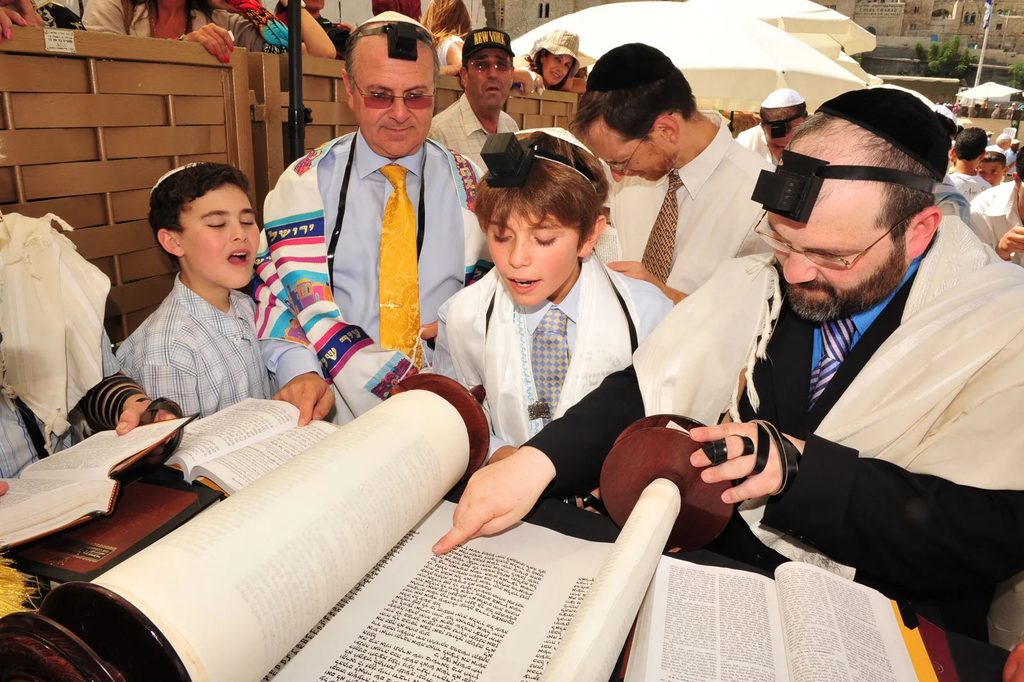
For more than three thousand years, one small but extraordinary group of people have walked through the corridors of history bearing both the scars of suffering and the light of faith.
The Jewish people.
Scattered, enslaved, exiled and persecuted, they’ve endured what few nations could survive. And yet, against every conceivable odd, they refused to disappear.
From the banks of the Nile to the rivers of Babylon, from the hills of Jerusalem to the ghettos of Europe, their story has been written in blood, exile, endurance and astonishing renewal.
Empires have risen and fallen – Egyptian, Babylonian, Persian, Greek, Roman, Ottoman, Nazi – each in turn trying to erase their name, silence their faith and extinguish their flame. But none have succeeded.
Somehow, through an inexplicable resilience, they outlived their conquerors. The Jewish people stood where empires crumbled, prayed where temples once burned and sang psalms where others had declared them finished. Their strength was never drawn from armies or numbers, but from something far deeper – the covenant between a people and their God, a faith that no sword could sever.
Their history is a rhythm of exile and return, destruction and rebirth. The First Temple fell to Babylon; the Second to Rome. The survivors were scattered across the earth, forbidden to dwell in the holy city that gave them their name. In medieval Europe they were branded, humiliated, and expelled and accused of crimes they never committed, massacred in crusades that preached love but practiced hate. Even under the crescent moon of Islam, they lived as second-class citizens, taxed for their faith but never freed from suspicion.
And then came the darkest night humanity had ever known – the Holocaust.
Six million souls – men, women and children systematically slaughtered by the Nazi machine. It was not only an attempt to destroy a people, but to erase a conscience from the world. The death camps were not just killing fields; they were factories of despair, designed to prove that faith and humanity itself could be broken.
But from the ashes of Auschwitz, a new light rose.
In 1948, after two thousand years of dispersion, the Jewish people reclaimed their ancestral homeland. Israel was born, not merely as a state, but as a miracle. It stood as living proof that you can burn a body but not a spirit, that a people’s faith can outlast every empire that seeks to crush it by the vilest means.
Yet the struggle did not end with statehood. Surrounded by enemies, attacked again and again, Israel’s very existence has remained a daily act of courage. But the Jewish story has never been one of victimhood. It’s one of survival, of transcendent faith, of moral vision. It’s a story that’s shaped the conscience of civilisation itself.
Their prophets taught justice. Their poets sang of mercy. Their teachers gave the world wisdom that outlived the walls of their cities. And through their sacred texts came the Ten Commandments – the moral compass that still guides nations and hearts across the world today.
When we speak of persecution, we must also speak of perseverance. When we remember the pain, we must also honour the purpose that kept them alive. The story of the Jewish people isn’t merely a chronicle of suffering. It’s the unyielding testament of hope, of faith reborn through fire.
Because the light that began with Abraham still burns.
The same light that flickered in exile, that glowed in the ghettos, that somehow refused to go out even in the darkness of the camps.
It’s the light of identity, belief and moral courage – a flame that says to the world:
You can scatter us, enslave us and slander us, but you will never erase us.
For the Jewish people are not defined by what they’ve lost, but by what they’ve kept – their faith, their purpose and their indestructible will to survive.
Their story is humanity’s mirror and message:
That even when darkness reigns, hope endures.
That faith can outlast fire.
And that a people who refuse to disappear can light the way for us all.
n COLIN DEOKI lives in Melbourne, Australia and is a regular contributor to this newspaper. The views expressed in this article are his and not necessarily reflect the views of this newspaper.

