
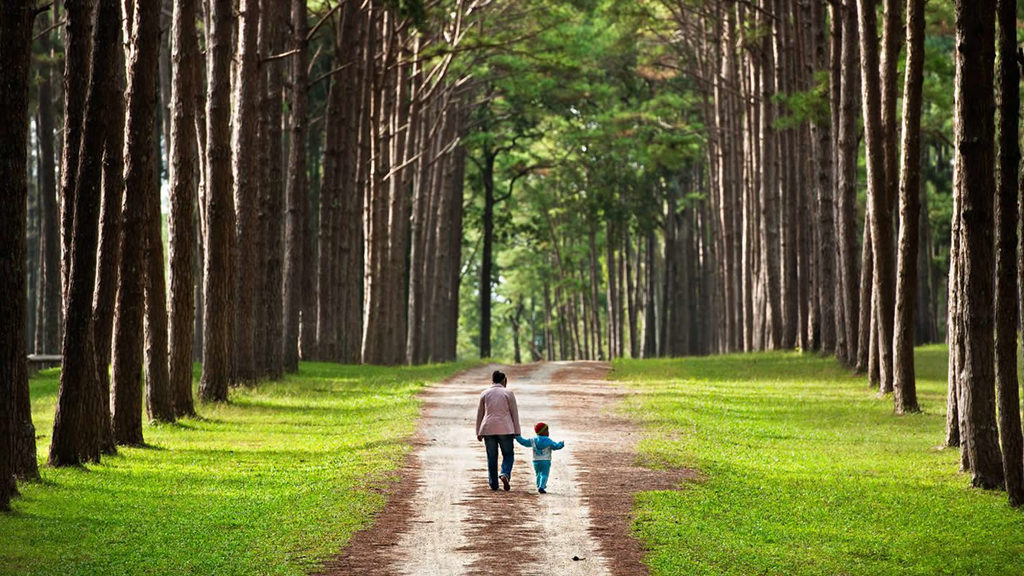
No one has ever “walked” in your shoes and never will.
Well, maybe once, a giggling toddler, wobbling clumsily across the living room floor, trying to balance in shoes five sizes too big. The scene is heart-melting. A tiny child, stumbling forward in oversized shoes, arms stretched out for balance while proud parents giggle with delight.
It’s a fleeting moment of innocence, yet also a quiet symbol of something deeper – that invisible thread that connects generations with the most beautiful memories of children growing up.
But hidden in that beautiful moment is a truth we often forget.
Very few of us ever truly step into someone else’s shoes.
We have no idea of the weight they’re carrying or the emotions they’re struggling with, sometimes every single waking day.
We never hear of the private battles fought in the silence of their heart and mind.
We don’t follow the footsteps of the despairingly distressing road they’re travelling – sometimes broken, often lonely and always far more complicated than what we see from our side of the fence.
Every human being carries a book full of stories – stories of triumph and stories of quiet struggles – stories of grief, pain, sadness and survival.
Many are stories we never see and cannot fully comprehend, simply because they’re not our lived experiences and stories.
The stories we walk past
Picture, for a moment, a homeless man sitting on a cold city footpath.
Traffic rushes by. People move quickly, heads down, phones in hand, lives full of deadlines and distractions. He sits there with worn shoes, tired eyes and a life that now fits inside a tattered blanket and a small cardboard sign.
Most of us pass by with only a cursory glance. We assume.
Sometimes we judge all too quickly and unkindly.
But rarely do we stop long enough to think and wonder how he arrived there.
Perhaps it began with the loss of a job that triggered a downward spiral.
Perhaps it was the quiet devastation of depression or some other form of mental illness.
Perhaps a marriage collapsed, leaving emotional wreckage in its wake.
Perhaps the trauma of war still echoes through sleepless nights.
Perhaps the unimaginable grief of losing a child slowly drained the colour from life itself.
We don’t know. And yet, far too often, we form judgemental opinions as though we do.
In a world addicted to digital distractions and surface impressions, compassion can feel inconvenient, even uncomfortable. It requires time, empathy and emotional courage.
But the true measure of our humanity isn’t found in the size of our home, the balance in our bank account or the titles printed on our business card.
It’s measured by something far more meaningful.
Our willingness to care, especially when it’s inconvenient and uncomfortable.
To show up when situations are messy and uncertain.
To extend kindness to those society has quietly pushed into the shadows.
The night compassion spoke louder than fear
Many years ago, I experienced a moment that left a permanent imprint on my heart.
It was a cold winter’s night. My wife and I were on our way to a social event. We were dressed up, smiling, caught in the pleasant anticipation of enjoying a beautiful evening.
Then we saw him. A young man was lying on the pavement in a pool of blood.
A small crowd had gathered around him, but they stood at a distance. No one moved. People appeared frozen and uncertain, frightened and unsure of what to do.
At the time, fear surrounding AIDS was everywhere. The disease dominated headlines and public consciousness, often portrayed in stark and frightening images in TV commercials. It was widely perceived as a death sentence and the stigma attached to it was powerful.
Like everyone else, I froze.
A thousand alarm bells began ringing in my mind.
What if he has AIDS? What if I become infected? What about my wife? My family?
Fear can be a powerful and inhibiting force.
But in that moment, another voice quietly emerged – softer, yet deeper and more resonant.
It was compassion with a very gentle nudge.
I gave my overcoat to my wife and walked nervously to the young man. I knelt beside him. Blood soaked into my shoes as I tried to help him. The scene felt surreal. The smell of blood, the confusion of voices and the tremor in my hands were overwhelming and real.
Yet the calm voice of the emergency operator on my mobile phone guided me through the process and what I needed to do.
I spoke softly to the young man as I gently turned him onto his side. I told him he was not alone. I reassured him that help was on its way and that I wouldn’t leave him. For some strange reason, something inside of me began to change. I became more conscious of a quiet peace and confidence slowly rising up inside of me.
Silently, I prayed for him. I prayed for courage.
And I prayed that fear would not win over my own deep and troubling thoughts that were trying to sabotage what I was doing.
Later that night, after the ambulance had taken him away, I went into the men’s room at the reception centre, shaken by the adrenaline rush of what had happened. I scrubbed my shoes and washed my hands again and again. Despite my efforts, a lingering fear still hovered over me like a grim shadow of doubt.
But alongside that fear was something stronger.
It was faith rooted in all of the scriptures, stories, hymns and worship songs that were deeply ingrained within my soul.
And the quiet belief that compassion had led me exactly where I needed to be. It comforted me in a way I can’t describe.
The letter that changed everything
Months passed. Life moved on.
Then one day, an envelope arrived.
Inside was a letter. It was from the young man. He had survived.
His words were raw with emotion and overflowing with gratitude. He wrote that my actions that night had saved his life.
As I read his letter, tears welled up inside me. Waves of immense relief and gratitude began washing over me.
In that moment I felt, with absolute certainty, that it had been no accident that my wife and I were there that night. It felt like a divine appointment that we’d been placed at exactly the right place at exactly the right time, when a young man’s life was quietly slipping away.
And something became profoundly clear to me.
When we choose compassion over comfort, something extraordinary happens.
When we see the person instead of their circumstances…
When we respond with empathy rather than fear or indifference…
We become part of something larger than ourselves.
Sometimes, we even become part of a miracle that we have no understanding of at the time it happens. Because it’s not for us to comprehend with any level of human understanding. Simply because we’re human.
The footprints we leave
Every person we encounter carries a hidden story.
Some stories are filled with joy.
Others are marked by hardship, loss and quiet resilience.
We may never truly walk in another person’s shoes.
But we can walk beside them.
With empathy. With humility. With grace.
And with words of encouragement that can slowly heal and make them whole again.
In the end, it will not be the style, cost or polish of our shoes that matters most.
What will matter is the compassion we chose to walk in.
Because when love and compassion guide our steps, the footprints we leave behind carry far greater meaning.
They become small acts of hope scattered along the highway of people’s lives.
And perhaps that’s one of the highest callings of being human – to remind one another, through kindness, courage and compassion, that no one has to walk their journey alone.
For when we walk beside the One who walks with us, life begins to echo the quiet conviction of that beautiful old hymn:
“Just a closer walk with Thee.”
- COLIN DEOKI lives in Melbourne, Australia and is a regular contributor to this newspaper. The views expressed in this article are his and not necessarily of this newspaper.

