
In this sacred season, as our Muslim brothers and sisters journey through Ramadan and Christians walk the reflective path of Lent toward Easter, Fiji finds itself in a uniquely beautiful moment.
We may gather in different churches, mosques and temples.
We celebrate Christmas, Eid and Diwali.
We pray in different languages and in different ways.
Yet we attend the same schools, shop in the same markets, cheer for the same rugby team and stand shoulder to shoulder when hardship visits our shores.
In a nation where Christians, Muslims, Hindus, Sikhs, Jews and Buddhists live side by side, it’s worth pausing to remember that one of the most honoured women in human history is deeply revered by two of these faiths.
Her name is Mary.
For Christians, she’s the mother of Jesus Christ, the woman chosen to bear the Saviour of the world.
For Muslims, she is Maryam – the only woman mentioned by name in the Qur’an and one of the most exalted figures in Islam. An entire chapter of the Qur’an, Surah Maryam, carries her name.
In a sacred book that speaks across generations of prophets and nations, that distinction is extraordinary.
A story both faiths cherish.
Both Christianity and Islam affirm the miraculous virgin birth of Jesus.
Both traditions honour Mary as chosen, pure and devoted.
Both speak of a moment when heaven touched earth through her obedience.
In the Bible of Judaism, Mary responds to the angel with humility and trust: “Let it be to me according to your word.”
In the Qur’an, Mary withdraws in solitude, carrying the weight of uncertainty and the fear of social judgement, yet placing her complete confidence in God’s mercy.
Across both narratives we do not meet a queen, a warrior or a ruler but a young woman whose strength lay in her faith.
That quiet courage resonates deeply in the Pacific, where a “mother” is still regarded with such deep respect and affection and where family, sacrifice and trust in God remain pillars of community life.
Where beliefs differ with respect
It wouldn’t be honest to pretend there are no differences in the two faiths.
For Christians, Jesus Christ is the Son of God, central to salvation, worship and hope. Faith revolves around His life, death and resurrection.
For Muslims, isa (Jesus) is honoured as a prophet and Messiah, born miraculously and performing wonders by God’s permission, yet not divine. Islam rests firmly upon the belief in one, indivisible God, worshipped alone.
These theological distinctions matter. They shape prayer, doctrine and devotion.
But difference need not mean division.
In Fiji, we’ve long understood that strong faith and strong community can walk side by side together. For decades, our islands have shown that conviction and coexistence are not enemies. They’re the bedrock of living together in harmony and in peace, respecting each other’s faith.
A lesson for our islands
Our nation has known seasons of deep divisions and racial tensions arising from coups and unjust constitutional reforms. Yet time and again we rediscover the deeper meaning of vanua – belonging, relationship and shared identity.
Mary’s story offers a quiet but powerful lesson.
Christians see in her the mother of their Saviour.
Muslims see in her a model of submission and purity before God.
Both see faith.
Both see courage.
Both see obedience in the face of uncertainty.
In a world where global conflicts often inflame religious suspicion, Fiji can continue choosing a different path and one of respectful understanding without surrendering belief.
Better neighbors, stronger communities
Mary does not erase theological differences. She does not blur doctrine or merge belief systems.
But she reminds us of something profoundly Pacific:
We can disagree and still share a meal.
We can worship differently and still stand together in times of need.
We can hold firm convictions and still treat one another with dignity, grace and compassion.
In a nation where churches, mosques and temples sometimes stand only metres apart, perhaps that’s the greater miracle – not uniformity, but unity in community.
History often remembers conquerors and politicians.
Sacred texts remember a young woman who trusted God.
And perhaps in remembering her together, Fiji can continue modelling something our divided world desperately needs:
Harmony without hostility.
Faith without fear.
Community without compromise.
It’s within this spirit of shared goodwill that the vision of the “Ocean of Peace” was spoken into prominence by Fiji’s Prime Minister, Sitiveni Rabuka – a reminder that our islands can be known not for division, but for reconciliation.
And perhaps one of the greatest messages brought by Mary’s beloved Son, Jesus Christ, was delivered on a hillside in what Christians know as the Sermon on the Mount. In words that feel especially urgent for our times, He said:
“Blessed are the peacemakers, for they will be called children of God.” Matthew 5:9
During this season of fasting, prayer, reflection and renewal, may our mosques, churches and homes be filled with gentleness and kindness and a deeper appreciation of what we have.
May Ramadan bring deeper compassion.
May Lent prepare hearts for resurrection hope.
And may Fiji continue to shine as a small but powerful light proving that faith, when rooted in humility and love, can build bridges instead of barriers.
Ramadan Mubarak.
A blessed Lent.
And may peace dwell richly in our shared Pacific home. And may this peace resonate and spread with hope to every corner of our planet.
COLIN DEOKI lives in Melbourne, Australia and is a regular contributor to this newspaper. The views expressed in this article are his and not necessarily of this newspaper.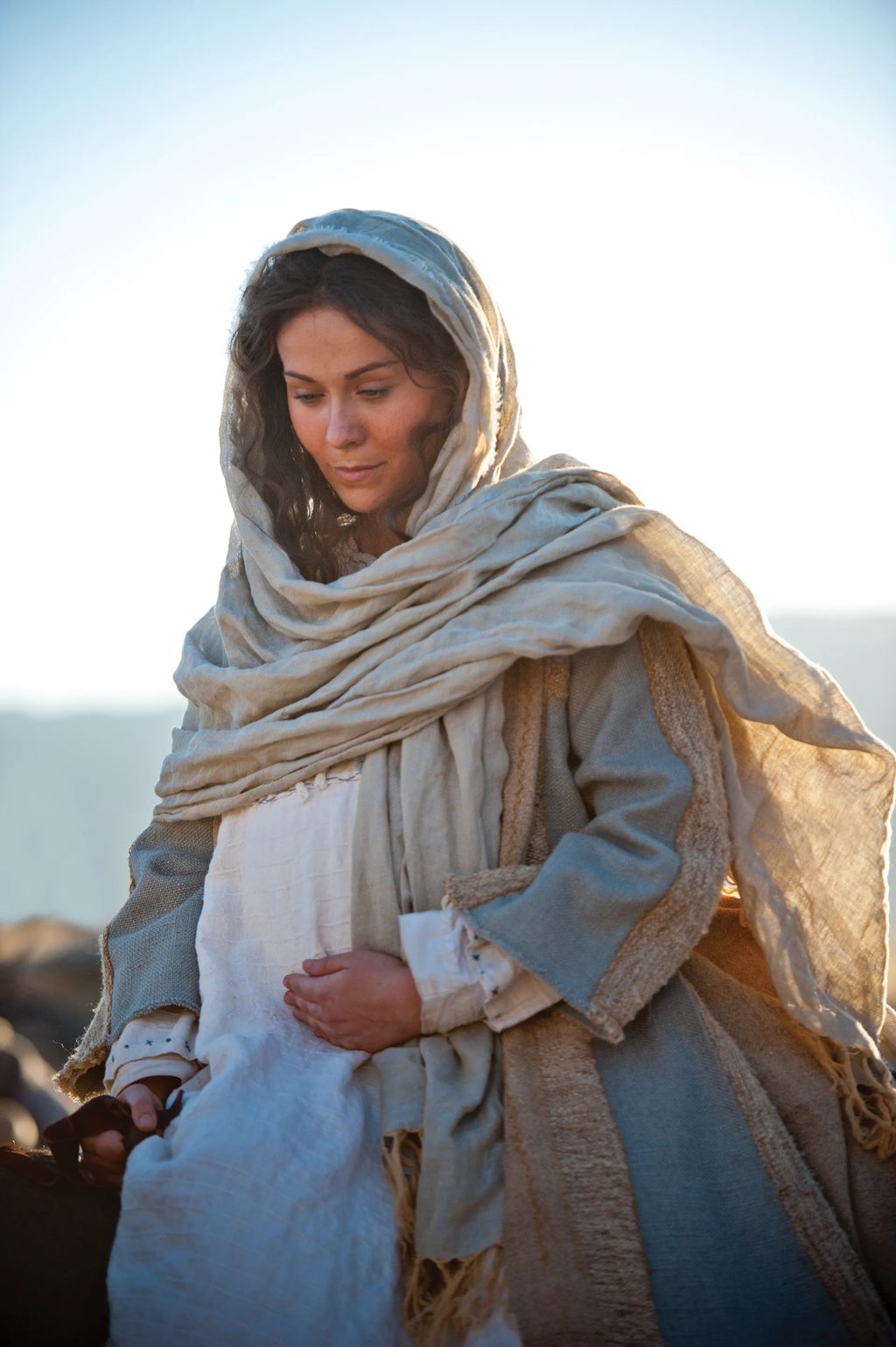
A depiction of Mary, the mother of Jesus, riding a donkey on the journey to Bethlehem.
Picture: WWW.CHURCHOFJESUSCHRIST.ORG

