
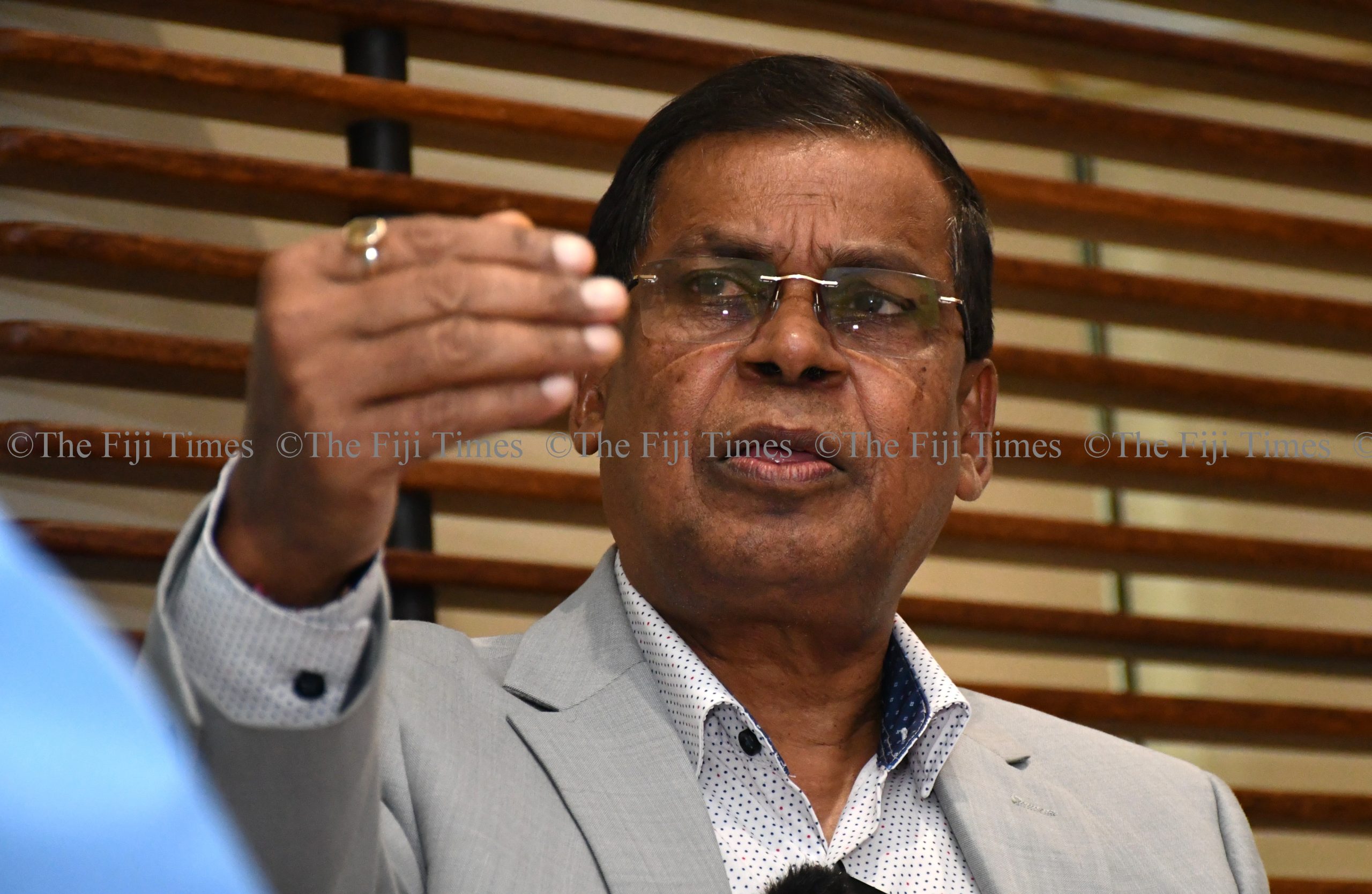
If Fiji doesn’t address the current NCD crisis, the economic burden associated with it will become unmanageable, says Deputy Prime Minister and Finance Minister Professor Biman Prasad.
Prof Prasad told this newspaper at the launch of the Fiji Health Sector Review 2024 report last Friday that the people must “wake up” and fully understand the gravity of the country’s health crisis.
He stressed that Fiji’s health outcomes were not improving at the rate needed, and that urgent action was required to address these growing health challenges.
The recently released report underscores the need for substantial investment in Fiji’s healthcare system, recommending a $50million annual investment for the next 70 years to address the country’s health issues, particularly the rise in NCDs.
“We are at a critical juncture,” Prof Prasad said.
“But as the report says, if we don’t do anything now, the rate at which NCDs, the public health emergency, is increasing, we will need close to 7 per cent of GDP expenditure to deal with the health emergency.
“This is the Government that significantly increased the health budget, and we are just shy of the World Health Organization’s recommendation of 4.5 per cent of GDP for health expenditure.”
Currently, Fiji’s health expenditure stands at around 4 per cent GDP, just below the WHO target.
However, Prof Prasad warned that without immediate intervention, the country would face much higher costs in the future.
“The pace at which NCDs are increasing is alarming.
“So, it’s better to invest early and intervene before the situation worsens.”
Despite the long-term challenges, Prof Prasad highlighted that improvements were already being made.
He pointed to the Government’s efforts to improve healthcare infrastructure, including the renovation of health centres like the one in Nausori, which had previously been in poor condition.
“You can see the difference.
“The Nausori Health Centre was falling apart, but now it serves 70,000 people.
“But it’s not going to happen overnight. Things are improving, things are changing.”

