
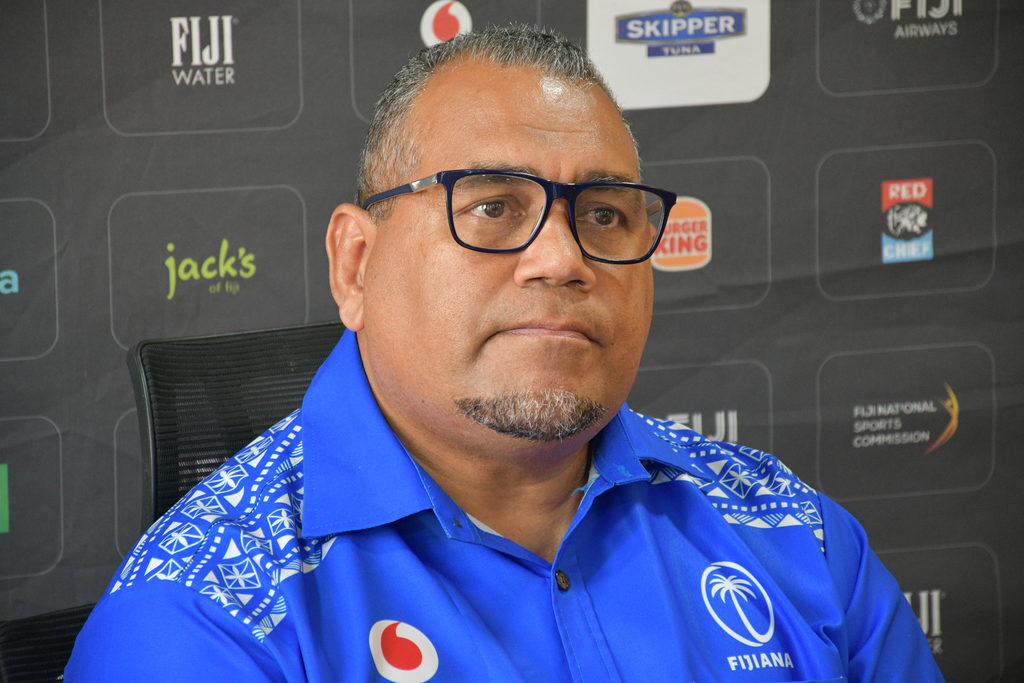
FIJI Rugby Football Union’s new board came into office facing major inherited challenges, says acting CEO Koli Sewabu.
Speaking after the General Assembly, he said much of 2025 was spent sorting out legacy issues and learning the new governance structure.
“Probably the challenges this year was more around some of the inherited legacy piece of Fiji Rugby Union.”
He explained that many agreements were already in place before the new leadership arrived, so they had to honour those commitments while adjusting to the new structure.
“The new board came in and there’s already agreements in place, so we had to honour that agreement and then we had to try and familiarise ourselves with the governance and the administration of Fiji Rugby and its new structure.”
Compliance issues were one of the biggest hurdles, with many unions not fully meeting requirements.
“There were game management issues under our terms of participation, there are a lot of compliance issues and a lot of our unions that were not fully compliant this year so we couldn’t really take a hard stance on that because if we do then there’s no teams playing in our competition so we have to find innovative ways of working with our unions on how we can address that.” Player registration and the lack of a comprehensive database also created operational problems.
“So player registration was a big one and we acknowledged the fact that we need a full comprehensive database to start to develop over the next few years, that hasn’t been in place and then we look at the pathways.”
Sewabu said that while pathways in primary, secondary, club and provincial rugby were exciting this year, the systems behind them need strengthening.
“We look at the systems and the structures that should shape them which we believe is loose at the moment, it needs strengthening.”
He added that Fiji Rugby previously had no fully endorsed strategic plan, resulting in ad hoc management in many areas.
“And obviously no strategic plan, there has been a strategic plan probably not fully endorsed so there was a lot of ad hoc management, administration and organisation happening but the purpose of the symposium that we did this year was to work with our stakeholders to the solutions they bring in was to form the basis of our new strategy which we presented and then we hope to finalise that in the next few weeks and start 2026 with a much clearer vision, objectives and direction of where we want to go for the next 10 years,” Sewabu added.

