
Data on births and deaths are fundamental for understanding a country’s population dynamics, public health, economic planning, and policymaking.
It provides the foundation for informed decision-making at various levels of government and society.
The Vital Statistics Report 2016-2021 contains data on fertility and mortality compiled by the Fiji Bureau of Statistics (FBoS), Registrar General’s Office, Ministry of Justice and the Ministry of Health & Medical Services (MoHMS).
This is the second national vital statistics report for Fiji and presents key demographic measures of fertility and mortality -including causes of death – for the period 2016-2021.
Births
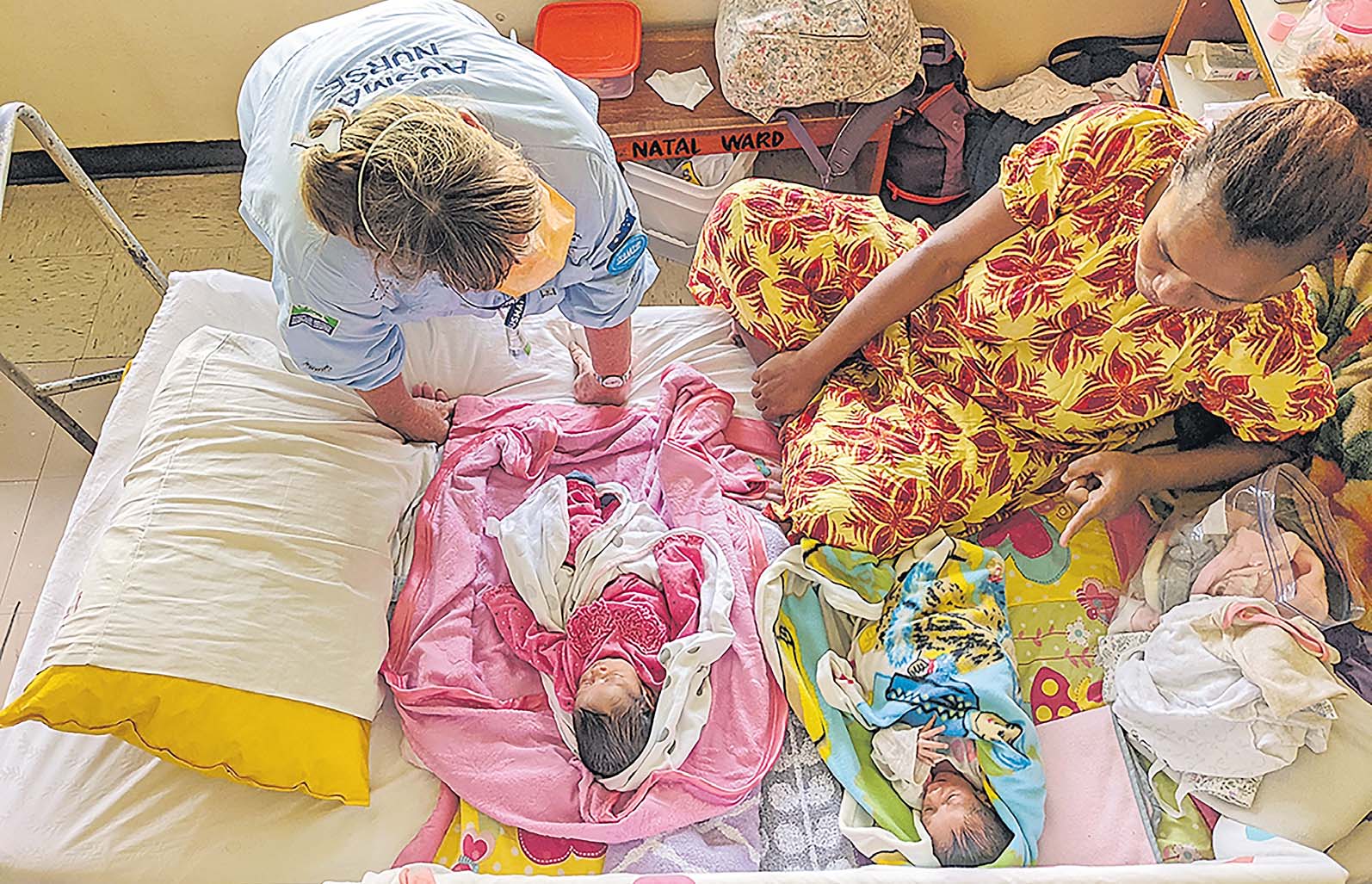
THE number of aggregate births reported through the Consolidated Monthly Reporting Information System (CMRIS) maintained by the Ministry of Health remained consistent at around 19,000 – 20,000 per year between 2016-2019, then increased to just above 21,000 in 2020, with 20,217 births reported in 2021, states the report.
Using this data, the calculated annual crude birth rates during 2016-2019 remained relatively stable between 21.8-22.2 births per 1000 population, before increasing sharply to 23.4 in 2020, and declining to 22.4 per 1000 in 2021.
The overall fertility pattern across 2016-21 indicated a gradual increase in the crude birth rate.
The report states data from the Civil Registry birth registration dataset showed that during 2016-19 the sex ratio at birth varied between 1.08-1.09, which means for every 100 female births there were 108-109 male births.
Age-specific fertility rates calculated from the same data source show the majority of births during 2016-19 were to women aged 20-29 years, with around 29 per cent of births in women aged 20-24 years and 30per cent in women aged 25-29 years.
The report states during 2016-19 the total fertility rate fluctuated between 2.6-2.8, which means that on average a woman would be expected to give birth to between 2.6 to 2.8 babies during her lifetime.
Births by age of mother and age specific fertlity rates
Childbearing age is generally considered to be from 15 to 49 years, with babies born to mothers outside this age range less common, states the report.
The distribution of births by mother’s age group shows the majority of births during 2016-19 were to women aged 20-29, with around 29 per cent of births in women aged 20-24 and 30 per cent in women aged 25-29.
From 30+ years fertility slowly declined, with around 20-21 per cent of births to mothers aged 30-34, and 11 per cent to mothers aged 35-39.
The percentage distribution remained below 3 per cent in women aged 40-44, and below 1 per cent in women aged 45 plus, states the report.
Teenage pregnancy in mothers aged 15-19 comprised 5-6 per cent of the percentage distribution of births in each year during 2016-19.
Age-specific fertility rates for 2016-19 show that fertility was highest among women aged 25-29, with the fertility rate fluctuating between 157-171 births per 1000 women.
Women aged 20-24 had the next highest fertility levels, with the rate fluctuating between 148-156 births per 1000.
The report states from 30 plus years the fertility rate slowly declined, from around 113-123 births per 1000 women aged 30-34, and 60-67 births per 1000 women aged 35-39.
From 40 plus years fertility declined sharply, from around 20 births per 1000 women aged 40-44, to less than 2 births per 1000 women aged 45-49.
Place of birth
CWM Divisional Hospital in the Central Division had the highest number of births each year, fluctuating between 7938 and 8820.
Lautoka Divisional Hospital in the Western Division had the second highest number of births, fluctuating between 4097 and 4492 during 2016-20 before declining to 3767 in 2021, states the report.
Labasa Divisional Hospital in the Northern Division had the third highest number of births, fluctuating between 1858 and 2348.9.
Of the 119,598 births that were recorded in the CMRIS database during 2016 to 2021, 94 per cent were from the 10 health facilities where the highest number of births occurred.
Makoi Birthing Unit in the Central Division opened in late 2018, and Navosa Hospital in the Western Division opened in early 2021.
The report states no births were recorded in the CMRIS from the ‘Other Mamanuca Islands’ or the ‘Yasawa Islands’ in the Western Division.
It is understood that pregnant women from these island groups most frequently travel to Lautoka or Nadi several weeks before they are due to give birth and reside with relatives or family friends until they deliver their baby in Lautoka or Nadi hospital.
Similarly, no births were recorded from the ‘Other Lau Islands’ or the ‘Other Lomaiviti Islands’ in the Eastern Division, and it is understood that pregnant women from those island groups most frequently travel to Suva and reside with relatives or family friends until their baby is born in a health facility in Suva.
The report states a small number of pregnant women from the outer islands of the Eastern Division may travel by boat to one of the sub-divisional hospitals to deliver their baby (e.g., Lakeba or Lomaloma Hospital) if they are on a nearby island.
Deaths
The Ministry of Health and Medical Services death database showed that during 2016-20 the number of deaths each year fluctuated, but the overall mortality pattern was a plateau in the number of deaths in both sexes with an average 7480 deaths per year, states the report.
In 2021 during the peak of the COVID-19 pandemic in Fiji, the number of deaths sharply increased to 8815, an increase of 1031 deaths over 2020.
More male than female deaths were recorded across all years, with deaths comprising 54 per cent males and 46 per cent females for 2016-21.
The report states child mortality was not greatly affected by the peak of the COVID-19 pandemic in Fiji in 2021, with five COVID-19 deaths recorded in children under-five years of age.
Causes of death
Circulatory diseases, diabetes and cancers were the leading causes of death in Fiji during 2016-21 for both males and females for all ages combined, states the report.
Children aged 0-4 mainly died of conditions originating in the perinatal period, primarily respiratory and cardiovascular disorders.
Among children aged 5-14, external causes of mortality were the leading cause of death, primarily accidental drowning and submersion, and motor vehicle accidents.
Among young adults aged 15-34, external causes of mortality were again the leading cause of death in males and females.
Among men this was primarily accidental suffocation, hanging and strangulation followed by motor vehicle accidents; and in women it was
primarily accidental suffocation, hanging and strangulation, followed by exposure to smoke, fire and flames.
In adults aged 35-59, the leading causes of death in men and women were non-communicable diseases (NCDs).
The report states in both sexes diseases of the circulatory system, primarily ischaemic heart diseases and cerebrovascular diseases, were the leading cause of death.
In men diabetes mellitus was the second leading cause of death, followed by cancers (primarily liver and lung cancer).
Among women, cancers were the second leading cause of death (primarily breast and cervical cancer), followed by diabetes mellitus as the third leading cause of death.
The report of the 831 recorded COVID-19 deaths during 2020-21, 1 per cent were children aged less than 15, 3 per cent young adults aged 15-
34, 29 per cent adults aged 35-59, and 68 per cent were aged 60 plus years.

