
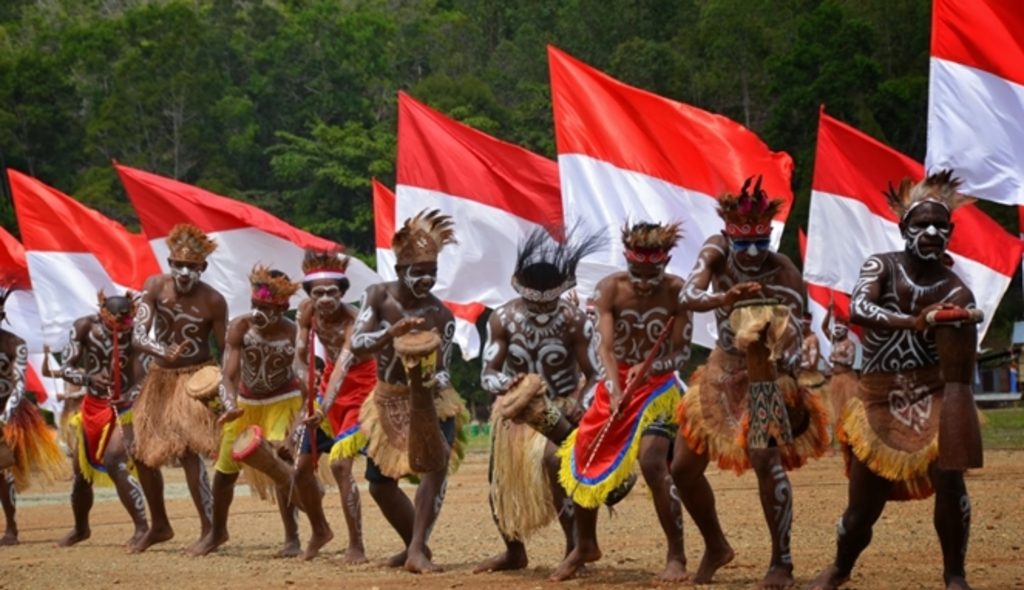
Papua is one of those subjects that can instantly divide a room in Fiji and around the Pacific, as conversations often revolve around politics and identity.
However, they rarely start with the things that keep a family alive. A functioning hospital. A reliable road. A market that opens without fear. A school where teachers stay long enough for children to learn.
If we want to understand Papua today, it helps to look at what is happening in real time on the ground.
Indonesia is in-fact investing heavily in development across its easternmost provinces and the effort is most visible in two areas.
Health, with new and upgraded hospitals that aim to bring specialist care closer to local communities and Food Security, with major programs in South Papua that are meant to strengthen national resilience and local livelihoods.
There is also a third factor that decides whether all of it works or fails and that is security, but not in the abstract sense of speeches and slogans, but in the practical sense of civilian safety.
If health workers cannot travel safely, hospitals become empty buildings. If farmers and traders cannot move goods without fear, food security becomes a headline rather than a reality.
Meaningful health infrastructure
For years, one of Papua’s hardest realities has been distance.
For many communities, reaching advanced care has meant long travel, high cost, and too often a dangerous delay.
Indonesia’s current approach is to shift specialist services closer to Papua itself, so that patients do not always need to be flown to other islands for treatment.
Jayapura, Papua’s capital, has today become a symbol of that effort.
A major hospital build has been positioned as a referral hub, with expectations that it will strengthen specialist care and reduce the burden on families who have had to travel far for treatment.
The broader plan is bigger than a single project. National targets have been publicly framed around a wider network of new hospitals across the Papua region in the coming years, alongside equipment and staffing improvements.
For readers here at home in Fiji, this should sound familiar.
In island states, a hospital is not only a building. It is a system. It needs specialists who stay, reliable supplies, maintenance that does not collapse after the ribbon cutting, and an emergency response chain that works when minutes matter.
That is the standard Papua’s hospital push will be judged by.
Can people access care quickly? Are medicines available? Are referrals handled properly? Do ambulances, communications, and staffing match the scale of need? Can maternal care improve in places where distance and cost have always been a barrier?
A hospital’s record becomes credible when ordinary people can feel it, not when officials can describe it.
Food security priorities
The second pillar is food security.
South Papua, particularly Merauke, has been placed at the heart of a major national push to grow staple foods and bioenergy inputs.
The goal is easy to understand. Indonesia wants stronger resilience against global price shocks and supply disruptions. It also wants to lift production in eastern provinces and build the infrastructure that comes with it, roads, irrigation, storage, ports, and processing.
For the Pacific, food security is not just an academic topic. We here in Fiji, like many of our brothers and sisters across island countries, know the vulnerability that comes with import dependence.
When shipping costs rise or disasters disrupt supply, the poorest households feel it first. That is why any serious attempt to build resilience deserves attention.
If Merauke’s programs succeed in building reliable production and logistics, they could create local jobs and a more stable flow of staples into eastern Indonesia.
They could also produce lessons that matter beyond Indonesia, especially around climate adaptation, extension services, seed systems, and storage.
These are shared challenges across Melanesia.
But Merauke also brings the hardest questions about development in Papua.
Land and customary rights. Forest loss. Whether local communities consent in a way that is meaningful. Whether benefits stay local or flow outward. Whether environmental safeguards are enforced or only promised.
This is where people of the Pacific have every reason to take a close interest.
We have seen across our region that development without legitimacy can deepen grievance. And grievance can become instability. Any large-scale project in a culturally and ecologically sensitive area needs to be governed carefully, with transparency that communities can see, and protections that hold up under pressure.
Security is the hinge that holds everything together
It is tempting for those of us outside to discuss issues relating to Papua as if development can be separated from security, but on the ground, they are inseparable.
Papua’s security environment has been shaped by periodic violence, including clashes involving armed separatist groups and state security forces.
As I have stated in a previous op-ed on this topic; when tensions rise, the impact on civilians is immediate. Health workers leave. Teachers are reluctant to stay. Contractors pause work. Transport becomes risky. Prices rise. Families move. The very services meant to close inequality become the first to retreat.
This is why security is not simply a matter of force. It is a matter of civilian protection and trust.
A disciplined, accountable security posture creates space for clinics to operate, for roads to be used, and for markets to function.
A heavy-handed approach that is seen as arbitrary can do the opposite, feeding resentment and expanding the cycle of fear. Papua’s development agenda will rise or fall on this point.
If Indonesia’s priority is to build Papua, then it must also prioritise protecting civilians and protecting the public servants who deliver services.
That means clear standards, credible investigations when civilians are harmed, and practical measures that keep essential services running even in tense areas. It also means recognising that information battles are real. Rumours and selective narratives travel faster than facts, especially where communities have limited access to trusted information. Trust must be earned through conduct and outcomes, not through messaging alone.
What is in this for Fiji and the Pacific?
Some will ask why Fiji should care. The answer is that Papua sits within our wider neighbourhood, and what happens there shapes regional stability, perceptions, and practical cooperation.
There is a direct health angle. Strengthening hospital capacity in Papua makes regional cooperation more realistic. Training exchanges, specialist visits, telemedicine links, and public health coordination become easier when referral centres are stronger. In an era where outbreaks can spread across borders quickly, regional health resilience is not a luxury.
There is also a food resilience angle. The Pacific should explore practical cooperation that supports local needs, not undermines them. That could mean sharing knowledge on climate resilient agriculture, disaster ready storage, extension methods, and supply chain resilience. Indonesia’s eastern provinces and many Pacific countries face similar constraints of distance, weather, and logistics. Collaboration does not need to be grand. It needs to be useful.
Then there is the governance lesson. Can major development reduce poverty while protecting forests and customary land. Can large public spending translate into services that function. Can security priorities align with civilian protection. These questions are not unique to Indonesia. They are questions the wider Pacific faces too.
Papua will continue to be debated in our region. That debate will not end. But it can be improved.
A constructive and objective Pacific conversation starts with what ordinary Papuans need to live with dignity.
Hospitals that treat people well. Food programs that raise local livelihoods rather than displace them. Infrastructure that lowers prices and opens access. Security that protects civilians and enables services rather than shutting them down.
While Papua is being built in real time, the task for all of us watching from the Pacific is to look past slogans and insist on the practical outcomes that matter most, safety, services, and a fair share of development that communities can actually see.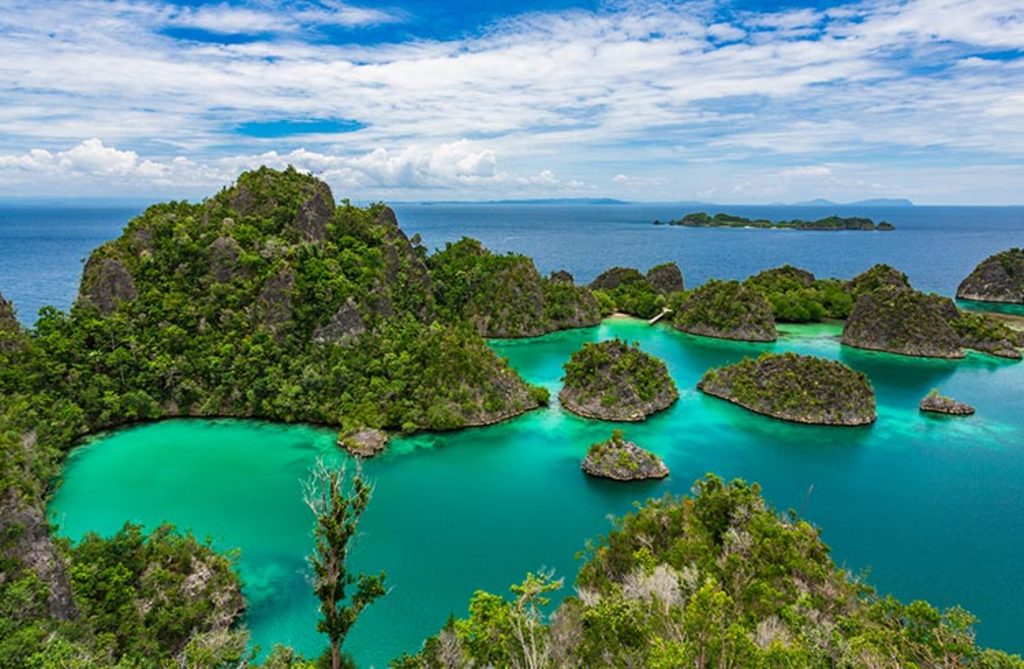
Papua is rich with natural resources as well as pristine natural environment. Picture: SUPPLIED
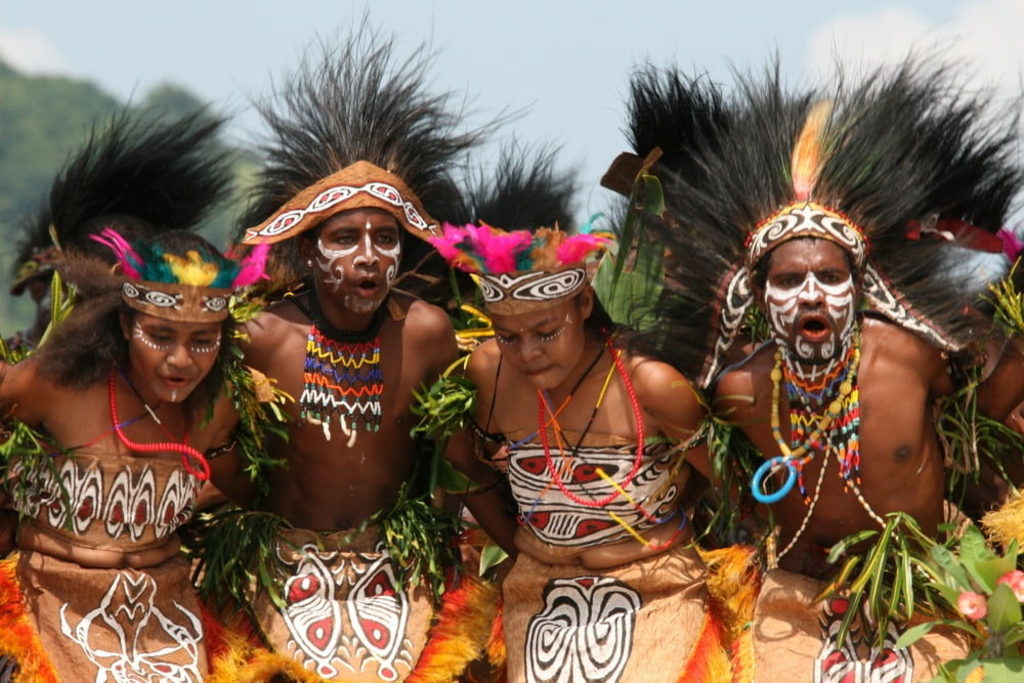
Some will ask why Fiji should care. The answer is that Papua sits within our wider neighbourhood, and what happens there shapes regional stability, perceptions, and practical cooperation. Picture: INDONESIA TRAVEL GUIDE

