

A somewhat controversial traditional ban on women drinking kava in the Vanua of Qoibau has sparked a wider national conversation, not only about gender equality and cultural authority, but about the deeper social strains facing families in Fiji.
Paul Morrell, founder of the Men Empowerment Network (MEN), explained that the debate has exposed what he believes is the real issue, which is a weakening family unit and a failure of leadership communication.
While critics have framed the ban as discriminatory, Mr Morrell stressed that the public discourse has been misdirected, fuelled by political and ideological interests rather than grounded dialogue.
A debate inflamed
Mr Morrell questioned the manner in which the issue entered the public sphere, noting that it was first raised on social media before being amplified through mainstream media and political commentary.
He said such sensitive matters, particularly those involving traditional governance structures, should be handled through direct consultation with the vanua.
“What could have been resolved through a simple conversation has now stirred emotions nationwide,” he said, adding that the public framing of the issue had allowed “extreme ideologies” to take hold.
In his view, both political actors and advocacy groups risk reducing complex social issues into competing narratives, whether framed as patriarchy or cultural preservation, without addressing underlying causes.
Beyond gender: a ‘family lens’
Central to MEN’s position is the belief that the issue should not be viewed solely through a gendered perspective, but through what Mr Morrell describes as a “family lens”.
He said concerns raised by the vanua, including excessive kava consumption among both men and women, point to broader challenges within households.
“In many communities, both parents are drinking late into the night, and children are neglected the next morning,” he said.
“That is where these decisions are coming from.”
Mr Morrell argued that while the ban may appear to disproportionately target women, it reflects a deeper attempt by traditional leaders to restore balance within families.
He suggested alternative approaches could have been explored, such as limiting kava consumption hours for all villagers, rather than focusing on one group.
Tradition meets modern law
The controversy has also highlighted ongoing tensions between constitutional rights and traditional authority.
Mr Morrell acknowledged that Fiji’s Constitution guarantees equality between men and women, but said village life often operates within its own cultural and biological frameworks.
“Navigating where constitutional law ends and traditional practice begins is complex,” he said.
“But it ultimately comes down to communication and understanding what benefits the community most.”
He warned that applying constitutional arguments without sensitivity to context could trigger wider challenges across institutions, including religious practices.
The pace of change
Mr Morrell also raised concerns about the speed at which social and cultural norms are evolving in Fiji.
He pointed to shifts in kava consumption over generations, from chiefly rituals to widespread use among men, and now increasingly among women and youth, as evidence of rapid change.
“We’ve evolved too fast. Traditions that once had structure are now open, and communities are trying to respond.”
For MEN, the solution lies not in rigid enforcement but in building stronger leadership and communication within households and communities.
A call for structural reform
Looking ahead, Mr Morrell has proposed the establishment of a dedicated Ministry of Family, arguing that current government structures do not adequately address the interconnected needs of men, women and children.
He said such a ministry could ensure that all policies, whether economic, social or cultural, are assessed based on their impact on families.
“The key question decision-makers must ask is: how will this affect the family?” he said.
Grassroots solutions
Apart from policy, MEN’s work focuses on community-level interventions, particularly in training men and boys to become better communicators and leaders within their households.
Mr Morrell stressed that many social issues, including excessive kava consumption, stem from poor communication within families.
“If people communicated better at home, there would be less need to seek connection elsewhere,” he said.
He warned that if current trends continue, the family unit itself could become “endangered”, undermining the foundation of society.
A broader reflection
As the debate over the Qoibau kava ban continues, it has become clear that the issue extends far beyond a single policy decision.
It raises fundamental questions about how Fiji balances tradition and modernity, individual rights, collective wellbeing, and ultimately, how it safeguards the family unit in a rapidly changing society.
Mr Morrell stressed therefore that the answer lies not in polarised debate, but in measured dialogue.
“This was never just about kava. It’s about the future of our families.”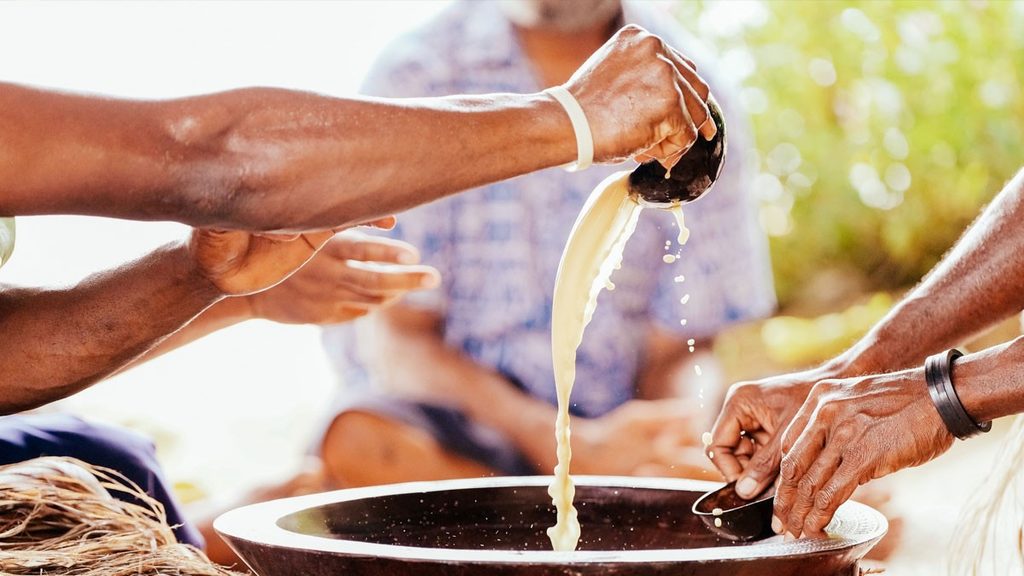
A tanoa of yaqona (kava) prepared for a traditional gathering, a practice deeply rooted in iTaukei culture and central to community dialogue and ceremony. Picture: SUPPLIED
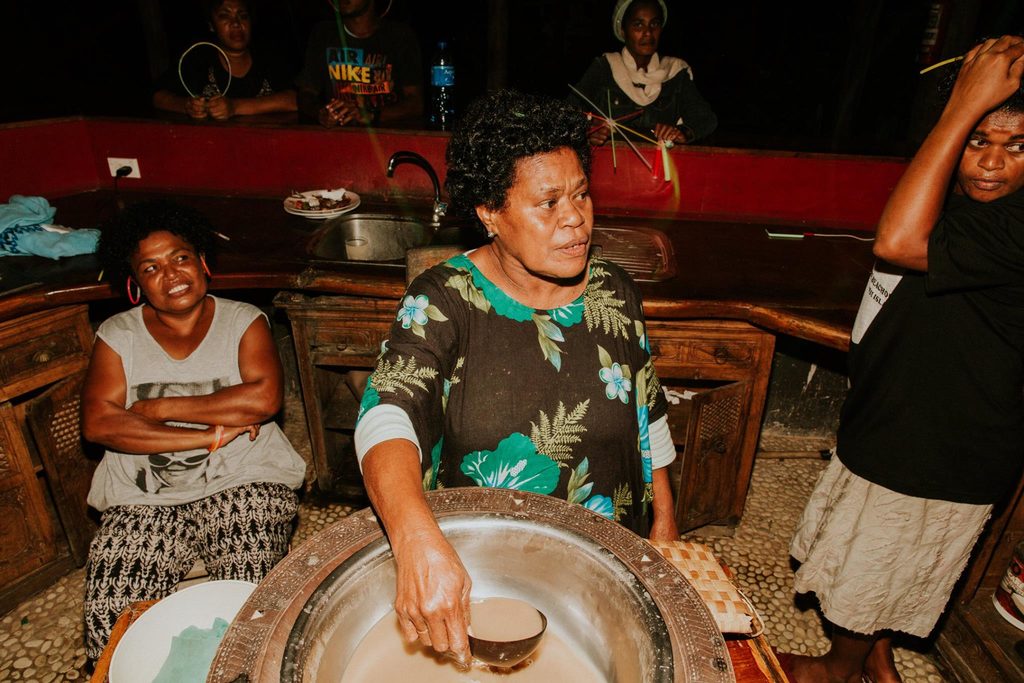
Women prepare and serve yaqona during a traditional gathering, reflecting the shared cultural role of kava in fostering community connection and dialogue. Picture: HOUSE OF SOUND

