
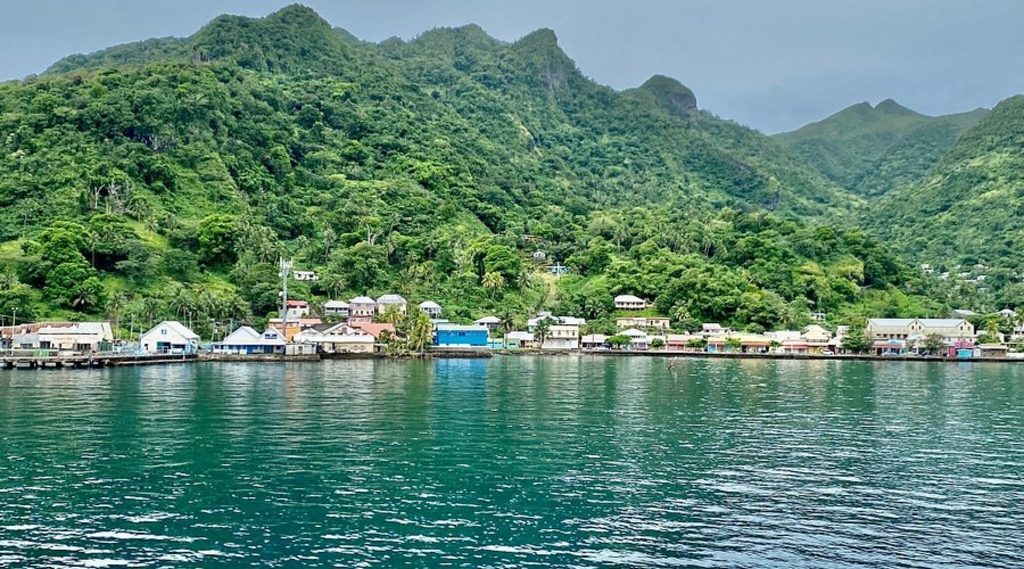
This week, while TC Rae was raging through the Fiji Group, I was in Levuka, Ovalau, on a special assignment.
Six years ago, The Sunday Times team, visited the Old Capital to work on a story about the dilemma facing property owners and residents of the Lomaiviti township. My recent trip was a follow-up.
The list of development complaints raised by residents seemed overwhelming – from poor road conditions and the absence of morgue services.
A few believe development has been very slow and there is a real need to have a council in place to hold ‘someone’ accountable, just like it used to be 20 years ago.
In fact, the current government owes it to the people of Fiji to have municipal elections and councils. It had frequently hounded the Fijifirst Government for its failure to bring back local government elections.
Whether we live in Suva or Levuka, elections, national and local, are important democratic competitions through which leaders are chosen to serve their fellow citizens.
Very often, those chosen to govern us arrogantly view themselves as people with the authority to lead. But the opposite is true – leaders are instead those entrusted with the unique privilege to serve. They are servants of the people – we the people.
At the municipal level, elections result in the decentralisation of power, enabling a transparent, truly accountable and responsive leadership in the community.
Since the concept of good governance emerged in the 1980s, effective local democracy of which municipal elections is a fundamental component, has been increasingly recognized as a prerequisite for sustainable and equitable socio-economic development.
For some, the attractions and value of strengthening democracy at local level lies in the opportunity for increased participation, which strengthens civic culture, builds social capital and breeds an active citizenry.
Others look at it differently, taking a more instrumental view of the benefits of local democracy, focusing on the ability of local democracy to improve service delivery and developmental outcomes through increased public accountability.
During the tenure of the Fijifirst Government, there were frequent debates around the need to uphold the Local Government Act and approve the facilitation of municipal elections.
National Federation Party member, Lenora Qereqeretabua, once moved a motion arguing that municipal elections would ensure transparency and accountability of government decisions and actions at local level. The motion was defeated.
Prior to 2008, local government elections were held every three years. Today, there are currently no appointed councillors anymore to oversee our municipalities.
In early 2023, two years ago, Prime Minister Sitiveni Rabuka told the media that Cabinet had approved a process to facilitate the elections of municipal councillors for town and city councils.
He said the ‘process’ included the establishment of a working group chaired by the permanent secretary for local government and comprising heads of central agencies, CEO’s of municipal councils and the Fijian Elections Office.
The working group was to formulate recommendations to the Minister for Housing and Local Government on municipal boundaries, demarcation of wards for each municipality, number of councillors for each municipal council, and the necessary amendments to existing legislation.
Also in 2023, Deputy Prime Minister Professor Biman Prasad said Fijians would be able to vote in municipal council elections in August 2024.
He revealed this while giving an address at the closing of the Tebara Festival. It’s been over six months since that public assurance was made.
In September last year, the Ministry of Local Government said it was finalizing the logistical details for upcoming municipal elections.
It said the ministry in consultation with all municipal councils was focusing on establishing clear policies and procedures for the allocation of councillors across municipal wards.
We are just one year away from another general election but there is still no definitive sign of having a municipal election anytime soon.
Municipal councils and election have been developed and designed to actively involve the public, in community safety and crime prevention, social events like festivals and for environmental programs including clean-up campaigns.
Despite its place in democratic systems and persistent calls for it in the past, and the latest murmurings I heard in Levuka this week, council elections have not taken place.
Municipal elections play a pivotal role in strengthening democratic governance crucial to attaining human development.
“For development and governance to be fully responsive and representational, people and institutions must be empowered at every level of society – national, provincial, district, city, town and village,” UNDP says.
This means institutions such as municipal councils enable people to exercise their choices for human development which among others, include taking part in city and town council elections.
In the past, local governments had to be accountable to their local constituencies. Their performance, the manner in which they discharged their responsibilities, and the integrity with which they handled financial resources were judged through local meetings and elections.
Local councils were the most accessible level of engagement with public authority and state institutions. It was the mechanism and channel closest to the people for accessing basic services and opportunities to improve lives, for participation in public processes where decisions affecting their lives were made, and for exercising their rights and obligations.
On the other hand, having a municipal election and an elected council headed by a mayor does not automatically solve our problems and will not be a sufficient condition for improved governance and leadership in our cities and towns. It will not guarantee equitable development, poverty alleviation, women’s empowerment and enhanced transparency and accountability.
When we do have municipal elections, we will need to have a workable balance between public demands for local democracy and the practicality of local democracy in terms of efficiency, capacity and resources.
Secondly, we’ll need to ensure that they are democratic and do not merely result in a transfer of power to unrepresentative, unresponsive and unaccountable local elites or citizens.
Third, there may be a need to first balance the need to protect local autonomy from the centralizing tendencies of the governing party (and parties).
Speaking in Parliament in September 2024, Local Government Minister Maciu Nalumisa said conducting local government elections in Fiji was challenging because of its complex socio-political landscape, diverse ethnic makeup and historical contexts.
Despite these challenges, Mr Nalumisa said municipal elections would be held in the 2025-2026 financial year upon consultation with the Fijian Elections Office and the Electoral Commission.
This means the earliest time we could have them would be in the later half of this year.
I believe citizens of our towns and cities have been waiting for too long. Since 2005 they have been dying for a chance to participate in decision-making and in choosing a council that best represents their interests. We can only hope government remains true to its promise.
Until then, the residents of Levuka, like those in other town and cities, can only hope for the best.
I look forward to meeting you on this same page same time next week, stay blessed, stay healthy and stay safe!

