
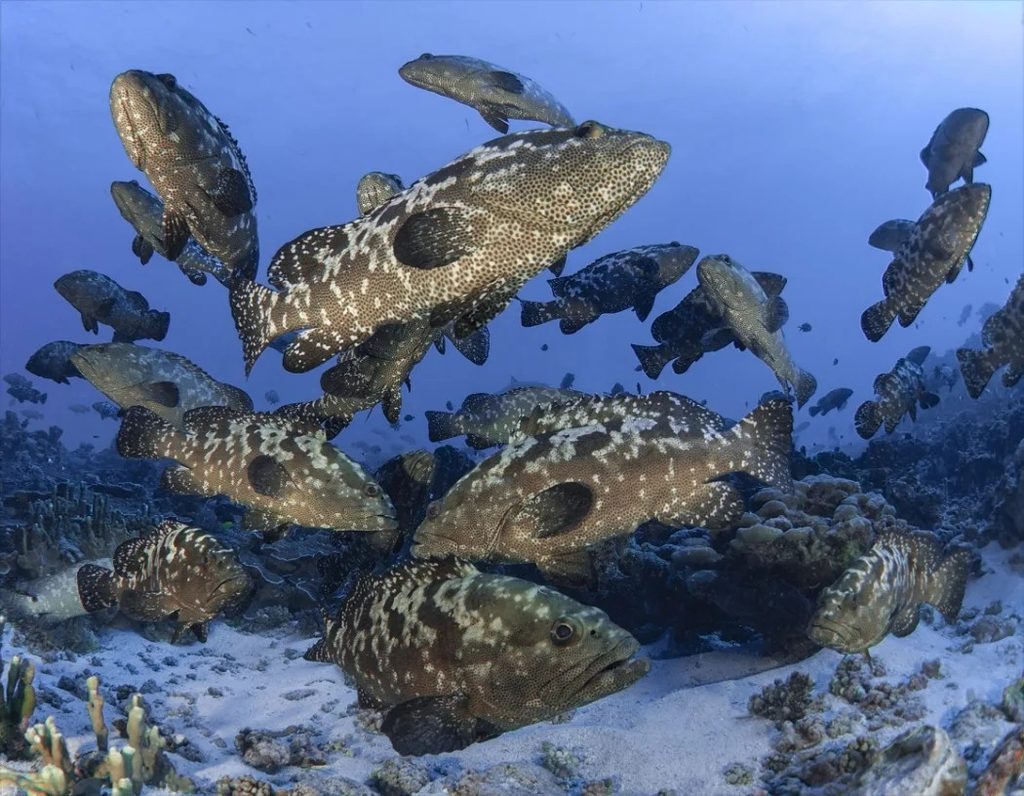
For generations, coastal fish have been the backbone of food security, livelihoods and culture across the Pacific.
Whether it be seafood sourced from village fish traps or by handlines, the ocean has fed island communities reliably and sustainably across centuries.
But new regional research suggests that something far less visible is now travelling up the food chain, you’ve probably heard of the term before – microplastics.
A landmark study titled “Considering ecological traits of fishes to understand microplastic ingestion across Pacific coastal fisheries” published this week in PLOS (Public Library Of Science) One, provides the most comprehensive assessment to date of microplastic contamination in coastal fish across four Pacific Island countries: Fiji, Tonga, Tuvalu and Vanuatu.
Its findings challenge long-held assumptions that remoteness offers protection from global pollution and raise urgent questions about waste management, fisheries health and human exposure.
Drawing on a standardised analysis of 878 fish from 138 species, the study revealed that nearly one in three coastal fish sampled contained microplastics.
In Fiji, the figure was far higher, almost three-quarters of fish examined were contaminated, exceeding reported global averages despite the country’s geographic isolation.
A regional first
Unlike previous Pacific-centered studies, which were often small-scale and methodologically inconsistent, this research compiled four nationally coordinated datasets using identical laboratory protocols.
Fish were sourced directly from coastal fishing communities, ensuring they reflected species commonly consumed for subsistence rather than those destined solely for commercial markets.
The result is a rare, region-wide snapshot of microplastic exposure in Pacific coastal fisheries and one that exposes stark national contrasts.
Fiji recorded by far the highest contamination levels, with 74.5 per cent of fish containing microplastics and an average of 2.17 particles per individual.
Tonga and Tuvalu showed moderate levels, while Vanuatu stood out at the other extreme, with fewer than five per cent of fish contaminated and an almost negligible average particle load.
These disparities suggest that local factors, including waste management systems, coastal population density, fishing practices and ocean circulation may be just as influential as global plastic flows.
Fibres dominate, reefs most exposed
Across all four countries, microplastic fibres dominated, accounting for between 65 and 95 per cent of particles recovered.
These fibres are commonly associated with synthetic clothing, fishing gear and ropes, pointing towards both land-based sources and fisheries-related inputs.
Fragments and films were also present, while polymer analysis showed widespread occurrence of common plastics such as polyethylene, polypropylene, PET and nylon which are materials used in packaging, bottles, fishing nets and textiles.
Crucially, contamination was not evenly distributed across fish types.
Reef-associated species were significantly more likely to ingest microplastics than pelagic or deep-water fish, reinforcing concerns that nearshore ecosystems are acting as accumulation zones.
Invertivorous fish, species that feed on small invertebrates living in sediments and reef substrates, showed the highest contamination levels.
This feeding behaviour increases the likelihood of ingesting microplastics either directly from sediments or indirectly through contaminated prey.
In contrast, planktivorous and open-water species generally exhibited lower levels, suggesting that microplastic exposure in the Pacific is closely tied to coastal habitats and benthic food webs rather than offshore waters alone.
Species under the microscope
Two species commonly eaten across the region; the thumbprint emperor (Lethrinus harak) and the dash-and-dot goatfish (Parupeneus barberinus), were found in all four countries and showed striking national differences.
In Fiji, 80 per cent of Lethrinus harak sampled contained microplastics, compared with just six per cent in Vanuatu.
Average particle loads followed a similar pattern, with Fiji significantly exceeding all other countries.
These differences underscore the study’s central message: exposure risk is shaped not only by what fish eat, but where they live and the environmental pressures surrounding them.
Human health and food security implications
While the study does not assess health impacts directly, it reinforces growing concerns about fish as potential vectors for microplastics and associated contaminants entering the human body.
Microplastics can carry toxic chemicals, heavy metals and pathogens, and may leach additives once ingested.
In Pacific Island countries, where fish consumption rates are among the highest in the world, even low-level contamination raises important public health questions.
The authors of the report, caution that current global assessments of microplastic pollution significantly underrepresent Pacific Island data, skewing international understanding and policy responses.
Without regional evidence, Pacific voices risk being sidelined in global plastics negotiations despite facing disproportionate exposure risks.
A call for Pacific-centred policy
Beyond its scientific findings, the study makes a strong case for integrating Pacific data into global pollution frameworks and for expanding monitoring to other island nations still absent from the literature.
It also highlights the importance of ecological traits as a tool for identifying high-risk species that could serve as bioindicators for ongoing monitoring.
Most importantly, the research reframes plastic pollution not as a distant or abstract threat, but as a local, tangible issue with direct implications for food security, customary fishing and community wellbeing.
As plastic production continues to rise globally, the Pacific’s reefs and lagoons are increasingly on the frontline. This study makes clear that isolation alone is no shield and that addressing plastic pollution will require solutions that are as local as they are global.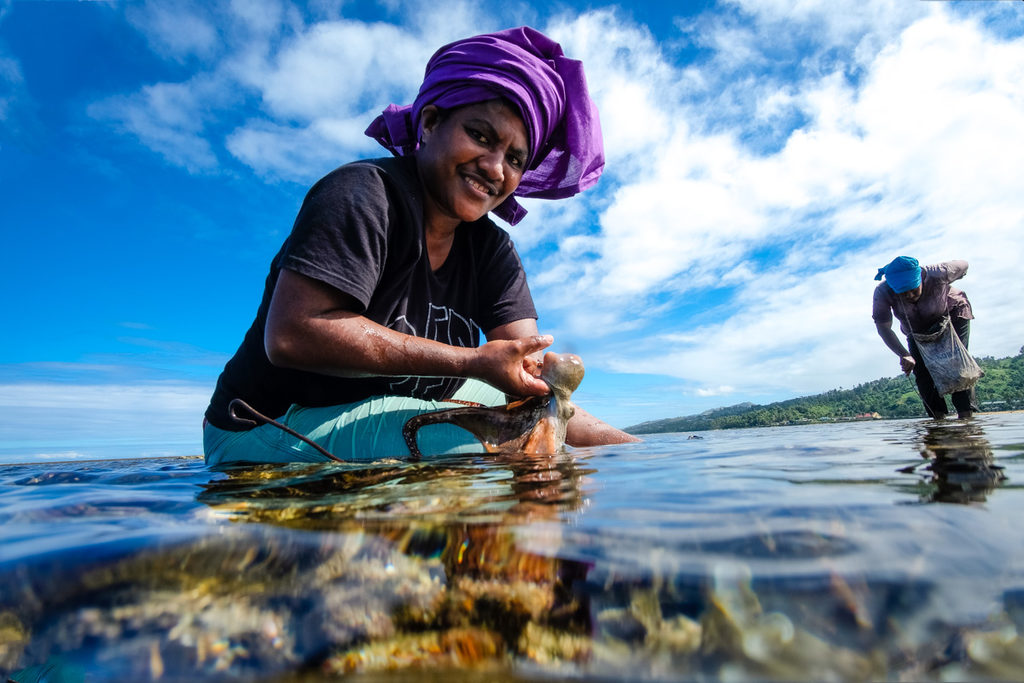
A Fijian fisherwoman out on the reef. According to the findings of the research “almost three-quarters of fish examined were contaminated” Picture: UNDP
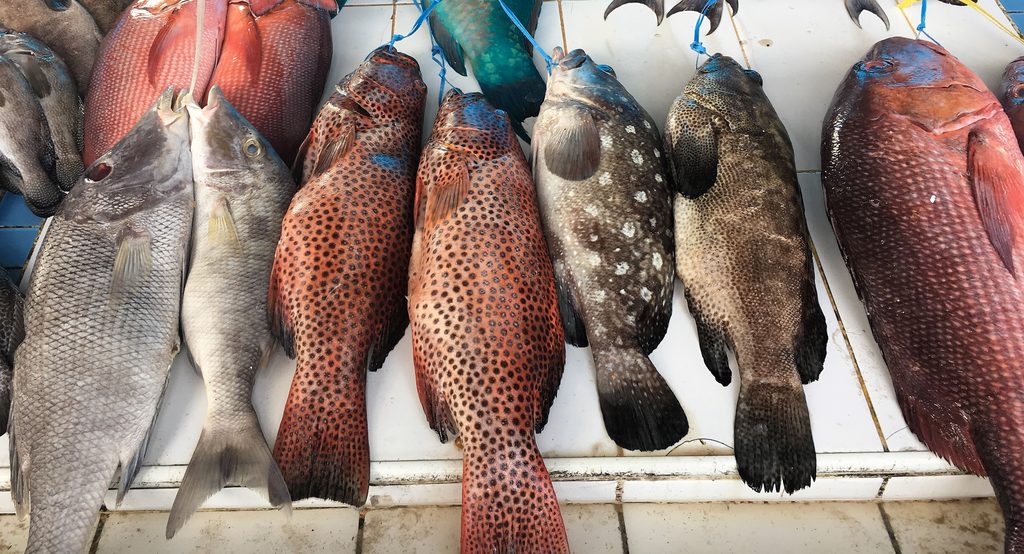
In Pacific Island countries, where fish consumption rates are among the highest in the world, even low-level contamination raises important public health questions
Picture: SUPPLIED

