
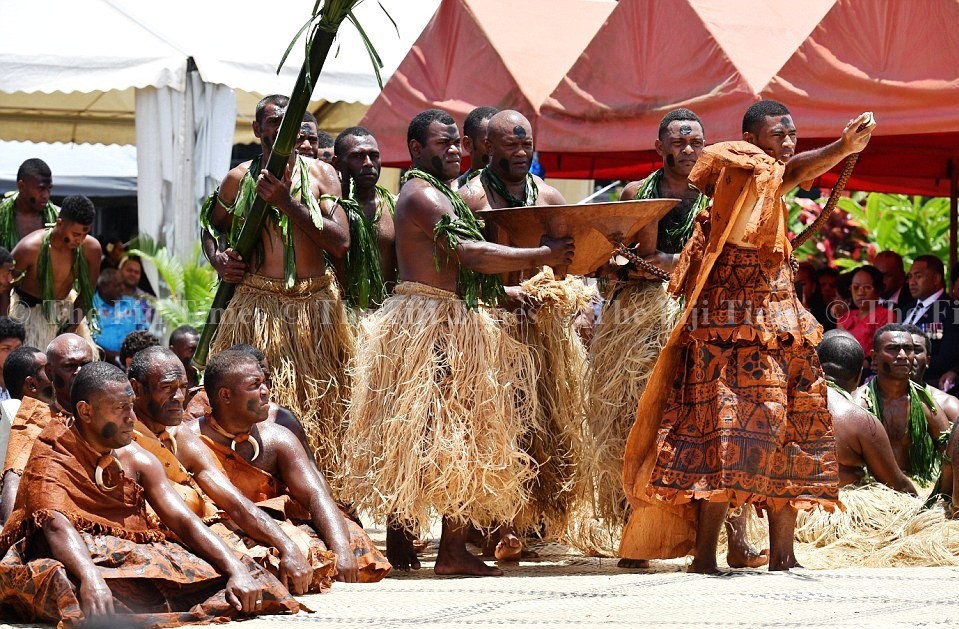
A leading cultural advisor has issued a stark warning to future church leaders, arguing that a loss of indigenous identity and cultural grounding is fuelling wider social problems in Fiji.
Speaking to trainee ministers at the Davuilevu Theological College during the recent commemoration for International Mother Language Day, Fijian cultural consultant Simione Sevudredre challenged students to reflect on their understanding of identity, language and tradition.
Drawing on a personal encounter with the national rugby sevens side during the COVID-19 pandemic, Mr Sevudredre illustrated what he described as a troubling disconnect among young Fijians.
He recounted being invited by a team official to speak to players about “na i tovo” – values and conduct. During the session, players were asked to introduce themselves, explain the meaning of their names, and describe their traditional roles within their communities.
“Many could explain their names. But when it came to their traditional roles, most could not,” he said.
The moment, he added, became more pronounced when then coach Gareth Baber stood and confidently traced his own cultural lineage, leaving the room in silence.
“It was clear, your coach knows who he is. But do you?”
Identity before theology
Addressing the trainee ministers, he warned that theological training alone was insufficient without a firm grounding in cultural identity.
“You are immersing yourselves in theological knowledge,” he said, “but are you preserving what is yours by blood?”
He stressed that language – na vosa – and identity were inseparable, arguing that a strong command of one’s mother tongue flows naturally from a deep awareness of one’s cultural roots.
“You cannot expect to understand heavenly things if you do not first understand what is here on Earth.”
He further positioned institutions such as the theological college as critical in safeguarding indigenous knowledge systems, particularly at a time when traditional concepts are increasingly questioned or dismissed.
Reclaiming the vanua
Central to his message was the concept of the vanua, a holistic worldview encompassing land, people, customs and spirituality.
Mr Sevudredre lamented what he described as a growing tendency to label traditional practices as “demonic” or incompatible with Christianity.
“Our identity lies in these practices. To dismiss them entirely is to lose a part of ourselves.”
He illustrated this through the traditional practice of sevu – the offering of first harvests, describing it not merely as ritual, but as a structured process of reconciliation and social harmony.
Historically observed during December, or vula ni vakanomodi, the practice prohibited conflict and emphasised forgiveness. Communities would exchange harvests, symbolising reconciliation, before presenting offerings at the bure kalou (temple).
“It was not about the size of the offering but what it represented, reconciliation and forgiveness.”
He noted that such practices reinforced communal bonds and ensured social stability, with symbolic acts believed to bring blessings for the year ahead.
Modern challenges, ancient lessons
Mr Sevudredre questioned why, despite the proliferation of churches across Fiji, issues such as crime and gender-based violence persist.
“There are thousands of churches today. That is a good thing. But why do these social ills remain?”
His answer was unequivocal: a neglect of foundational cultural principles.
“If you cannot protect and treasure what is yours by blood, how can you protect what you cannot see, the spiritual?”
He argued that traditional knowledge systems, particularly those rooted in respect for land and community, offer practical lessons that remain relevant in addressing contemporary challenges.
“Our ancestors protected nature, their environment, the things that bound them to the Earth.
“From there, they understood the spiritual.”
Memory and the future
Mr Sevudredre emphasised the importance of cultural memory, warning that its erosion threatens not only identity but the future of society.
Quoting both biblical scripture and historical reflection, he said: “My people are destroyed for lack of knowledge, not knowledge from books, but knowledge of the land, of the vanua.”
He urged the trainee ministers to see themselves not only as custodians of faith, but also as guardians of culture.
“Without memory, there is no culture. Without culture, there is no future.”

