
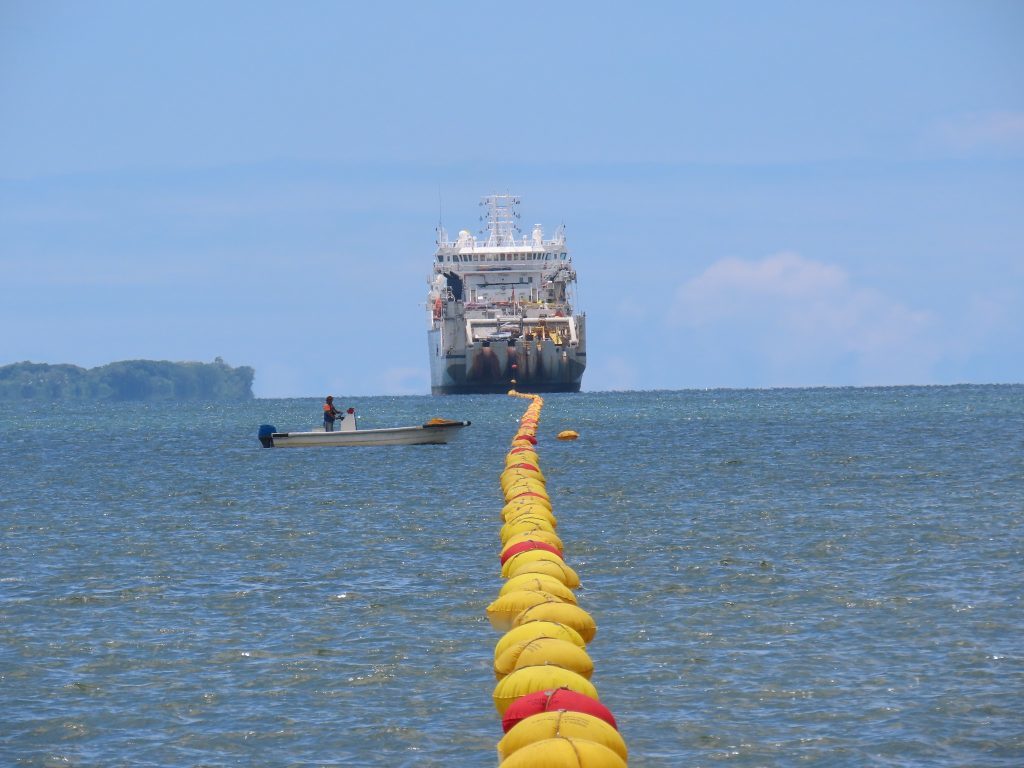
THE landing of Google’s Tabua and Bulikula submarine cables, together with the near-completion of a state-of-the-art ICT facility at Natadola, represents a defining moment for Fiji’s development trajectory.
What is unfolding here before our eyes is not merely an upgrade in telecommunications capacity, but the creation of foundational infrastructure capable of reshaping the country’s economic model.
However, connectivity alone does not guarantee transformation.
The cables provide the physical backbone, but policy coherence, skills development and institutional readiness will determine whether Fiji captures sustained economic value or simply serves as a transit point in a global network.
Infrastructure
Fiji International Telecommunications (FINTEL) remains Fiji’s sole international gateway provider, managing connections to major global systems and ensuring the country’s integration into international communications networks.
As a wholly owned subsidiary of Amalgamated Telecom Holdings (ATH), it plays a central role in safeguarding and expanding national connectivity.
Along with the Fijian government, FNPF and international partners, it is a key player in the execution and delivery of this strategic development.
In early 2025, Fiji welcomed the landing of Google’s Tabua and Bulikula cables under the broader Google Pacific Connect Initiative, an ambitious programme designed to enhance the reach, resilience and reliability of internet infrastructure across the Pacific.
The Tabua cable, named after the sacred Fijian whale’s tooth, significantly boosts trans-Pacific connectivity between the United States, Australia and Fiji.
With 16 fibre pairs and a total system capacity of 272 terabits per second, it dramatically increases available bandwidth.
Its dual landing points at Vatuwaqa in Suva and at Natadola provide essential path diversity, reducing vulnerability to natural disasters.
The Bulikula cable, named after the golden cowrie shell, delivers Fiji’s first direct, low-latency link to Guam and North Asia.
Beyond strengthening Fiji’s own network, it functions as a backbone system that other Pacific island nations can connect to, enhancing regional resilience and diversifying data routes across the ocean.
Taken together, these developments elevate Fiji from being simply connected to being strategically positioned within the Pacific’s digital architecture.
Digital-services
Enhanced bandwidth and lower latency open the door for Fiji to scale a digital-services export sector.
Business Process Outsourcing and call-centre operations could expand significantly, particularly given Fiji’s English-speaking workforce and favourable time zone alignment with Australia and parts of Asia.
Beyond traditional BPO, the country could develop Knowledge Process Outsourcing services in legal processing, accounting and medical transcription.
There is also scope to promote remote professional services such as software development, artificial intelligence data services and cloud-based tourism platforms serving the wider Pacific region.
To realise this potential, government policy would need to support export-oriented technology zones and provide targeted tax incentives that attract investment while ensuring meaningful domestic participation.
Data-centres and cloud ecosystem
The combination of high-capacity cables and dual landing sites creates favourable conditions for data-centre development.
Fiji could position itself as a location for secondary data centres and disaster-recovery hosting for regional businesses and governments.
Encouraging the establishment of regional cloud nodes would enable Pacific governments and financial institutions to store and process data closer to home.
If coupled with strong data-protection laws and regulatory clarity, Fiji could market itself as a trusted jurisdiction for Pacific data sovereignty.
Such a strategy would shift the country from merely facilitating data transit to actively hosting and managing digital assets.
Investing in skills and talent
No infrastructure project can deliver inclusive growth without a parallel investment in human capital.
A coordinated national digital-skills acceleration programme would be critical to ensure that Fijians occupy high-value roles within the emerging ecosystem.
Training in software engineering, cybersecurity, artificial intelligence and data analytics must align with industry demand.
Partnerships between universities and private-sector operators would help bridge the gap between academic learning and practical employment.
Without such investment, Fiji risks importing expertise rather than cultivating it, limiting long-term economic gains.
Pacific’s digital gateway for government services
With enhanced resilience and capacity, Fiji is well placed to host shared digital platforms for the Pacific region.
Regional disaster-management systems, health information platforms and fintech regulatory sandboxes could all be anchored in Fiji.
The development of digital identity frameworks and regional payments infrastructure would deepen economic integration across Pacific island nations.
In doing so, Fiji would strengthen both its economic base and its geopolitical relevance.
SME transformation
The benefits of enhanced connectivity must extend beyond multinational corporations.
Domestic small and medium-sized enterprises require support to adopt digital tools, expand e-commerce operations and integrate digital payment systems.
Government-backed digital adoption grants and procurement policies that favour locally developed technology solutions could stimulate home-grown innovation.
Strengthening the domestic digital economy ensures that the gains from international connectivity circulate within the national economy.
Cybersecurity, energy and strategic risk
Greater connectivity also brings heightened exposure to cyber threats.
Establishing a regional cybersecurity operations centre and aligning data-protection legislation with global standards will be essential to building trust in Fiji’s digital ecosystem.
At the same time, policymakers must manage strategic risks.
Ensuring meaningful local workforce participation will prevent over-reliance on foreign expertise.
Safeguards are needed to avoid excessive value leakage to foreign ownership structures.
Moreover, rising energy demands from data centres must align with Fiji’s renewable energy ambitions to maintain environmental sustainability.
A defining national moment
The arrival of world-class ICT infrastructure at Natadola and the dual cable landings in Suva and Natadola give Fiji a level of digital resilience unmatched by most Pacific neighbours.
Yet infrastructure is only the starting point.
Whether Fiji emerges as the Pacific’s primary digital hub will depend on the speed and coherence of its national strategy.
If policy, skills development and regulatory reform advance in tandem with connectivity, the country could transition from a tourism-dependent economy to a diversified digital-services centre.
If not, the cables will carry global data through Fiji without fundamentally transforming its economy.
The opportunity is immediate and substantial but the outcome now rests on strategic execution.
Information for this article was compiled from industry and academic sources, including Submarine Networks’ technical overviews of the Bulikula and Tabua submarine cable systems, the National Centre for ICT at Fiji National University’s report on Telecom Fiji’s national ICT infrastructure, the APNIC Blog on Fiji’s strengthening internet connectivity, and FINTEL’s documentation on international gateway and submarine cable operations.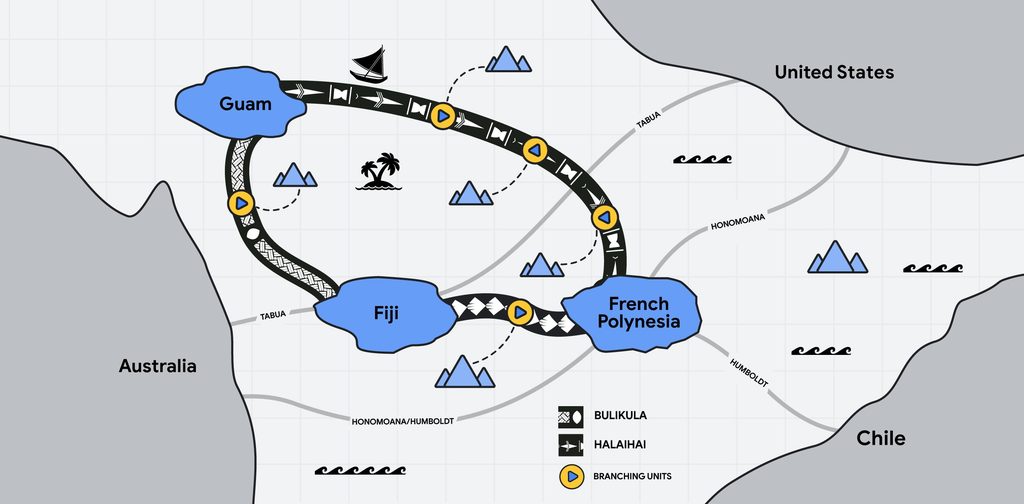
Picture: GOOGLE CLOUD

