
While the National Economic Summit was big last week, Sports made the news this week.
FRU hit the headlines for unpopular reasons while the event that gripped Fiji for three days was the 2023 Coca-Cola Games.
I enjoyed the nostalgia brought on by watching the games on television from the comfort of my desk in The Fiji Times newsroom.
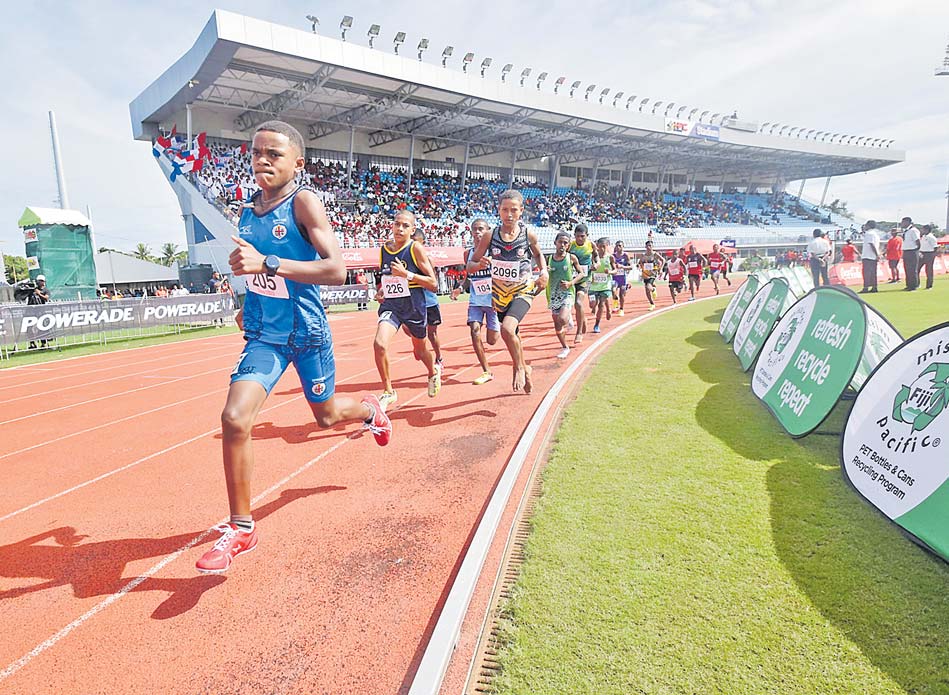
The kaleidoscope of colours, sizes and shapes, plus the deafening sounds of cheering brought the HFC Bank Stadium to life.
Apart from the stiff competition and healthy school rivalry, it was encouraging to see Fijians come out in droves to have fun in the sun, despite the intermittent rain.
The Coca-Cola Games is not just an annual athletic competition.
It is the biggest event of its kind in this part of the world.
Apart from the sporting side of things it promotes, the athletics competition has a number of distinct advantages which I wish to highlight.
The necessary preparations in the lead up to the games, some of which take a good 12 months, teach students how to treat and condition their bodies so that they can achieve peak level performances.
To remain committed throughout many months of strenuous training demands staying truly focused and motivated.
In the end, only those who observe strict discipline and work hard succeed.
The games also prepare athletics to organise and manage their time wisely in order to attain specific goals they want to achieve, make friends with those they don’t know, develop inter-relationships with their peers and acquire new skills and experiences that may come handy later on in life.
One can be excused for claiming that there is no single event in Fiji that is able to bring the young and old together from different parts of the country, like the Coca-Cola Games does.
According to Coca-Cola EuroPacific Marketing Manager, Lawrence Tikaram, this year, 3156 athletes from 151 schools took part, making it the biggest games ever.
Last year 3000 athletes participated, which means a few schools that were absent last year were able to make it in 2023.
Many friendships that were created and revived over the past three days would remain intact for many years to come, even when students leave school and grow into adults.
Competitors in the same event learn to respect each other and some grow to become best friends for life.
The fans who shout until they drop from the sidelines, fly their school flags or tease through annoying chants, are one of the most important components of the Fiji Finals.
In an essay titled “Trust Me, Sports Without Fans Is Not Sports,” Matthew Futterman, a veteran sports journalist from the US, correctly said “the roar of the crowd is as vital to sports as a ball or a net”.
Fans turn up in the thousands to cheer their favourite schools on and provide encouragement and support that not even the coach and school management can give.
The way they scream out in frenzy, do their fanatic wave and dance to the music, help motivate competitors to perform their best and not quit even when on the verge of giving up.
Then there is the most important support base – the family, that helps athletes unconditionally, and makes them feel good about themselves, their performances and achievements, even though they may not win a single medal.
Unemployed parents may sacrifice a family need just to buy a training gear, cut copra to pay for island boat fares to Suva or fundraise to afford a pair of track shoes.
A tap on the back from siblings, kiss from mum on the ground and coaxing from dad saying “I am proud of you!” can go a long way in making an athlete win a medal of any colour or encourage a demoralised loser to try again next time.
It is quite amazing to consider how the coke games can make parents and children understand and appreciate each other.
Participating in sports helps build leadership skills.
Taking part in the CocaCola Games have provided the opportunity for many of our young people to learn new life and leadership skills.
Team captains or grade captains learn to become role models for their peers and juniors.
They also learn how to delegate, communicate, encourage, empower and lead by example.
All these become important values they will use as they grow older.
Everyone knows that the best performing schools during Coca- Cola Games are those who have professional and quality coaches.
This very important cadre of people are responsible for pushing athletes beyond their limits.
Coaches who use positive coaching techniques can help boost morale and team unity.
They give athletes the tools to win.
It is common to hear that schools that do well in sports do not perform well academically.
That is not entirely true because participating in sports can leave a positive impact on schools.
The secret is finding the right balance, meaning if you can learn to organise your time and discipline yourself, then you can succeed in both.
On the other hand, many students who excel in sports may not be good academically but they could become national icons and represent the country internationally through sports.
As they become famous, remember it is usually the school that moulded them and recognised the raw talents in the first place.
The Coca-Cola Games would be incomplete without having a burger or roti sold on the roadside on the way to the stadium.
Women and men who prepare food and sell them wake up very early in the morning.
They have become an integral part of the games every year.
Business houses that sponsor the various aspects of the games make the event possible.
Without them there is no Coca-Cola Games.
At the end of the day the staging of this week’s Coca-Cola Games was dependent on each and every one of us.
We all made the games a reality and a success and we should all share its positives.
This article was written on Friday so I take this opportunity to congratulate all winners and all those who participated.
Until we meet on this same page same time next week, stay blessed, stay healthy and stay safe!

