
THERE are many exotic places in Fiji where nature whispers softly.
And there are places where the bold elements of display their dynamism and dramatic overtones – like the gushing wind in your ears, shifting sand beneath your feet, and the ebbing seas bellowing beyond silhouetted hills.
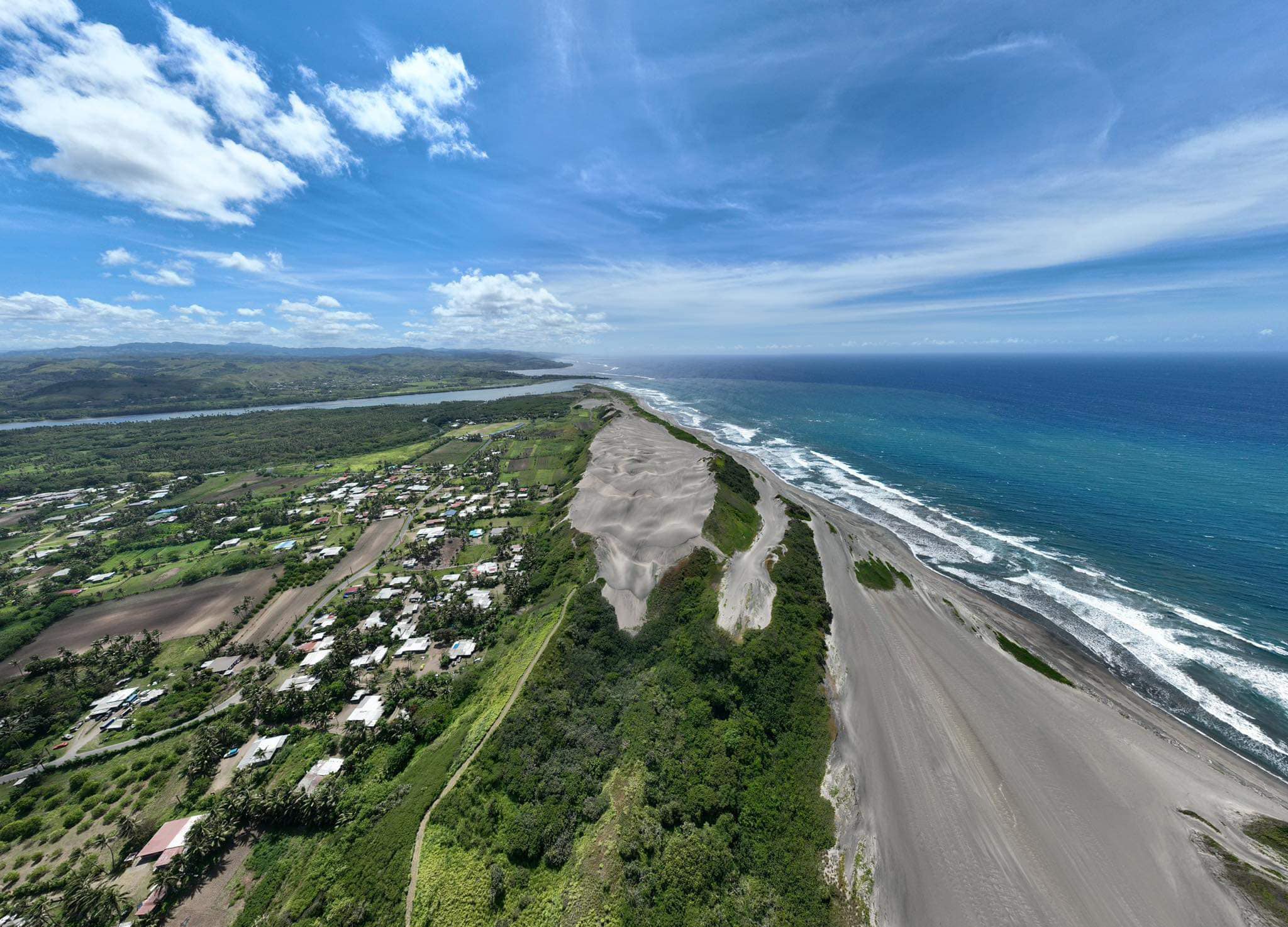
The Sigatoka Sand Dunes National Park is one of those bustling places, and more.
If you position yourself for a moment on the sparkling grey-white sand, sculptured by centuries of boisterous winds and pounding waves, you will begin to understand why this splice of local coastal paradise leaves visitors spellbound.
The dunes roll and fold like waves fosilised by time, ascending and descending toward the distant horizon where the Pacific kisses the blue sky.
Established in 1989, the 650-acre park protects one of Fiji’s most remarkable natural landscapes, a natural melting place of surf, sea, sand and sun.
For travellers, both local and foreign, who love chasing the breathtaking offerings of mother nature, the Nadroga jewel is nothing less than a perfect setting for learning, adventure and fun.
The park is open daily, and its local rangers welcome visitors with the brand of unadulterated warmth that Fiji is well known for.
Before you set off, they’ll walk you through the layout of the property, pointing out the two trails that wind across the magnificent dunes.
One is a gentle half-hour wander and the other, a longer one-hour journey that traverses the forest pockets and reaches sweeping vantage points.
Either way, the walk begins with a gentle sandy massage underfoot, enveloping greenery and the wind carrying the distant rhythm of the ocean.
Where the forest basks in the sand
If you make it to the first lookout, you’ll notice the physical form of your surroundings change unexpectedly.
Below lies a gully dense with sturdy native trees — sikeci, dilo and dakua, forming a dry forest at a place the locals call driodrio, or “darkness”. It is a place intricately woven with history.
Local elders say the forest is a mystic pathway to the spirit world. And if, on a clear night, a falling star streaks down toward the trees below, it is said to be an omen that an elder in the village will soon pass on.
The vegetation here, though stunted in growth, thrives in the dunes’ sandy soil, a mosaic of native and introduced species that somehow manage to flourish in the restless sand and scotching ground.
At some places, towering mahogany stands shoulder to shoulder with dancing pandanus woodland, while the network of vines, grasses and creeping plants spread across the sand like a living carpet, holding the dunes in place and conserving its vitality.
Closer to the coast, as the hills descend to the beach, you’ll find clusters of humble herbaceous plants that form the quiet pharmacy of the dune forest. For generations, local communities have turned to these plants for traditional herbal concoctions, remedies passed down thousands of years long before the conquest of modern medicine.
Life of the dunes
Listen attentively as you walk and enjoy the breeze. The dunes begin to reveal their other residents.
High in the jostling branches, a noisy colony of fruit bats squabble and rustle in the afternoon heat. Native birds sing their choruses through the trees, the shy Fiji Bush Warbler, the bright-voiced White–collared Kingfisher, and occasionally the watchful shadows of the Fiji Goshawk circling in the skies above.
Multi-hued butterflies flutter through the warm air while honeybees collect nectar from flower bed to flower bed. Slow down for a moment and the dunes begin to whisper their quiet orchestra of life
Memories of the forgotten past
But the dunes hold more than a multitude of plants and serenading birds. Beneath their undulating and restless surface lies one of Fiji’s most important archaeological sites.
Here, aggressive coastal winds have been uncovering fragments of the past — pottery shards more than 2600 years old, stone tools, ancient burial remains and traces of the seafaring Lapita people believed to be among the first to settle in Fiji.
Past archaeological discoveries is a reminder that the Sigatoka sand dunes are not just a living landscape but a natural archive, where past stories continue to surface layer by later.
If you’re feeling adventurous, climb to the crest of one of the higher ridges. Some dunes rise as much as 60 metres above the coast, and from the top the view stretches endlessly – rolling sand hills on one either side, the Sigatoka River estuary to the left and the wide expanse of the blue Pacific.
With the wind blowing against your face and the sun glaring from above, it’s not unusual to see visitors stretch into a yoga pose while drawing in the therapeutic salty breeze.
They say time spent close to nature calms the mind, eases the body and quietens the noise of everyday life. At the dunes, those small miracles are freely carried on the wings of the wind.
Tree hugging
Tree-hugging is one of the activities to enjoy on the final stretch in the park’s hiking trails.
After taking a few photographs of the colony of flying foxes within the park, you will notice something clinging to the trunks of nearby mahogany trees.
At first glance they look almost like plant-dwelling sloths resting against the bark.
They are not. They are tree huggers.
The curious shapes are made by visitors using vines, driftwood and other natural materials found along the beach and forest floor. Carefully arranged around tree trunks, they resemble human figures embracing the trees and standing watch over the forest.
The idea, we are told, draws inspiration from conservation movements in the world where communities once embraced trees to stop them from being cut down. The symbolic act grew out of growing concerns over deforestation caused by excessive logging, unsustainable development and commercial agriculture.
Hugging a tree symbolises a deep concern for the forest and helps visitors grasp the importance of plant life in maintaining the balance of the ecosystem and the need to protect it.
Standing beneath the shade of the mahogany trees, surrounded by these quiet wooden figures locked in an eternal embrace, the message would be impossible to ignore.
Guardians of Fiji’s heritage
The Sigatoka Sand Dunes National Park is managed by the National Trust of Fiji, a statutory body established in 1970 to protect the country’s natural and historical heritage.
Its stewardship extends to sites across the islands, including the Momi World War II Gun Site, Borron House, the crested iguana sanctuary on Yaduataba Island in Bua, conservation sites in Levuka, and the lush Garrick Rainforest Reserve in Serua.
At the sand dunes, the Trust also offers specially designed activities for schools, offices and organisations looking to mix exploration with team-building. Staff at the park can help tailor programmes that make a visit both memorable and meaningful.
But for most visitors, the real magic of the dunes is simpler than that.
Just walk. Stroll the ridges, kick the sand and listen to the howling winds.
Watch the ocean glimmer in the distance. And let the immortal sand do the rest!

