
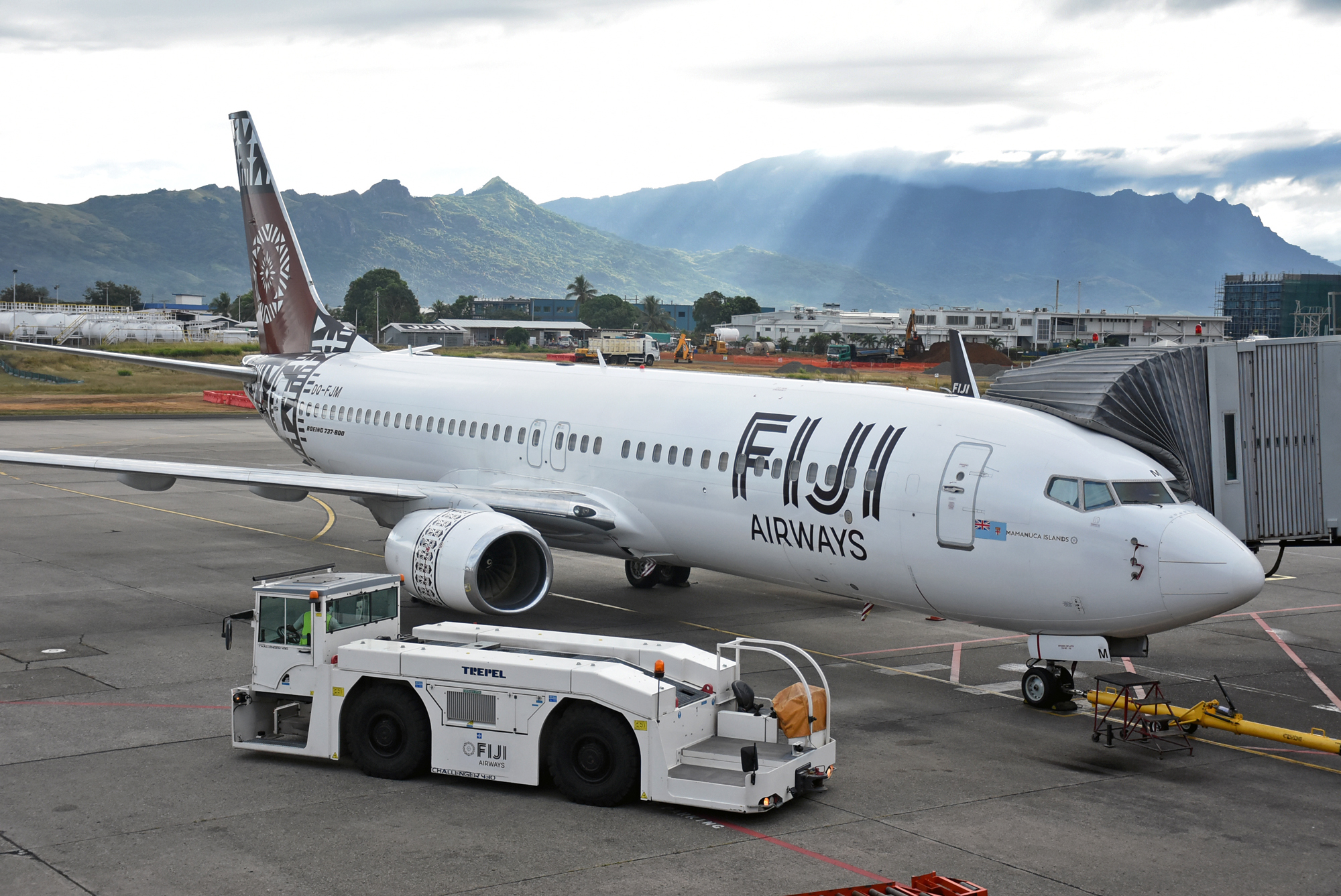
THE Israeli-US war on Iran, now into its fourth week, may have yet to filter down to everyday life in Fiji but for our national carrier Fiji Airways – the critical link between Fiji and the world – every day that this war drags on is putting pressure on its ability to keep things running as they are.
Spikes in jet fuel prices, which has doubled since the war began on February 28, has put the airline on guard as it treads a thin line between protecting its revenue base and the increasing costs driven by high fuel price and disruptions in supply flow.
To start cutting back on routes in order to save costs, as some airlines have done in their response to the crisis, is an option on the table but not likely one that the company will activate now.
Unless the war drags on.
“The worst-case scenario for any airline is another COVID,” Fiji Airways managing director and chief executive officer Paul Scurrah said in an interview with this newspaper last week.
“In this circumstance, the worst case specifically related to the Middle East crisis is that it is prolonged and that we start to see an impact on our ability to get fuel.
“Of course, there’s going to be, if it goes for much longer, a sustained increase in the cost, and that will start putting pressure on airlines, particularly on marginal routes where they may have been not necessarily making money.
“And so you might see temporary network changes. We may do that.
“Certainly the other carriers are doing it. But we want to resist the temptation to do that just on a cost basis and do what we can to recover on the revenue side.
“Now, we know that that’s not an open opportunity for us.
“If we push our fares up too much, it might actually kill demand. So, it’s a balancing act.”
Tourism makes up around 40 per cent of Fiji’s GDP.
Some argue even 50 per cent.
Over 120,000 Fijians are directly employed by the tourism sector according to the Fiji Bureau of Statistics.
As the central cog in Fiji’s tourism supply chain, not to mention a major investment for the Fiji National Provident Fund, which owns 30 per cent, keeping Fiji Airways running is not only in the national interest.
It is a matter of national security.
“My ambition is to make sure that we continue flying with our full fleet, with a full amount of seats that are coming in and out of Fiji so the hotels and the tourism industry here, who are so reliant on us, have an opportunity to actually help their businesses and to help tourism industry here,” Mr Scurrah said.

