
The journey began quietly in 2008, when an eight-year-old boy received a pair of tabla his parents brought back from India.
For 25-year-old Aman Singh, the instrument marked the start of a disciplined relationship with rhythm that would later shape one of Fiji’s most emerging youth bands – Yuvaan.
Music was already present in his home. His father Sajendra Singh regularly sang ghazals and bhajans, and Aman grew up listening before learning. Under the guidance of Guruji Vijay Prasad, he began formal tabla training, developing a strong foundation in rhythm that would influence every instrument he later played.
He described the tabla as the “King of Rhythm”, a belief that allowed him to transition naturally into drums and other percussion instruments.
By his teenage years, his musical range expanded. He learned keyboard at 14 under Pranesh and Albert Prasad, began vocal training at 15 with Shraddha Das, and later picked up the guitar at 17 to strengthen his rhythmic accompaniment.
Over time, he developed into a multi-instrumentalist, with rhythm remaining at the centre of his musical identity.
“Yuvaan was formed about three years ago, not through a planned launch but through a shared realisation,” Aman said.
At the time, all members were freelance musicians.
“We came together for a small devotional program performing bhajans and kirtans. When the program ended, the group recognised their musical compatibility and potential.”
Aman said the name Yuvaan was chosen to reflect both direction and origin. It symbolised youth energy and was also a name associated with Lord Shiva. The band’s devotional roots played a key role in shaping its early identity.
Initially, Yuvaan focused on Bollywood music, bhajans, kirtans and ghazals. As performances increased, their sound evolved organically. Audience response guided their musical direction, leading to a broader and more inclusive style that reflected Fiji’s multicultural landscape.
Today, the band performs a mix of Hindi, English, and iTaukei music. Reggae influences feature prominently, acknowledging its strong presence in Fiji’s music culture. Elements of hip-hop, rock and chutney have also been incorporated, allowing Yuvaan to connect with diverse audiences.
“Fiji music has a strong reggae influence, so we try to keep that in our setlist, we also blend chutney rhythms into Fijian music, and people respond well to that.”
Yuvaan’s instrumentation distinguishes it from many local bands. Alongside standard western instruments such as drums, bass and keyboard, the band integrates global percussion including tabla, djembe and dahola. This fusion creates a sound that bridges Indian, Fijian, and international musical traditions.
The band’s transition from devotional performances to the wedding and event circuit marked a significant turning point.
It demonstrated their versatility and broadened their audience base. Major performances followed, including appearances at the Vodafone Hibiscus Festival, Coca-Cola Christmas in the Park, and the Uprising New Year’s event.
Since its formation, Yuvaan has steadily built its performance portfolio, completing four major festival appearances, two mini concerts and more than 15 private events. Despite its expansion into mainstream entertainment spaces, the band has maintained its devotional foundation, performing at more than 20 religious and community programs. The group has also produced two devotional music videos and continued to strengthen its presence through venue-based performances at locations such as Masala Twist and Ashiyana.
Aman also built experience beyond the band, serving as a guest tabla artist and musician for Fiji Sur Sangharsh and Sa Re Ga Ma Pa for five seasons until 2019. These platforms helped sharpen his technical skills and stage discipline.
As Yuvaan’s profile grew, he faced a personal decision. He was studying towards a Bachelor of Commerce in Human Resource Management and International Business.
“I realised that music was my gift, I didn’t want my studies to define me. I wanted my work and craftsmanship to speak for who I am.”
For Aman, music remains a continuous learning process. He said mastery was not a destination, but a discipline built through daily practice and listening. Performing, he added, carried responsibility.
“If people feel something when we perform – whether it’s happiness or emotion – then we have done our job,” he said.
Inspired by international figures such as Zakir Hussain and Surinder Kumar, as well as local ghazal singer Vivekanand, Aman’s focus remained on originality rather than imitation.
Looking ahead, he hopes Yuvaan will be remembered as a leading youth band that encouraged young musicians to view music as a professional pathway.
“I don’t want us to fit in, I want people to recognise our sound and say, ‘That’s Yuvaan’.”
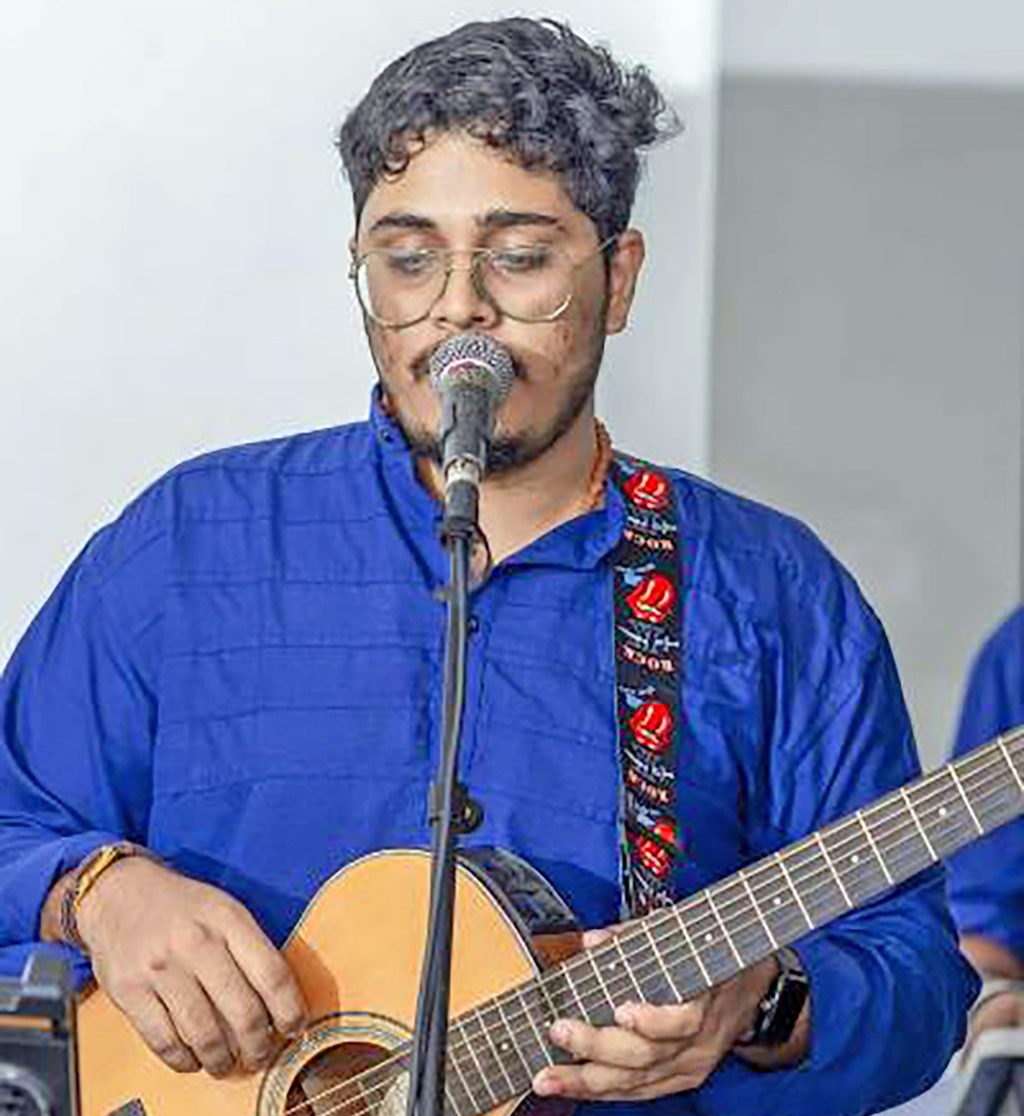
Aman Singh, the lead singer of Yuvaan. Picture: SUPPLIED
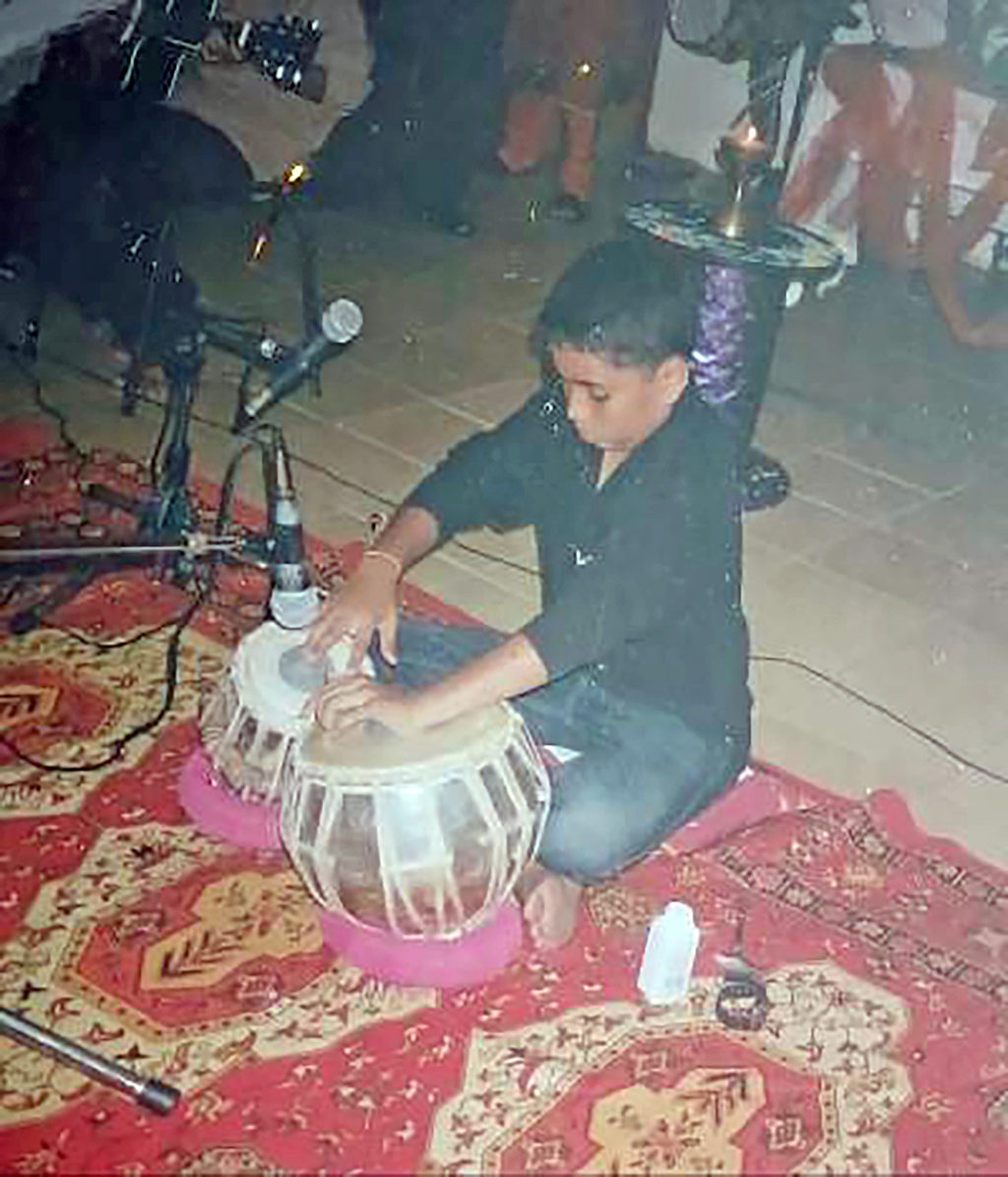
Aman Singh learning to play the tabla at the age of eight. Picture: SUPPLIED

