
RATU Seru Cakobau Memorial Church which was built during the reign of Ratu Seru Cakobau was completed in 1880.
A few decades on, the church still stands as a relic on Bau Island.
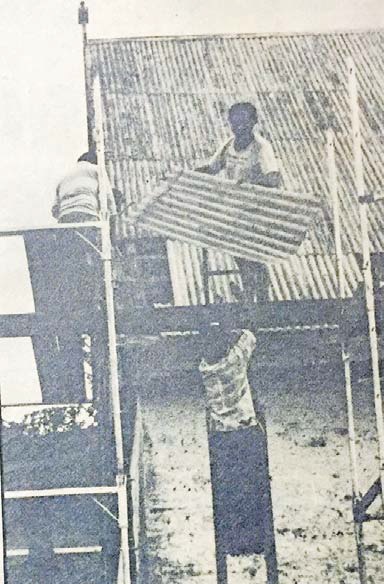
But in 1980, parts of that historical structure needed to be removed to allow room for reconstruction.
The Fiji Times covered the reconstruction works carried out on the church in February, 1980 with an article being published on February 5, 1980.
According to this newspaper, before the reconstruction work started on the church building, there were traditional ceremonies in which yaqona and ‘i madrali’ (food of pigs, fish and dalo) were presented to the Vunivalu of Bau, the governor general Ratu Sir George Cakobau.
The Bau Church Committee chairman then, Alisi Dobui, said the cost of the reconstruction was estimated at $100,000.
She said they hoped workers would complete the reconstruction in about three months.
The pulpit and the walls of the church which were built from stones mixed with coral and clay were preserved during the reconstruction.
This was the second reconstruction work that was carried out on the church with the first renovation being done in 1954 by the people of Daku.
Two elderly women of Bau, 77-year-old twin sisters, Raijieli Raceva Vuniwakaya and Sereana Tolani Balekiwai told The Fiji Times then that they remembered the church during its early days.
They said that in 1910, when they were eight years old there was a hurricane which was later followed by a tidal wave.
During that period the church floor was covered with “tabakau” (woven coconut leaves) used in those days to cover the floors of homes and the church was lit with kerosene lamps. In 1915, according to the report, the women of Bau had decided to put a floor in the church.
The floor and the seats for the church were built by the then principal of the Davuilevu Theological School, Mr Bennett.
“Reverend Dean was minister at the time on the island but Reverend Culvert was the first minister of Bau,” the sisters said.
“After kerosene light came gas then benzene lights, followed in 1938 by electricity.”
The sisters said a German, John Sinclair, built the church with the help of the “bobula” (prisoners of mission war).
They said the war started when Wawabalavu of Nabutautau in Nadrau killed Reverend Baker.
The Vunivalu had sent his men to Nadrau to try and defeat Wawabalavu’s people. Most of the men from Bau were killed, including their grandfather, Tomasi Talemaigusuna Toganivalu.
They said the “i madrali” was food prepared in those days to please the gods.
During the reconstruction period the people of Bau used the “bure kalou” for church services.

