
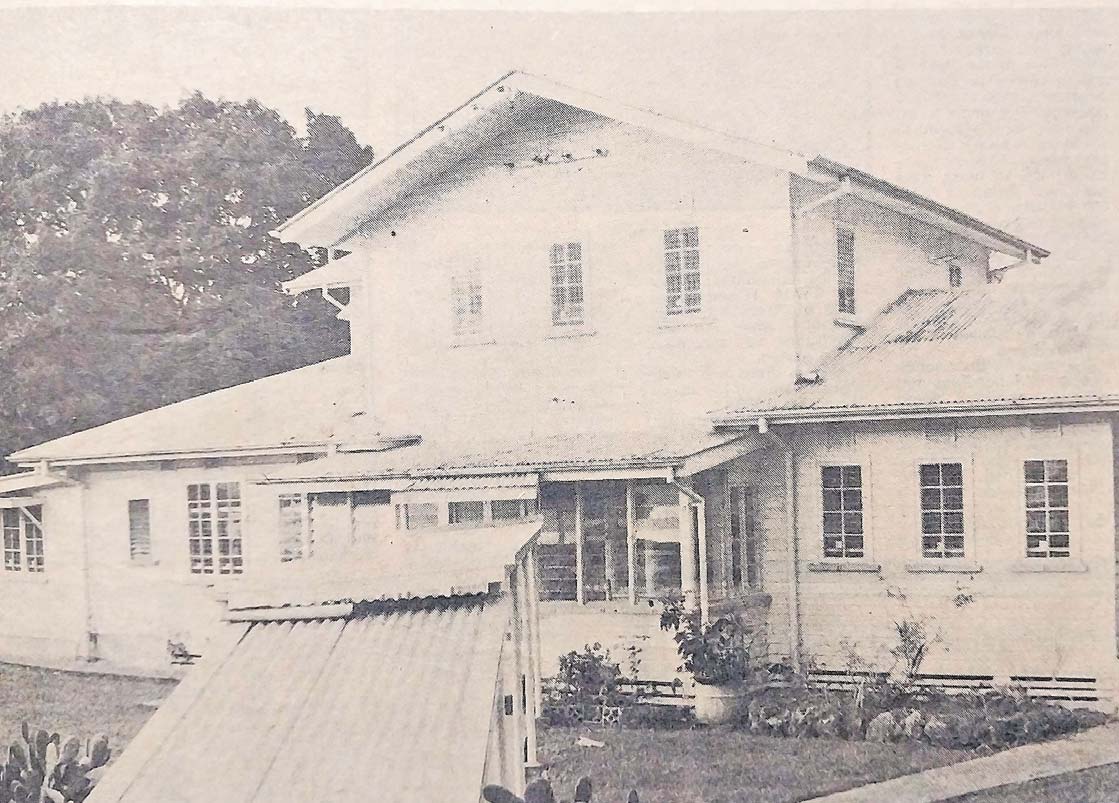
St Giles Psychiatric Hospital was built in the mid 1890s at the same site on which it is along Reservoir Rd, Tamavua.
On the site today, are much improved buildings. An article published by The Fiji Times on June 3, 1977 on the history of the institution shared how the then tiny quarters housed a small number of patients who were cared for by lay people known as warders.
The institution was known as the Asylum and its affairs were managed by a board of about three members consisting of the then attorney-general, the chief medical officer and a member of the public.
The very first report by the board of 1903 read: “The premises and patients were inspected and their conditions found satisfactory, no complaints were received.”
A return of admissions, discharges and deaths was presented and a report of the enquiry into the death of a patient on January 24 was considered. Recommendations regarding accommodation had been favourably considered by the Governor.
In 1905 there were five people on the board. The members inspected the hospital and recommended improvements.
They also determined who should be discharged.
The Asylum appeared to run well until 1906 when the first overcrowding was reported and an extension recommended.
However, the numbers of patients kept increasing and by 1909, the number grew to about 51.
These included 25 male natives 23 female natives and three Europeans.
Included in the category of natives, were; Indo-Fijians, iTaukei and any other islanders.
A separate ward was built for Europeans only and it was named the Levuka Ward, and it may be because in those days there were more Europeans settled at the old capital of Fiji.
A devastating hurricane of 1910 hit Fiji and the Asylum and the surrounding fencing was badly damaged.
The First World War came with its bitter experiences, soon after followed by the killer influenza that claimed many lives at the hospital, and in certain households all members of the family perished.
The whole situation was very bad, made worse by the lack of running water.
In those days water was stored in tanks and 44-gallon drums, and of course, wells were also in use. It was in 1927 when the question of septic tanks and electric lights were discussed.
However, it was not until 1938 that electric lights were installed at the Asylum.
The need for continuous medical attention was felt necessary by some board members. The late Mr Elahi and others were instrumental in having this done.
Prior to that, a nurse from the Colonial War Memorial Hospital used to visit the patients at the Asylum. Not many drugs were available either in those days.
The supervision was carried out by the superintendent of the CWM Hospital.
This state of affairs continued until 1964 when the first psychiatrist was appointed. Modern drugs and treatments came into usage during the 1960s.
In 1976, St Elizabeth’s Home became part of St Giles. The home was not in use because of the lack of staff and delay in building road access to St Giles.
The patients were separated on the basis of sex into large female and male wards.
The separation of improving patients from the chronic and convalescent ones was vital if progress was be made, and this was not available at St Giles then.
There were plans to use funds raised from this 1977 flag-day to set up a workshop where occupational, recreational and social therapies.
The use of occupation, recreation and social activities were essential elements in the treatment of the psychiatric patients.
This was by no means new. The goal was to foster the movement of the patient towards independence and to interfere as little as possible with his freedom and privacy.
To achieve all this at the hospital, the report said it was vital and that the improving patients be moved to St Elizabeth’s Home and trained staff, specifically nurses, be employed.

