
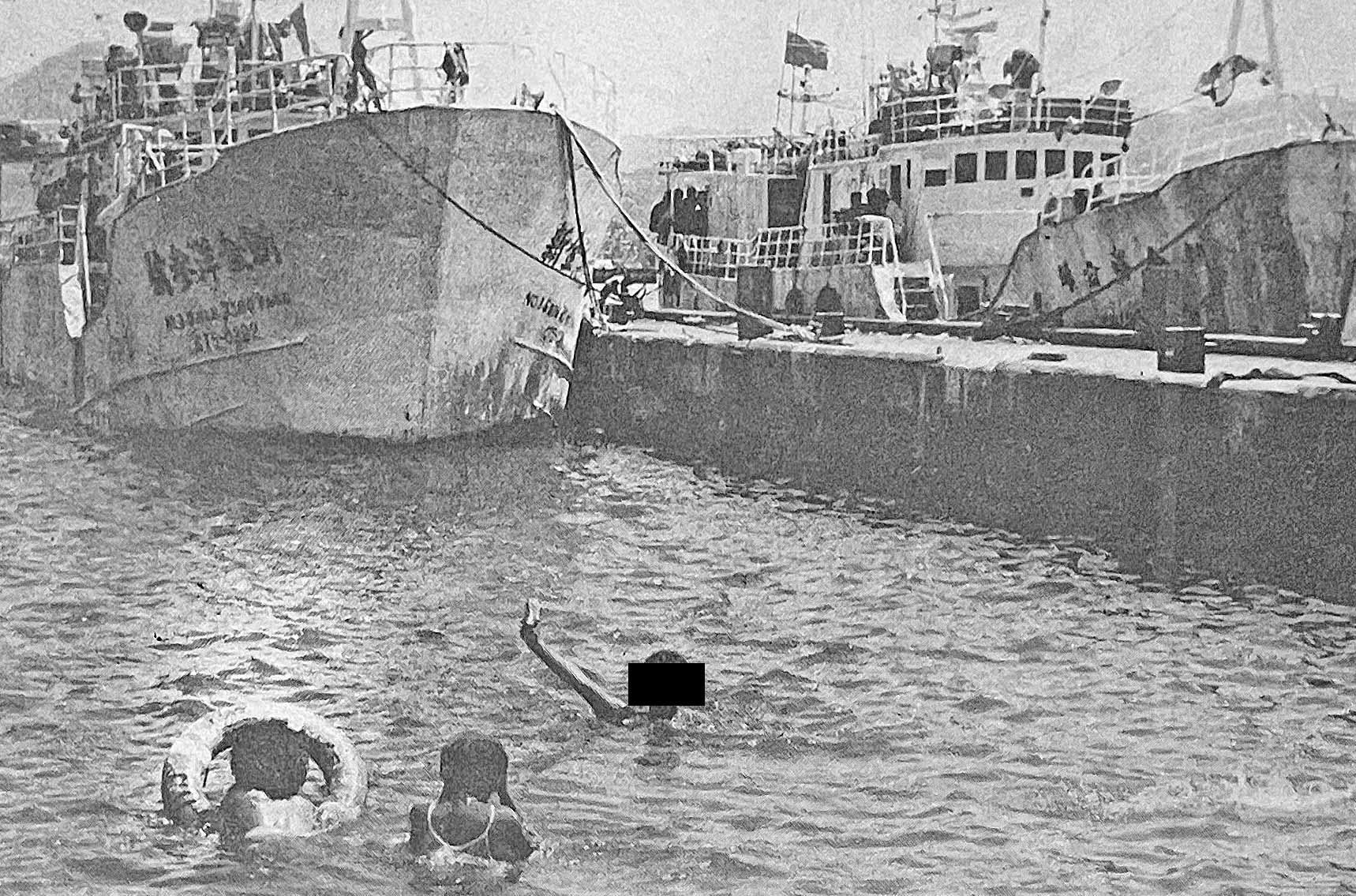
On April 13, 1986, The Fiji Times published an article about the double life of the waterfront girls of Suva.
The article said it had been 20 years since “Madam Ann”, as she was known among her friends, arrived in Suva from one of the outer islands to visit relatives.
The visit was meant to be for only a month, but after arriving in Suva, Madam Ann liked the place and asked that her stay be extended. She remained in Suva.
She told this newspaper that when she decided to stay, she had not anticipated the difficulties of making a living in the city.
To her, life was easy at first glance, as the relatives she had come to visit provided her the basic necessities.
She had a room of her own, there was plenty of food around and pocket money was provided now and then when she wanted to go out.
She thoroughly enjoyed the change in lifestyle.
There was no more fish diving throughout the day, or tear-filled eyes from cooking in a smoke-filled kitchen. Collecting firewood was now a thing of the past, as Madam Ann relaxed and enjoyed the comforts of modern living.
To her, Suva and its way of life were a dream come true. But as she continued to enjoy modern living, her life started to become sophisticated.
Without realising it, she was getting further and further away from her relatives as she began to make new friends and, together, they explored the Suva nightlife.
During a short period of time, all hell broke loose as Madam Ann went through the ABCs of adult life, including a way of life which became to be known in the local slang as kabawaqa.
So secretive had she become, even her relatives had no knowledge of her activities. Madam Ann was leading a double life.
By day she was a devoted, happy, carefree young and innocent village girl, but by night she roamed the streets of Suva looking for a good time.
Her activities were not discovered until two years later when a cousin who had gone to buy fish from one of the Korean fishing boats found her on board.
That was the breaking point. Of her own volition, she moved out of her relative’s home and joined a group of 12 girls who had made the Taiwanese and Korean fishing boats that frequent Suva their home away from home.
All those girls had their own stories to tell, but they had one thing in common — the desire to survive.
And they did that by selling their bodies. Madam Ann said life was not always easy on board the fishing boats.
“We have our ups and downs, language is an obstacle but not a problem. At times we are subject to abuse, but we have learned to live with this. What we cannot understand is the harassment we get from locals who only want to take advantage of us.
“I remember the first time I went on board, there were eight of us coming out of a nightclub drunk. With us was a group of Korean fishermen who had been on the high seas for six months and they invited us to join them on board.”
The ship was docked at the Millers Wharf in Walu Bay, now known as the Port of Mua-i-Walu 1. The gates to the area were locked and the watchmen would not let them through unless they paid him some money.
“We gave him $20. “Another time we had to swim from the main Kings Wharf to a Korean fishing boat because the watchman had increased his fee from $20 to $50. We could not afford the fee and we had to swim in and out every night.
“This went on for some time when another business-minded watchman offered his services to ferry us to and from the fishing boats in his punt for $2 per head one way.
“The arrangement went on smoothly until the old man died.
“To save us the trouble of going to and from the boats every night, the sailors made arrangements for us to stay on board. This suited our purpose well, we lived
on board, the sailors supplied us with food and booze apart from giving us money and clothes.”
The Sunday Times reported that under the arrangements, the girls did not really care whether they were paid or not.
Their main concern was to have a roof over their heads at night, plenty of food to eat, and money for spending.
In a way, it was like a marriage.
Each girl had her own man and they lived like husband and wife.
The ships were in for only a short period of time and the arrangement was convenient for them.
As they sailed away, the girls would jump onto a new one arriving, and the cycle continued.
Madam Ann said some girls got pregnant, and some of the fishermen made wonderful fathers.
She said there were a few girls around Suva then who were being looked after by those sailors, although they would only see them once in a while.

