
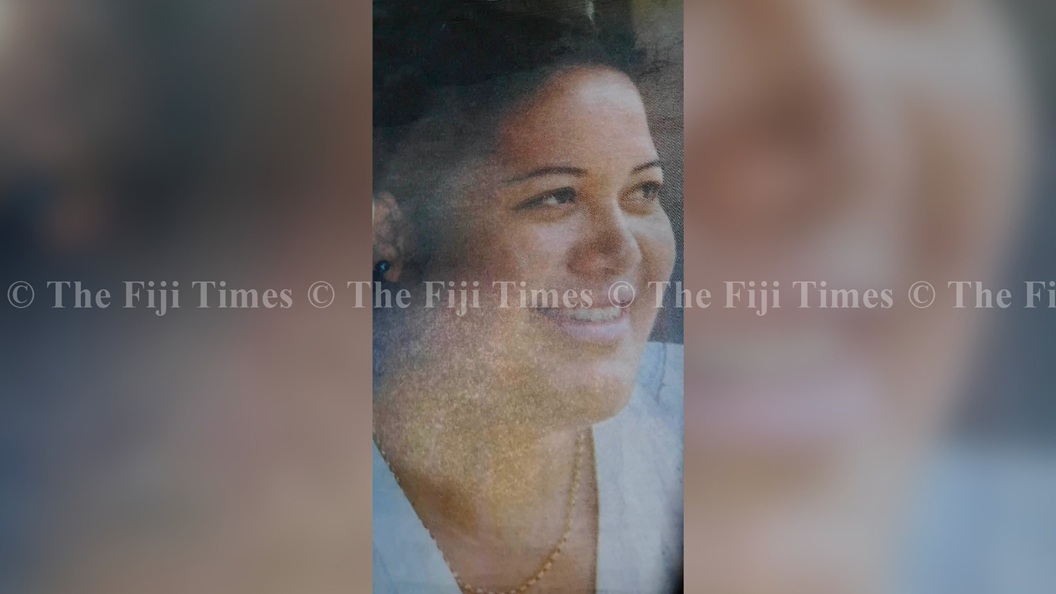
According to a report published in The Fiji Times on October 16 1999, Maire Bopp happened to be quite well-known in most Pacific Island countries.
The 25-year-old Tahitian woman was the first islander to come out publicly about being HIV positive.
She contracted the infection from her former boyfriend during their two-year relationship. He had known right from the beginning he was HIV positive, but was too scared to tell her and in the process, passed it on to her.
“This is the result of love, not sex. I was in love with him, and this is what happened,” Maire said.
Maire had revealed the sad reality at the Pacific Islands News Association (PINA) meeting the year before.
She first told it in the third person, and several times during her talk she broke down. At the end of it, she told everyone she was the victim, the unlucky island girl.
She was at the PINA conference in Suva again that year, where she was awarded the Medal of Freedom.
Maire had spoken openly in the media about issues concerning HIV/AIDS while she was a student at the University of the South Pacific.
“Although I was surprised when I received it, this award gives me reassurance that the media is supporting the work I am doing. I know that the media is sharing the views and messages I am giving to people. Knowing that gives me a lot of strength.”
But the main reason for her trip to Fiji was to continue with her awareness work. Her trips involved travelling to schools around the country, meeting with churches, youth, and community groups, talking about HIV/AIDS.
Earlier in the week that year, a documentary on four weeks of her life as a HIV-positive person was launched and was screened on television.
In the documentary, she said she was “basically a window to her life”.
“It is to show everyone that there are people living with AIDS, and there are responsible ways of living with it.
“It is also to show that all this stigma surrounding AIDS is wrong. I would like to bring a change in the way people think about these things.”
Maire was very passionate about what she was doing.
“It is not easy, but I have to do it. I have to let everyone know what is happening and what the life of a HIV positive person is about.”
One of the first meetings she attended after she went public was a regional meeting on AIDS which was held in Nadi the previous year.
Since then, she continued her advocacy work.
“I did a lot of advocacy work in the Cook Islands with church groups, schools, and community groups, as well as in Tahiti, where I was invited by parishes to speak to the young people.
“Here in Fiji, I have been to several schools and spoken to many schoolchildren about HIV/AIDS. They have been very interested, and what I gathered is that they know how the disease is contracted, and so on. But they want to share the experience of someone who has gone through it, and this is where I come in.
“I talk to them about my experiences, my life, and how I look at the issue.”
While Maire gained the courage to talk more openly about the issue, it wasn’t very easy when she first started.
“To tell you the truth, it was very difficult. When I first talked about it, I spoke as a third person. I sat there and looked at my colleagues and told them the story, keeping in mind that I had to keep the distance between the story and myself. But I broke down halfway through the story. But there was a need for this story to be told. This is what helped me carry on — the need for the story to come out.”
When she was first diagnosed, it was difficult for her to come to terms with it.
Maire had been very sick shortly before she was diagnosed and spent most of her time in the hospital. Soon after she was diagnosed, her father and brother flew from Tahiti.
“My brother was the first person I told. He was very shocked yet supportive.”
Her father was also very supportive, but found it hard to accept the fact that she was HIV positive. She returned home with them after completing her BA that year.
During her advocacy work, she met people who told her that this was not the sort of thing people wanted to hear or talk about.
“I disagree when people say this. My experience shows that this is the sort of thing people want to talk about. They want to be told they can talk about a particular issue, but not discuss this.
“People want to know what is happening. They want to know what I have been through, my experiences.”
Maire had been commended by many for her courage and strength to talk about being HIV positive.
“I don’t feel like a heroine, and I also disagree with the picture that some people want to present of me.
“Not too long ago, a Samoan said, ‘Don’t you think that because you are popular, always in the news, and now that there is a documentary, that you are helping make AIDS a fashion. Maybe young people look at you and think, ‘Wow, that is so cool’.
“In reply, I asked her how many HIV-positive people she knew who were popular. I don’t know anyone. I feel one of the reasons why I may have some impact on the people I speak to is because I am very positive.
“I have always been positive even after what I have been through. I want to show a positive face. Why should all this change only because I am HIV positive?
“When I talk to people, I discuss the pain, constraints, and burden of being HIV positive. Today, I would still be positive and would even have a better life if I weren’t HIV positive.
“I tell young people that it is not cool to be HIV positive, and even though I appear positive and strong, the truth is that I have been through a lot of pain.
“But it’s not always easy to put on a brave face.
“There are times when I am depressed, and I think it would be so much better if I weren’t HIV positive. But at the same time, I think well, any other situation will only make things worse for me.
“I try not to focus on the HIV side of things. I try to see it as if it were any other problem and how I can work my way around that.”
While there were generally a lot of criticism, one she remembers very well was when she featured on a talk-back radio show on one of the local radio stations.
“A man called me up and said I should repent and regret what I did because that was exactly what he was doing. He was in the same situation.
“He said we shouldn’t talk about sexual intercourse but just focus on the good values of being a Christian because that was the only solution.
“My answer was that I didn’t see any reason why I should regret. Maybe I should regret being so stupid, but not for being in love with my boyfriend. This is the result of love and nothing else. So why should I regret? But it feels that by regretting and repenting, he is on the right track, then good for him.”

