
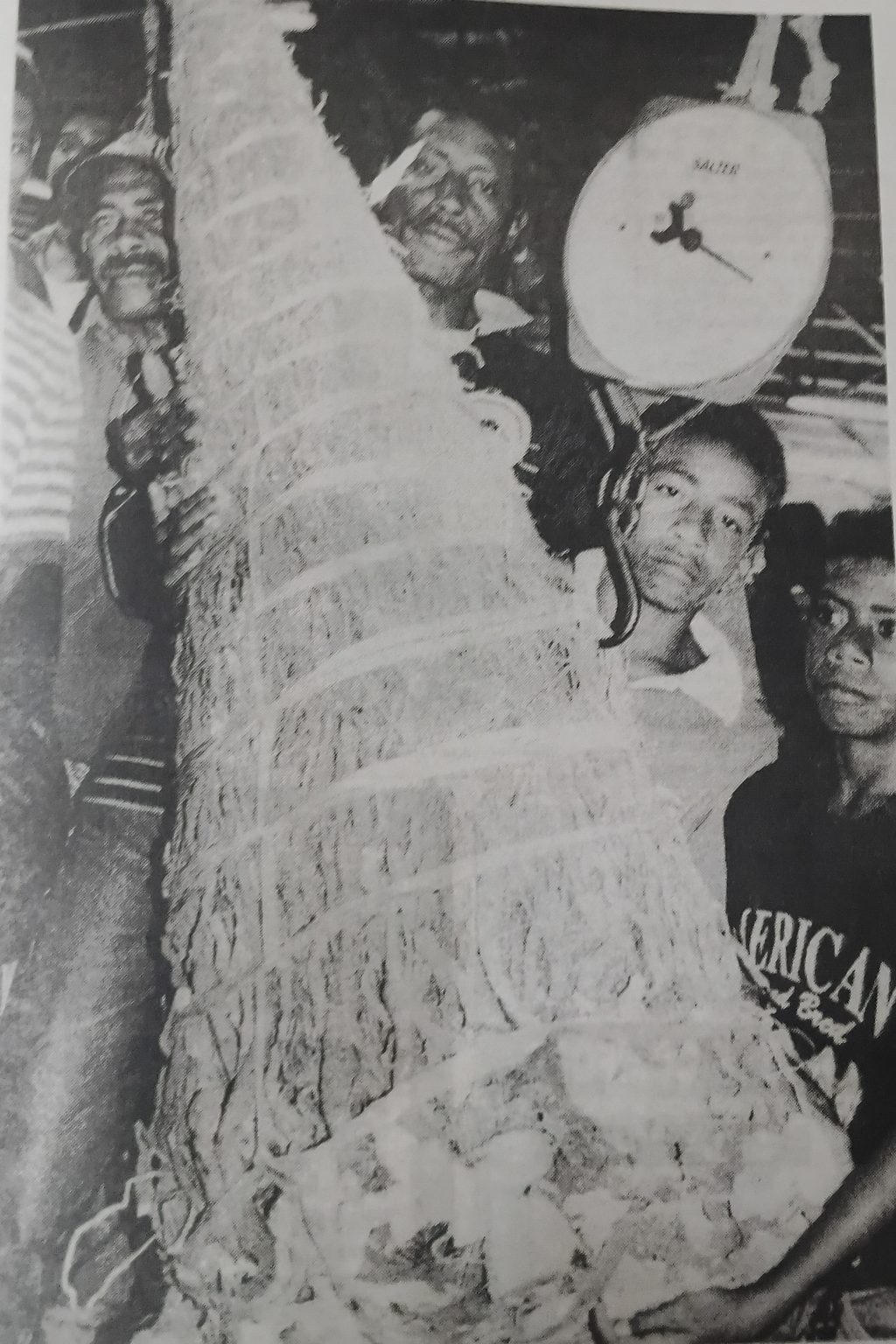
Looking back to the late 1990s, Fiji’s kava industry had been on a turbulent ride, swinging from historic highs to sudden slumps in global markets.
The Fiji Times reported on October 16, 1999, that prices were finally starting to recover after a dramatic downturn that shook producers.
When the international market for kava reached an all-time high the previous year, US companies eager to extract kavalactones for pharmaceutical use rushed to Fiji and other suppliers in the region.
The demand was so intense that middlemen were paying between $US180 ($F397) and $US200 ($F441) a kilogram.
Exports surged to $16.2 million, compared with just $2.4m in 1997 and $2.2m the year before.
But the boom was short-lived.
“Because the middlemen had enough kava to last them for a year, they stopped buying and so prices crashed.”
Prices bottomed out in January at around $US120 ($F265) a kilogram. Quality issues, arising from the rush to supply the market, pushed some buyers toward alternative sources.
Marketing missteps compounded the problem.
Kava had not been promoted in North America with well-supported claims of its uses, and, as Shirley McLean noted in the Public Ledger in 1998, “Kava has a reputation as an aid to feeling high and as a sexual stimulant.”
The first international botanical conference on kava, held in Hawai’i in 1997, had even expressed concern over the plant being touted as the “Prosaic of the Future.” Regulatory restrictions in Canada and Australia, due to health concerns and personal-use limits, further complicated the picture.
Yet there was reason for cautious optimism. Market watchers reported the price for kava used in pharmaceutical capsules was climbing again, fetching $US140 ($F309) a kilogram, with potential to rise toward $US160 ($F353). The European herbal and pharmaceutical markets were also seen as more stable and predictable, and it was in these markets that kava’s greatest potential lay.
“The reality was that pharmaceutical buyers, and for that matter herbal buyers, want kava kavalactones, not kava,” the reports explained.
“Variations in kavalactone content across roots, stems, leaves, and peelings, combined with inconsistent quality, limited returns to producers and meant exports were, by modern standards, “primitive.”
In response, the Fiji Kava Council, the Ministry of Agriculture, and the Pacific Community’s Suva office convened earlier that year to explore improvements.
“It is hoped that the agencies identified would not wait to be asked to take action on this recommendation but act immediately to realise the changes that have been identified,” said Re Sanday, chairman of the three-day workshop.

