Ancient burial sites lie scattered across the globe — hidden in caves, buried under soil or mud, or even submerged in rivers, streams, and seas.
Each site offers a glimpse into the customs, beliefs, and daily lives of past civilisations.
The Fiji Times published an article on September 6, 1998, where Sagale Buadromo detailed Rotuman burial practices, citing Reverend Churchward and WJE Eason in Tales of a Lonely Island and A Short History of Rotuma.
Titled “How the Dead were Laid to Rest in Rotuma,” the article said Ms Buadromo was approached by Aministai Tora, who had worked in Rotuma as a weatherman in 1949.
Mr Tora recounted how he was asked by Mr Eason, then District Commissioner of Southern Rotuma, to excavate old burial sites after local Rotumans refused.
“They believed it was not wise to dig up their ancestors’ bones,” he explained.
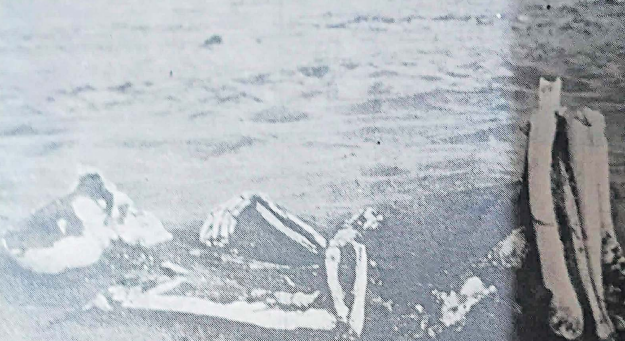
Volunteering at Sororoa, Mr Tora discovered that the skeletal remains were unusually tall — averaging more than six feet in height — and had larger teeth.
At Pepje, he unearthed ornaments accompanying the bones.
AL Parke, in his 1965 paper Legends, Language and Archaeology of Rotuma for the Fiji Society, also documented Mr Eason’s work, including the excavation of a chief’s burial on the island of Haua.
“He had found a body in a sitting position. Chiefs were traditionally buried sitting,” Parke noted.
JS Gardiner, author of The Natives of Rotuma (1898 and published in the Journal of the Anthropological Institute, reported that cemeteries were scattered throughout the island. Parke later categorised these cemeteries into three types: graves dug into natural soil, sandy coastal graves, and large mounded cemeteries made of beach sand, sandy earth, and boulders.
One coastal cemetery at Kaivaka had been constructed on flat ground using white sand. Some graves were marked with stone slabs, while others had no surface markers. Bodies were often placed haphazardly, though some slab-lined graves contained multiple burials. In one case, a lower body was extended facing the land at a depth of 0.9 meters. All bodies were covered with sand, and grave goods — including shell ornaments and pierced cowries — were common. No European artifacts were found.
In an interior cemetery, a grave dug into red volcanic soil contained a body extended on its back, head and feet slightly elevated, and facing the sea. The deceased wore a shell necklace, and the burial, approximately 2.1 meters deep, was covered with a thin layer of white sand before the grave was filled with dark earth.
Coastal cemeteries sometimes featured stone-box graves with slabs forming sides, bottoms, and tops. Bodies were laid extended on slabs, covered with soil, and accompanied by grave goods such as pistols, whale-tooth necklaces, turtle-shell wrist guards, and glass rectangles, possibly representing photographs.
Other graves had bodies facing the sea, lying flat on the back, adorned with whale-tooth pendants and coloured glass beads, but with no soil covering.
At Malhaha, graves disturbed during construction revealed seated burials in stone-lined graves, with whale-tooth ornaments and adzes.
Parke was later invited to excavate at Sisilo, the cemetery of Rotuman kings (sau), and was informed that the burials would be in a sitting position.
Similarly, the Sigatoka sand dunes — once forested and populated — have yielded burial sites occasionally exposed by strong winds. Skeletal remains there, some 3000 to 3500 years old, were often found seated and facing the sea.
Many grave goods from Rotuma, uncovered in 1898 and 1949, were taken to the British Museum by Mr Eason and Mr Gardiner. Today, strict Fijian archaeology and palaeontology laws prohibit the sale or export of cultural, archaeological, and palaeontological objects.
All digs require permits issued by the Fiji Museum, the Immigration Department, and the Ministry of iTaukei Affairs. Excavated remains are stored for research and, in some cases, sent abroad for carbon dating. After study, skeletal remains are reburied to preserve cultural respect.