
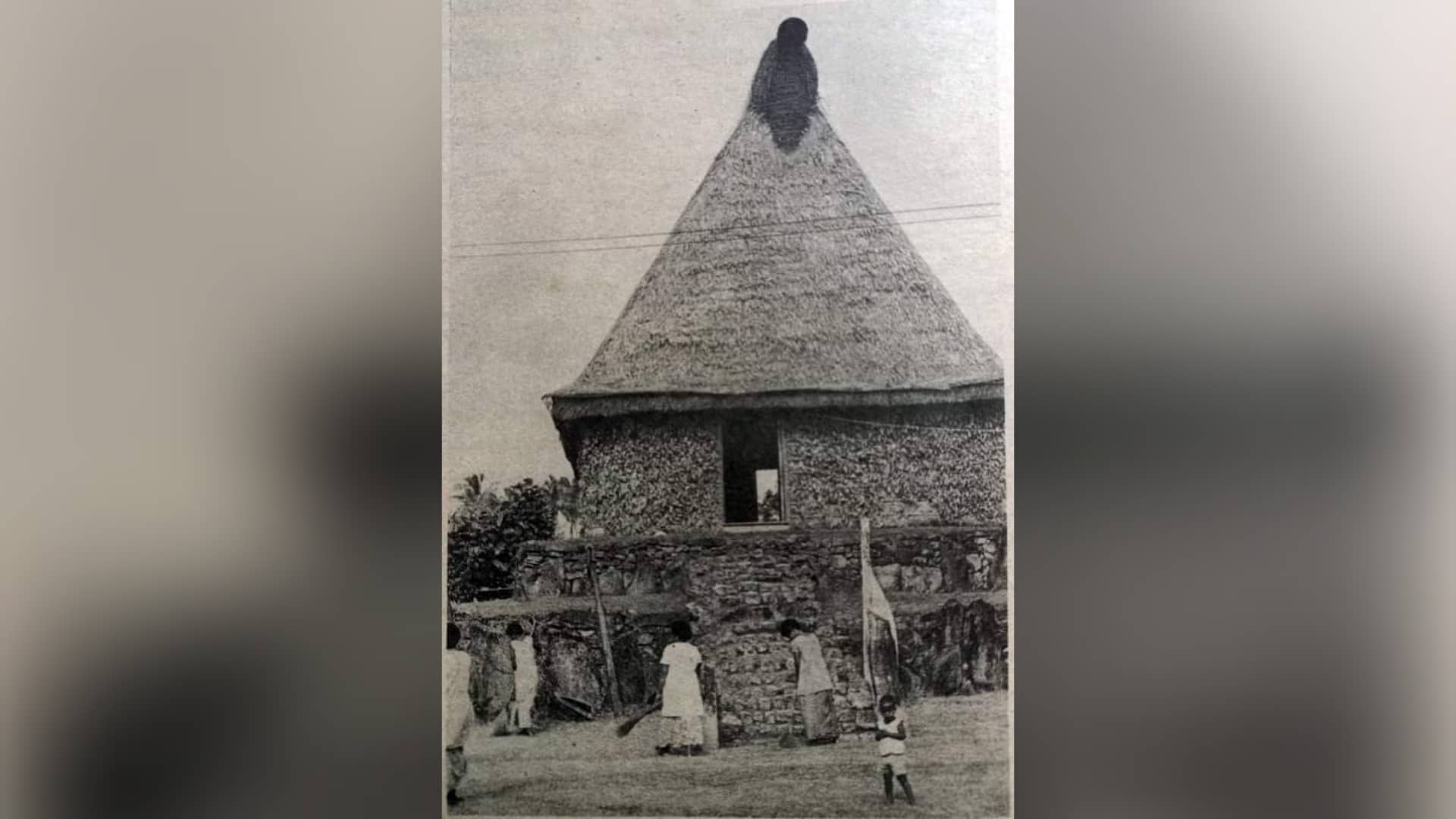
Human remains were found in the post holes of Navatanitawake, the historic meeting house on the chiefly island of Bau, an article published by The Fiji Times on July 23, 1971 read.
This tiny island had birthed great chiefs, one of them being the vunivalu and late Governor General Ratu Seru Cakobau.
Today, while still the home of the high chiefs of Fiji, it is of much social and historic importance. In 1971, a total of 50 men were involved in the restoration of the four historical houses on Bau with an estimated amount of $10,000 planned for the works.
One of the tasks was to cut down the existing house posts of Navatanitawake, the former temple and meeting house and it was in the holes of the two main posts that the bones were found.
In the old days, Bau practised cannibalism to the extreme degree and it was said by one early settler that “dead bodies were brought to Bau as often as twice or three times a week”. Dead bodies were presented at the temple, apportioned out and then cooked.
The hearts and tongues were considered the choice pieces and were therefore claimed by the chiefs.
Another practice was to place the bodies’ of prisoners of war (bakola) in the holes of posts of a bure being built for a chief. It was believed that this enabled the huge posts to slide into place more easily.
This gruesome practice was called na vakasobu ni duru. Although this was not normally practised in house building in other parts of Fiji except Macuata, Bau chiefs thought it may have been done in the case of Navatanitawake.
It was built in the time of Ratu Seru Cakobau, the powerful Fijian chief who led other high Fijian chiefs in the ceding of Fiji to Great Britain in 1874.
An interesting reminder of fierce times in Fiji’s history was the large whitewashed stone found in front of the altar of the Cakobau Memorial Church, which stands at the south end of the village green.
At the time the article was written, the hollow in the stone was used to hold the holy water for baptisms but in the old days it was an instrument of death, rather than spiritual birth.
It was on this stone that the heads of victims of the fearsome high chief Tanoa were placed and crushed.
Ratu Tanoa Visawaqa was a Fijian Chieftain who held the title vunivalu of Bau.
He was the son of Ratu Banuve Baleivavalagi and father of the first Tui Viti, Ratu Seru Epenisa Cakobau. Ratu Tanoa was installed as vunivalu upon the death of his elder brother, Ratu Naulivou Ramatenikutu, who was involved in a fierce power struggle against the Turaga Na Rasau and Roko Tui Bau, Ratu Raiwalui, which led to his death.
The idea of becoming Tui Viti was first thought of during his reign but he made it possible when his son Ratu Seru Cakobau took over the throne.
It is said that at one time Tanoa had more than ten men slaughtered in order that the deck of a new canoe might be washed with blood.

