
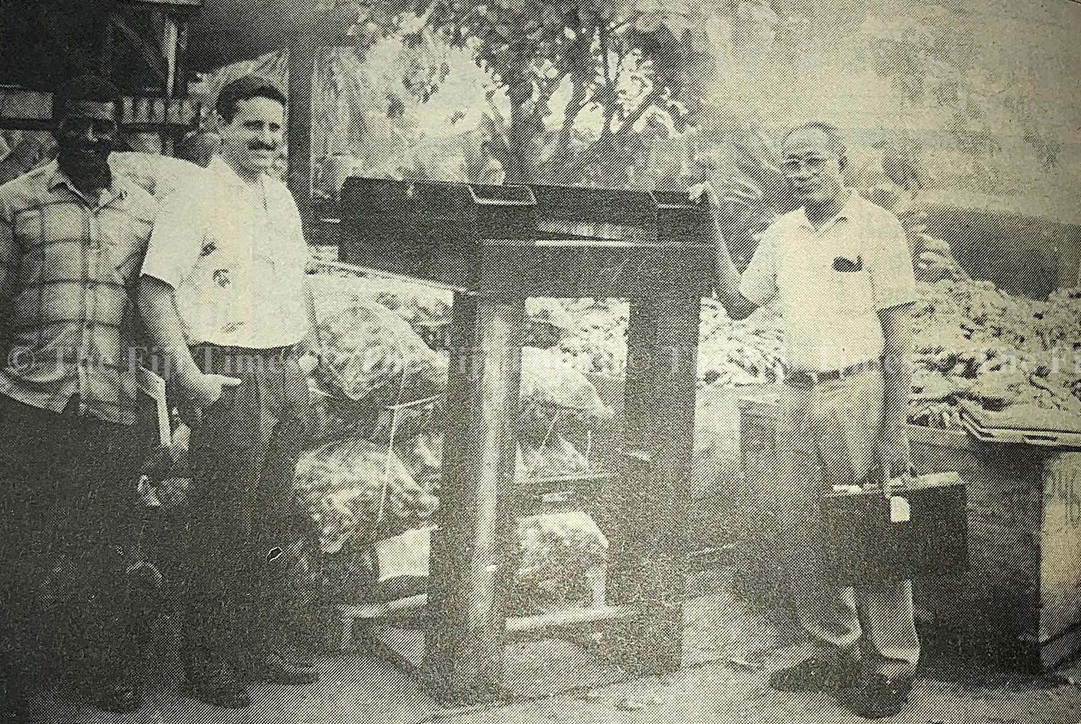
A visit to Hawaii in 1992 gave three members of Fiji’s ginger industry a first-hand look at why the American state was regarded as the world’s leading producer of export-quality ginger.
Published in The Fiji Times on Friday, May 29, 1992, Ginger farmers Stephen Joe and Koroi Siganivalu, accompanied by Fiji Fresh Ginger Exporters Association field officer Fistino Kafoa, spent a week studying Hawaii’s production methods as part of an industry initiative to improve the quality of Fiji-grown ginger.
The tour was sponsored by the association, with Qantas contributing half of the team’s airfares.
Hosted by Mauna Kea Agronomics Inc., the largest importer of Fiji ginger, the group observed every stage of production, from land preparation and planting to harvesting, grading and packaging.
Mr Kafoa described the experience as an eye-opener.
“The trip was a real eye opener for us — everything from land preparation and planting to grading and final packing is directed at obtaining a premium quality product,” he said.
“I can see now why Hawaii is the world leader. We can learn a great deal from Hawaii particularly in the areas such as land preparation, seed selection, disease control, fertilizer management, post-harvest handling and grading.”
At the time, Hawaii’s ginger industry consisted of about 200 growers producing an estimated 4500 tonnes annually, matching the previous year’s harvest.
The average yield was about 23 tonnes per acre, significantly higher than Fiji’s average of 15 tonnes per acre, of which only about 60 per cent met export standards.
Mr Kafoa noted that Hawaiian farmers benefited from fertile volcanic soils and mechanised farming systems. Soil testing, fumigation and careful crop monitoring were routine practices that contributed to healthier crops and higher yields.
“Hawaii farmers fumigate the soil before planting. Fumigation cleans the soil of such pests as nematodes, fungi, bacteria, weeds and weed seeds. The Hawaiians believe fumigation is the best answer to disease control in ginger,” he added.
The team was particularly impressed by the strict standards applied to seed selection.
“They use only Grade One ginger for seed material. This is because they believe a good healthy seed will give rise to a good healthy rhizome and similarly a poor seed will give rise to poor rhizome that is susceptible to disease.”
Mr Kafoa contrasted this with practices in Fiji, where farmers often selected seed after the best ginger had already been sold for export.
He said more dedicated seed plots were needed, similar to the association’s half-acre seed plot in Waibau.
“The farmers need to change their attitude. Even seed cutting requires special attention as unwise cutting could lower the quality of the seed,” he said.
The delegation also observed the use of tractor-prepared furrows, systematic soil monitoring and specialised fertiliser programs designed to maximise crop growth and quality.
According to Mr Kafoa, cleanliness was central to successful ginger production.
“Cleanliness is the key to disease control. If you have clean healthy seeds and a clean field, then the chances are you would get a disease-free crop.”
Perhaps the most impressive aspect of the visit was the quality of Hawaii’s export ginger.
Using a three-grade system, about 85 per cent of Hawaii’s ginger qualified as Grade One or Hawaii Premium, while only five per cent was considered off-grade.
Mr Kafoa said those figures highlighted the potential for Fiji’s ginger industry if farmers adopted similar production and quality-control practices. This version mirrors the concise, reflective Back in History format used by The Fiji Times, focusing on the significance of the event while preserving the strongest original quotes.

