
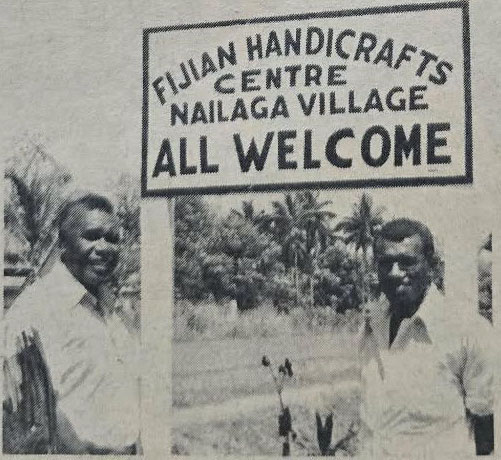
IN 1976, a simple idea sparked by hardship grew into a source of income, pride and hope for the people of Mataqali Tavanaki in Ba when a new handicraft centre opened at Nailaga Village.
An article published by The Fiji Times on November 8 that year said the initiative was led by Mr Joseva Nakautoga, a retired soldier who had served in Malaya during World War II.
After many years working on a cane farm in Koronubu, Ba, Mr Nakautoga fell ill and became unable to do strenuous labour.
The illness left him without a steady income. It was during this difficult period that he heard of the struggles faced by the mataqali (clan) Tavanaki, who were trying to raise funds to bring electricity to their homes.
He got an idea of a handicraft centre. And so, with the help of the assistant Roko Tui Ba, Mr Alusio Navosailagi, the craft centre was built at a cost of $500.
When it opened in August, it became the first of its kind in the area and quickly drew interest from locals and visitors alike.
The centre showcased an array of Fijian handicrafts, including beads, lali, swords, masi, baskets, mats, and tablecloths, all made by the youths of Nailaga Village and women’s clubs from surrounding communities.
Mr Nakautoga personally priced each item and received 25 per cent of every sale. The remainder of the revenue contributed directly to the clan’s electrification fund.
Since the opening, the centre had already collected $800.
Support for the centre grew further when a group of Alexians from Australia visited Nailaga and purchased $150 worth of crafts, donating an additional $52 to the centre.
In a time when rural electrification remained a distant dream for many Fijian households, the Nailaga craft centre stood as a reminder that even small ideas can bring lasting change.

