
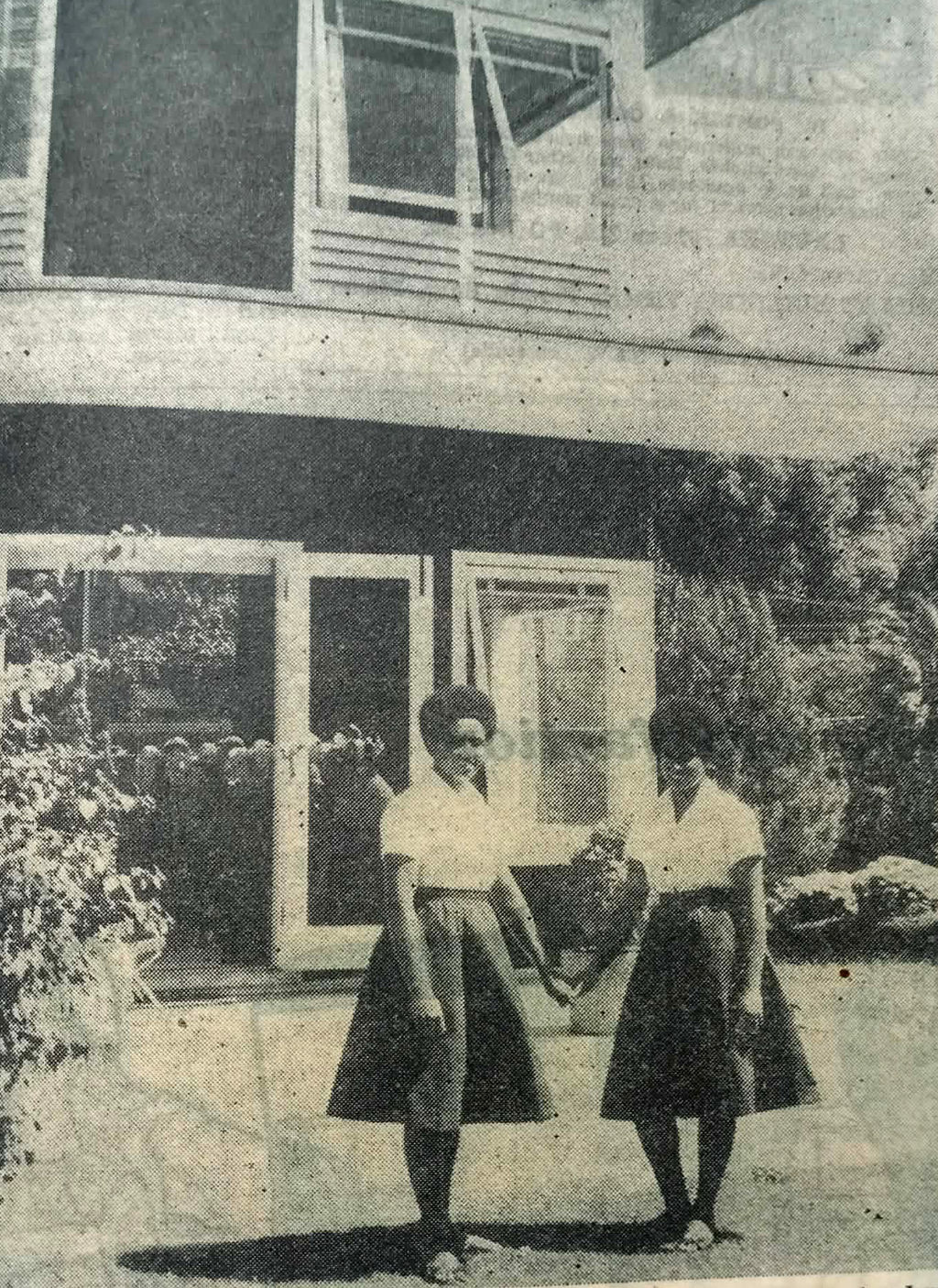
Featured in The Fiji Times on January 27, 1962, was the story of Adi Cakobau School’s triumph when they set foot in New Zealand.
“Out of a bus on Friday afternoon, January 26, 1962, stepped 35 smiling, laughing girls in red skirts and white blouses,” the article read.
The monogram “ACS” means Adi Cakobau School, which, measured by any standard at all, meant “a very remarkable school indeed”.
According to the article, the comment came from the Daily News, New Plymouth.
“The girls are already well-known through radio performances, but the thing about them which makes the most striking impression is their quiet, well-mannered poise,” the report said.
“Shy? A little to begin with, but once the introductions have been made, they are natural and unassumingly friendly.”
According to the article, the Wanganui Chronicle reported: “Typical Fijian friendliness, cheerful smiles, and politeness were the characteristics of two members of the Adi Cakobau School choir interviewed at the house of Mr and Mrs AD Morrison, on St John’s Hill.”
The girls were 16-year-old Kolora Nasilasila, a third form student and 17-year-old Alisi Qaramaitoga, a fifth former.
“The cooler evenings have caused a little discomfort and Mrs Morrison put an extra blanket on each of the girl’s beds. They said that in the daytime, the Wanganui weather was similar to Fiji’s.”
The Chronicle quoted Kolora as saying, “They like New Zealand audiences because they were very attentive.
“A big audience gave the visitors a very warm welcome.”
Deep voice
Hamilton’s Waikato Times said there were voices in the choir that were deep enough to be bass.
“In fact, they call themselves basses. That in a girls’ choir is unusual. The deep tones gave an organ-like effect to some of the numbers.
“The striking feature of the Polynesian and Fijian dances was the poetry of the hands and arms. This was most striking.
“The audience was also treated to some good acting in the sketches.
“The most striking feature was the ability of the choir, singing in unison, to perform unconducted. Their diction was clear and the solo from Kolora Nasilasila was well received.
“Towards the close of the concert, the choir sang one of the best versions of Waltzing Matilda yet heard, brisk with an amusing change of octave in the middle of a line.
“A crowded audience gave the singers an enthusiastic reception.”
Farewell song
The Daily News, New Plymouth reported: “The song began. The curtain came down quietly. The song continued and beguiled from behind the curtain, 30 voices in organ-like harmony saying farewell.
It described the singing of Isa Lei.
“A plaintive note in it, that song was something the big audience extending into the gallery, will long remember both for its enchanting self and for the things that had gone before.
“These girls have a gift of rhythm, dignity and melody that is the prerogative of their race.
“Those lovely, deep voices in the choir; the audience talked about them in the intervals, admiring their baritone quality, and remarking, too, on the girls’ ability to sing without accompaniment.
“But the thing that fascinated most was its dignity and grace, and the slow, mesmeric accompaniment was the Fijian dancing.
“Arms and hands and fingers were used with delicate eloquence to tell a story in movement. The effect of it all, the fan dances, the rhythmic percussion and chant and the graceful, descriptive hand dancing, was enchanting.
“Throughout the performance the audience showed their appreciation by generous applause.”

