
No one asked this vital question at the recent economic summit.
The short and sweet answer is: Not the government’s.
The economic summit is mercifully over, unanimously “passing” 14 Resolutions which are so general that no one can disagree with any of them, an astute political achievement for the Minister of Finance, Professor Biman Prasad.
The only hints of serious disagreement arose from brief discussions of the World Bank (WB) Public Expenditure Report and Richard Naidu’s hints of likely recommendations of the Fiscal Review Committee (FRC).
Like the WB Public Expenditure Report, the FRC must inevitably call for reduction of public debt via control of government expenditure, measures for increased government revenue.
These disagreements were skilfully avoided by the 14 recommendations, effectively postponing social conflict until that FRC report comes out, while paying some attention to Bill Gavoka’s plea for more attention to the concerns of the indigenous Fijians.
While many thought that the economic summit should have come after the report of the FRC so that its contentious recommendations could be discussed and resolved, the smart planners of the economic summit probably knew that there would have been a lot of heat generated, a lot of political posturing by some leaders, and no agreement on the way forward.
I suggest, however, that even when the FRC report comes out and is deliberated, the only three economic strategies that can be and will be agreed upon to partly satisfy everyone’s objectives are: (1) economic growth (2) economic growth and (3) economic growth.
One concession may be made to involve domestic natural resources and indigenous Fijians wherever possible and practical.
Unfortunately, at the economic summit itself, while there were lots of words about objectives, there was little to no discussion of what actual action people had to take to achieve the end goals of the 14 recommendations.
One 2018 pathway in this article and my own personal practical example of value adding to a national resource, Fiji mahogany.
The fatal conflicts avoided
But first, notice that there was no targeted discussion of the WB report and its many contentious recommendations.
WB recommendations on control of government expenditure inevitably require control of wages and salaries, which would have immediately attracted the bitter opposition of the unions.
I remind that Bainimarama/Sayed-Khaiyum government had cunningly and with great cowardice avoided these necessary measures even during the COVID pandemic when government revenues totally dried up.
They underhandedly, with the tacit agreement of the unions, simply borrowed more and horrendously increased the public debt, thereby passing the problem to future governments, starting with this People’s Coalition Government.
But these politically difficult expenditure control measures can no longer be avoided – or can they – and the Coalition Government can look forward to a difficult period of opposition from the Fiji Public Service Association (FPSA) and the public sector unions.
Then there are the inevitable recommendations for the increases of government revenue through removal of VAT exemptions on basic food items – supposedly costing Government $160 million – and increase to the old rate of 15 per cent (which word-smart lawyer Richard Naidu cosmetically presented as “no higher than 15 per cent”.)
Again, unions can be expected to fight tooth and nail, if all they see is a further increase in cost of living, although Government has promised that there will be compensating welfare payments targeted to the poor and the really needy.
It may be no coincidence that the past secretary general of FPSA has called it quits and strategically moved on, leaving the upcoming battles to his former deputy, the new SG Judith Kotobalavu.
She has already announced (FT 25/4/2023) her vehement opposition to the WB Public Expenditure Report recommendations.
Then there is the WB recommendation to reduce fiscal support of the terminally ill sugar industry, which will no doubt be vehemently opposed by Fiji’s foremost politician who for decades has utilised the votes from the sugar industry, even if its contribution to Fiji’s value added has been rapidly declining.
But discussion of this contentious recommendation can also be postponed until the FRC report comes out.
In most of these battles, the Minister of Finance will not be in a win-win situation.
He may but win some, but he will also lose some.
Only sustainable solution: economic growth Any sensible economist – even those at the World Bank – knows that the only way to reduce social conflicts over the reduction of government expenditure and increases in government revenue (euphemistically called “fiscal consolidation”), is to foster economic growth.
If the economic cake is not growing, “fiscal consolidation” is a zero sum game where for some to win, others must lose and they will oppose as
strongly as they can.
The only way to have a win-win scenario is to have the economic cake growing, so that even if some people’s “share” is falling, the actual amount of cake they get may still be growing or at least not falling so significantly.
This economic growth must be private sector led and driven by entrepreneurs, who may be assisted by dynamic groups of civil servants, but
not led.
I tried to point out these and other lessons in my 2018 publication The Challenges of Growing the Fiji Economy which is Volume 1 of my Fiji
Developing which is for sale in the USP Book Centre.
Growing the Fiji economy
On the page opposite are the contents of my Volume 1 The Challenges of Growing the Fiji Economy, which all participants of the economic summit and the Fiji public might like to browse through.
Section A discusses not just the importance of all governments having an actual “development strategy” (Reading 1), but also all the specific
development projects that I have proposed to various governments, the last being the Qarase government of 2001 to 2006.
I also explained (Reading 4) why civil servants needed to be given incentives (carrots and sticks) if they were to effectively get development projects off the ground.
Section A went through a number of concrete projects which I thought was ideal for the involvement of indigenous Fijians such as in tourism, timber processing (more below) and the retirement homes industry.
But ideas and project proposals by themselves are no good if they do not receive support from government entities.
In 2000, a potentially valuable retirement homes proposal I did with friend Keni Dakuidreketi did not receive support from the FTIB (Fiji Trade And Investment Board) which strangely went with another proposal at Wailoaloa Beach which eventually got nowhere.
Because of the importance of the private sector in fostering economic growth, my Section B presented a small selection of Fiji’s great
entrepreneurs as role models for others: David Gilmour (Fiji Water), Dr Mere Samisoni (bread), Yee Wah Sing (ginger), the Halabes (garments), Chauhans (printery), Hunter (pearls), Dr Ganesh Chand (academic entrepreneur, still one today, starting a polytech), and the late Dr Qalo (Mucunabitu Iron Works).
There were of course many more such entrepreneurs who I did not cover in my Volume 1 such as the Punjas, Tappoos and Patels, who should be documented for the future.
These are the kinds of entrepreneurs who must lead the economic growth.
In Volume 1 I also suggest a number of “industries” which are already bearing fruit – like the rugby industry, the caregiving, the seasonal labour schemes, the resulting remittances – all guaranteed to grow in the future because Australia and NZ have finally understood, with a little prodding from China, the potential benefits to themselves of holding the Pacific peoples closer to them in employment, sports and arts.
Timber value adding
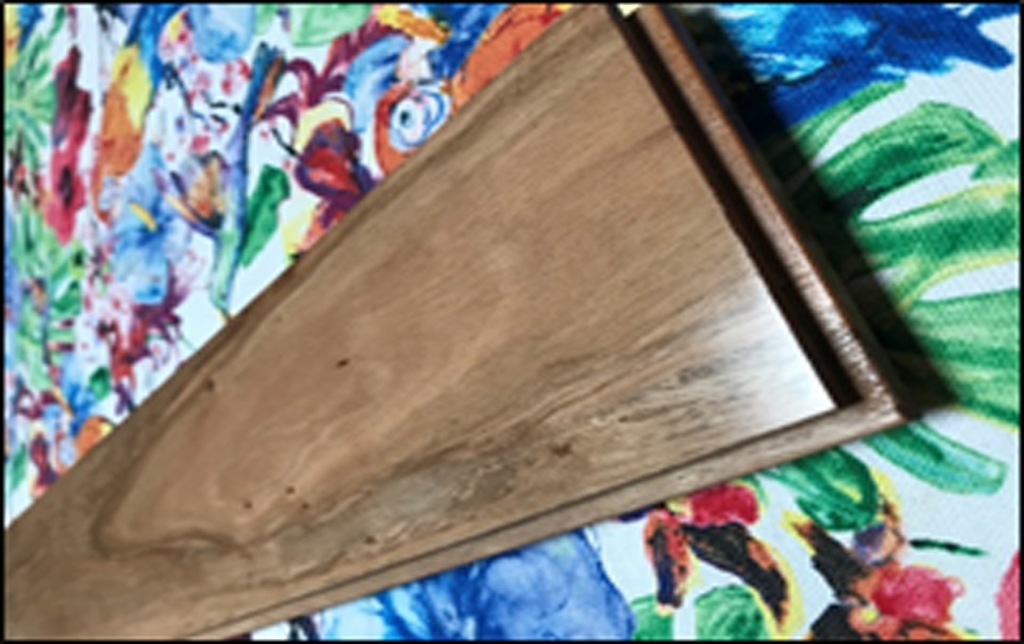
Figure 1: Australian Pacific Blackbutt, with tongue and groove on sides and ends.
I know that many members of the public are dismissive of academics’ advice as coming from useless “book learning”.
So let me give Fiji readers a brief perspective of the many practical things done by this academic in Melbourne, using Fiji mahogany, illustrating the fantastic potential for timber value adding, in Fiji.
I used simple technology available off the shelf, mostly at Bunnings.
I explained some of this potential in my Volume 1 Reading 11 (written in year 2000) and Reading 12 (written in 2018).
In my humble Melbourne home with four small bedrooms, there was a large concrete floor garage with two steel roller doors, all facing the street.
What a waste, I thought.
Figure 2: Beautiful Pacific Blackbutt floor, secret nailing machine and small compressor.
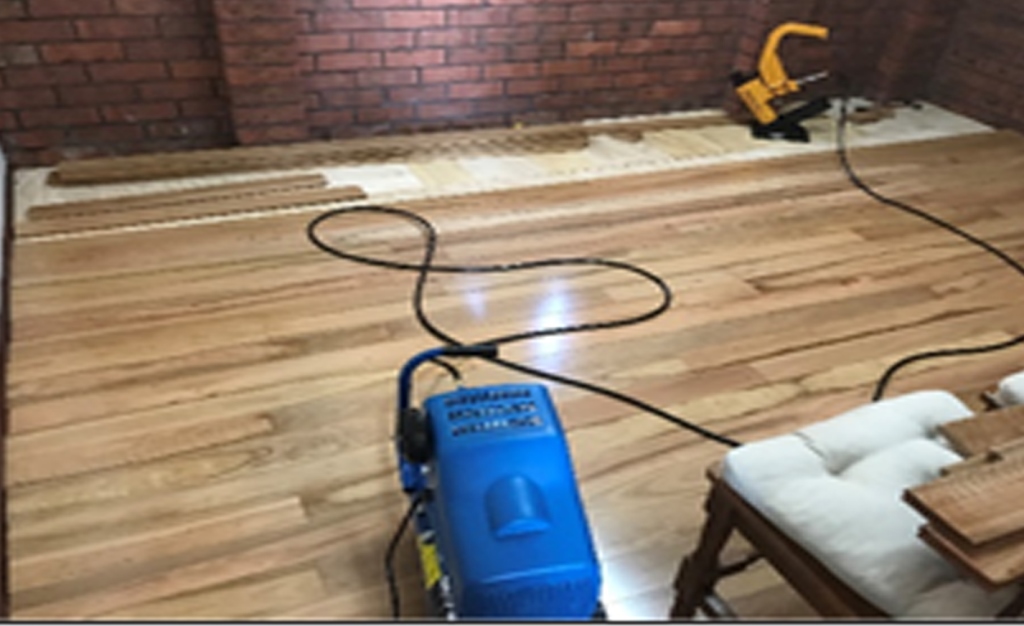
No clamps, no sanding, no polishing required.
So I hired a company to replace the roller doors with full-height glass windows and sliding door.
Then on the cold concrete floor, I put down some insulation, 20mm plyboard, and proceeded to install ready-made Australian Pacific Blackbutt timber flooring.
This was already beautifully sanded and polished.
Apart from the sides having “tongue and groove”, the ends of the Pacific Blackbutt also had tongue and groove so the ends could be easily and neatly fitted (see Figure 1).
They were beautifully machined so could be just tapped into place with a rubber hammer.
These pieces of timber came in three lengths so that grooves of adjoining rows could be staggered.
I bought a special Bostitch “secret nailing machine” and a small Lincoln compressor to drive it using a rubber hammer.
The nails or staples were driven into the edge of the tongue so was not visible on the top of the floor.
The process was fast and the finished floor was fantastic, needing no further work (see Figure 2).
But Fiji Mahogany needed more work.
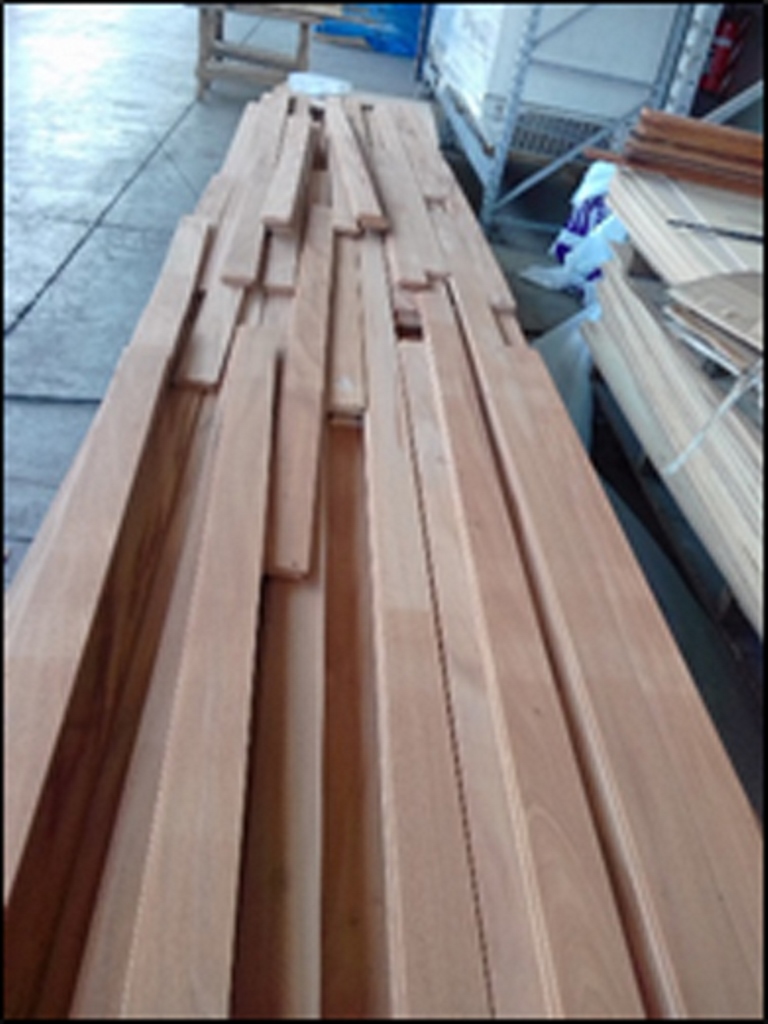
I later bought my Fiji tongue and groove mahogany flooring over the internet from Dayals Sawmillers of Ba (thanks to Jay Dayal).
A huge amount of timber came in a container with my household goods, all fumigated and professionally packed by Williams and
Gosling staff – thanks to Dave Aidney, Romana and staff (see Figure 3).
Unfortunately, the Fiji mahogany was not machined with accurate thickness and the long 3-metre pieces were often slightly warped (so needed clamping together before nailing), while the ends did not have tongue and groove (so needed accurate 90 degree cutting with a drop saw) (see Figure 4).
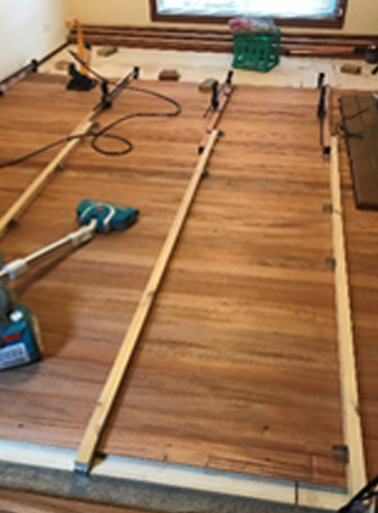
But I improvised and largely succeeded.
The timber floor also needed sanding, but a large roller floor sander rented from Bunnings was more than equal to the task, although one had to put up with a lot of noise and dust (see Figure 5).
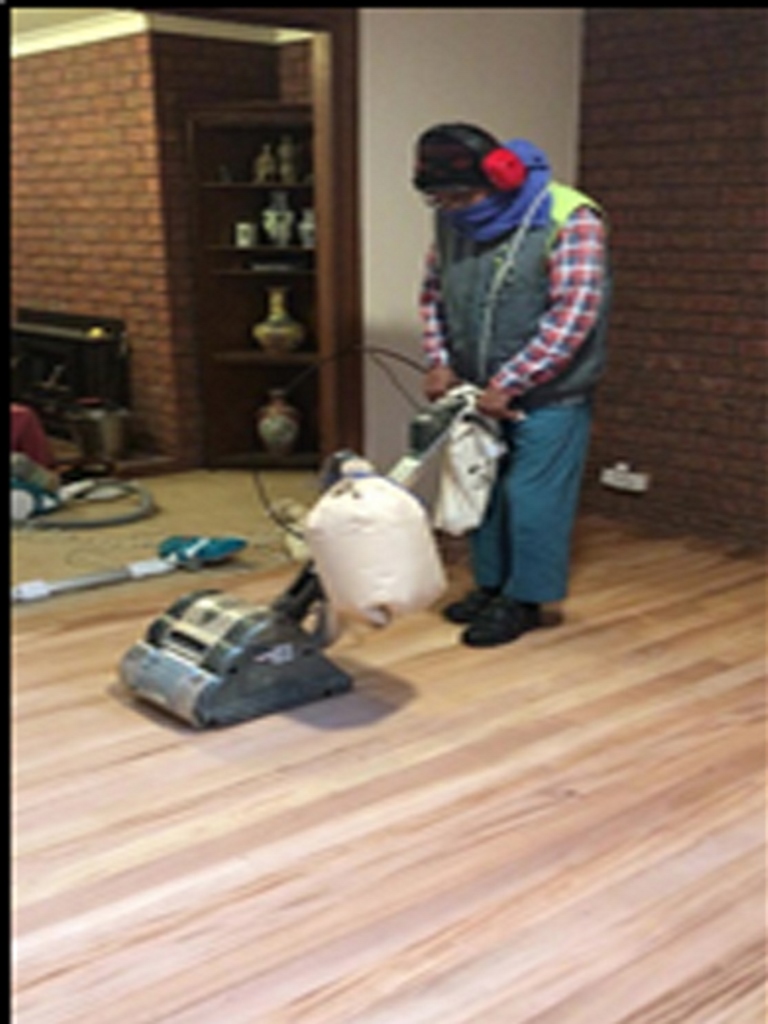
But the end result was fantastic.
My wife and I did the entire mahogany flooring over a one-year period.
By the end this academic had grown quite familiar with using drop saws, circular saws, small sanding machines, routers, wood glue and clamps to make any number of other wonderful products with all my left-over Fiji mahogany tongue and groove timber.
Of course such a large project would not have been possible without the ability to rent the large machines from Bunnings and other stores.
So many other products possible
After I had done my flooring I had more than a half of the original amount still left over.
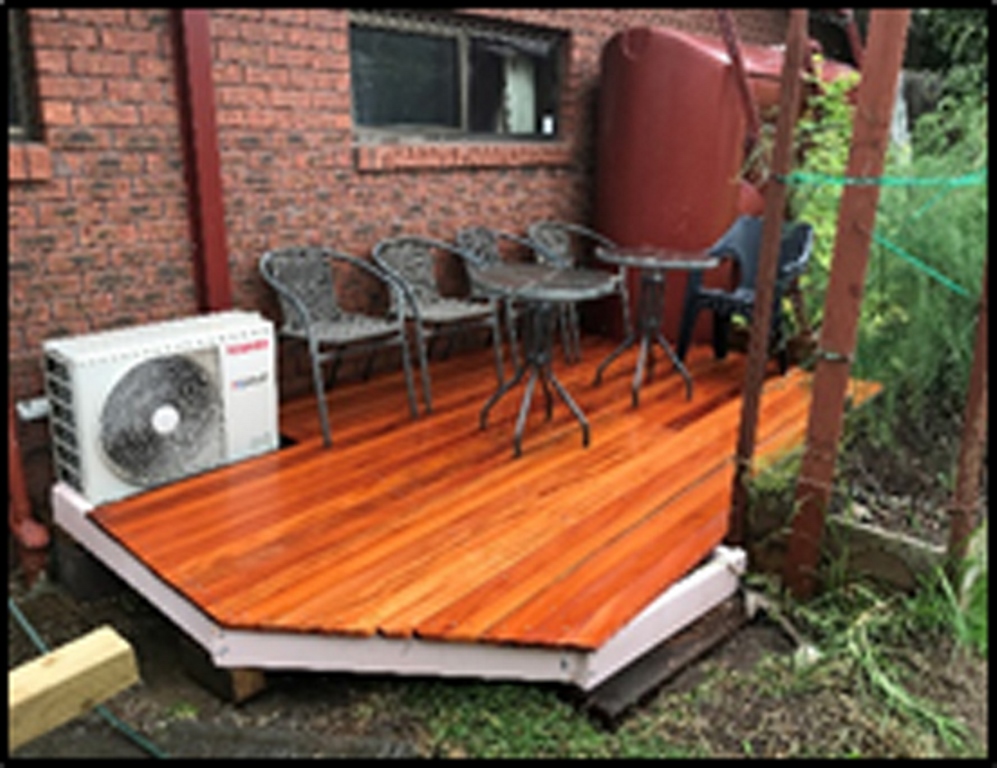
So I made a small external deck (Figure 7), mahogany table top on an old iron frame (Figure 8), study desks for grandkids (Figure 9), any number of cheese boards and roti boards for relatives and friends (Figure 10).
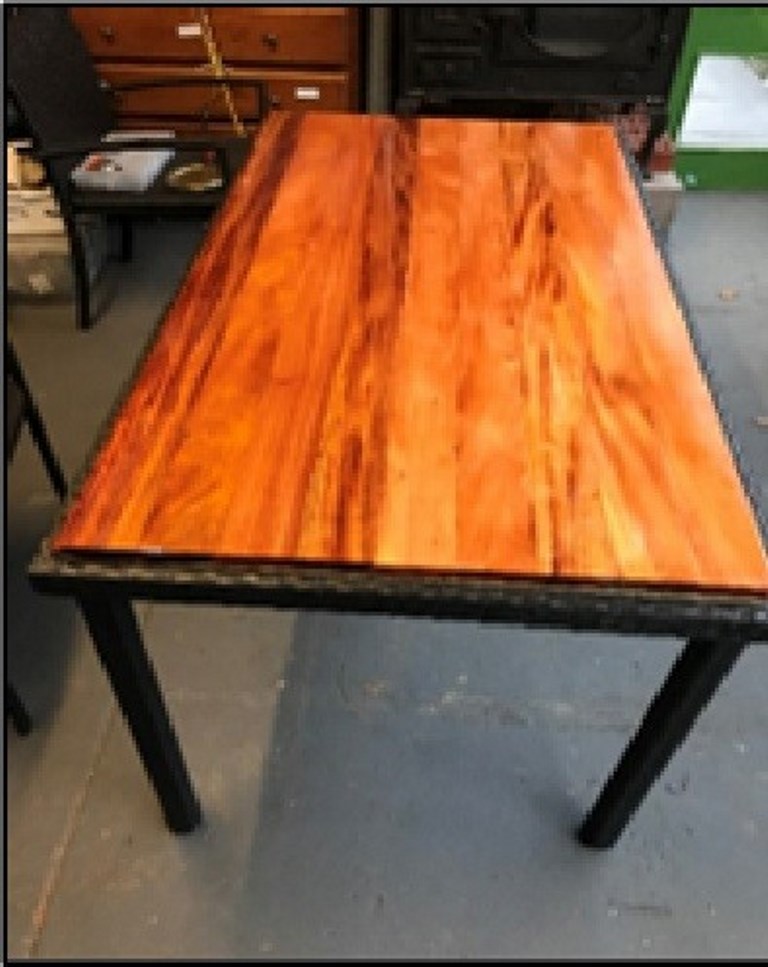
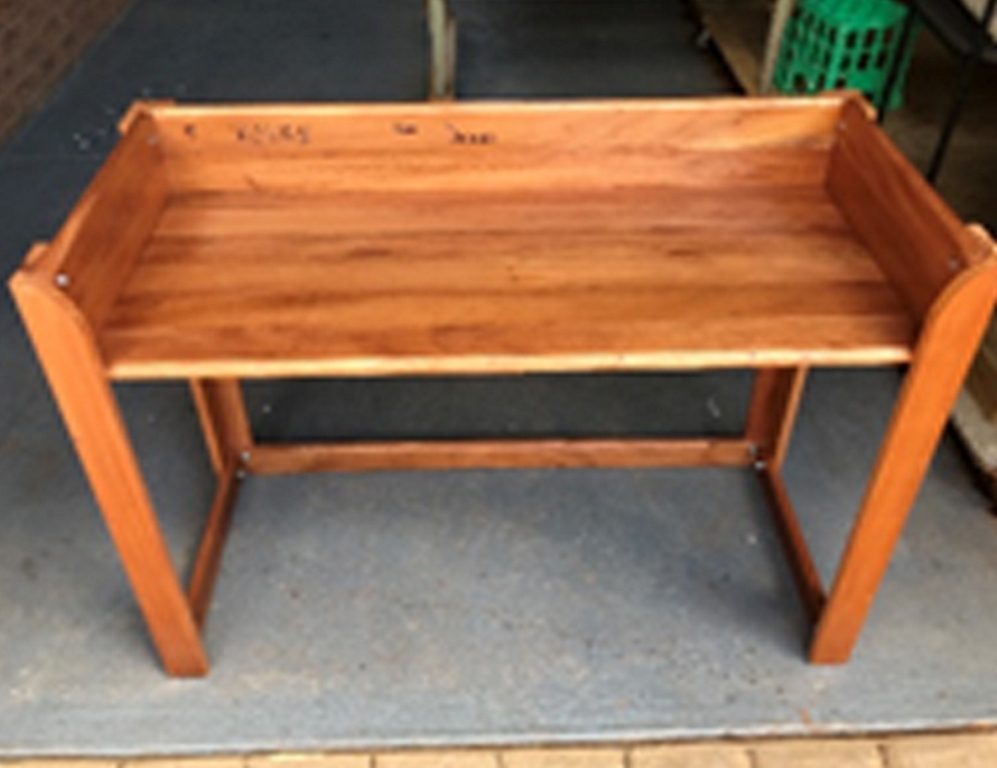

At Bunnings you can find any number of finished timber products which consumers can buy off the shelf and do simple modifications before
installation in their homes.
These are all possible in Fiji.
What value adding in Fiji?
There should be no shortage of quality timber supplies now that indigenous Fijian forest owners do not have to deal with the dead hand of the Bainimarama/ Khaiyum government.
They can also invest in their own timber sawmilling or just use existing sammillers like Dayals.
But these sawmillers must provide quality flooring like the Pacific Blackbutt I explained above.
They must invest in the appropriate technology to do all the value adding that is possible in Fiji before shipping the finished product.
Proper kiln drying, accurate machines to reduce variation in thickness, ensure that the ends of short pieces also have tongue and groove, proper sanding, proper finishing with the varnish or oils specified by the buyer.
With the power of internet, Fiji suppliers could even do special orders over the Internet, giving the right lengths of timber, with the right number required to cover the rooms exactly.
The timber would be neatly packed in small tough cardboard packaging so that they are easily transported and packed into containers.
The Fiji suppliers can also set up fumigation at their factory to standards approved by Australian, NZ, Canadian, USA, or other destination countries, just as Williams and Gosling had.
All these value adding processes mean that there will be far more value added in Fiji accruing to indigenous Fijians, more jobs, more injections into FNPF, higher prices and profits for the suppliers, and higher taxes for Government.
Of course, with Fiji mahogany being marketed as “plantation” timber, it would be totally acceptable to the “green” lobbies in developed countries who are opposed to rain forests being cut down.
But Fiji timber suppliers can do far more than provide flooring.
Bunnings also sell ready made wooden doors, window frames, posts, beams, lattices, and all kinds of other wooden products.
There is no reason why the Pacific Green model with coconut furniture cannot also be adopted for making world quality standard furniture,
especially in an era when forest timber supplies are shrinking all over the world.
The average Australian householder is a DIY fanatic with a garage full of tools that any little factory in Fiji would be proud of.
What they do not have can be easily rented from Bunnings and other suppliers.
What a tragedy that the immensely profitable hardware merchants in Fiji make no attempt to rent quality machinery to Fijians, as Bunnings so readily does, thereby improving worker productivity no end.
I thank The Fiji Times and especially its owners Motibhai for providing such an excellent outlet for my hundreds of community education articles.
I also thank the long stream of supportive publishers and editors especially in the censorship years: Russel Hunter, Netani Rika, Hank Arts and Fred Wesley.
- PROF WADAN NARSEY is one of the region’s senior economists and a regular commentator on political and economic issues in Fiji. The views expressed in this article are not necessarily the views of The Fiji Times.